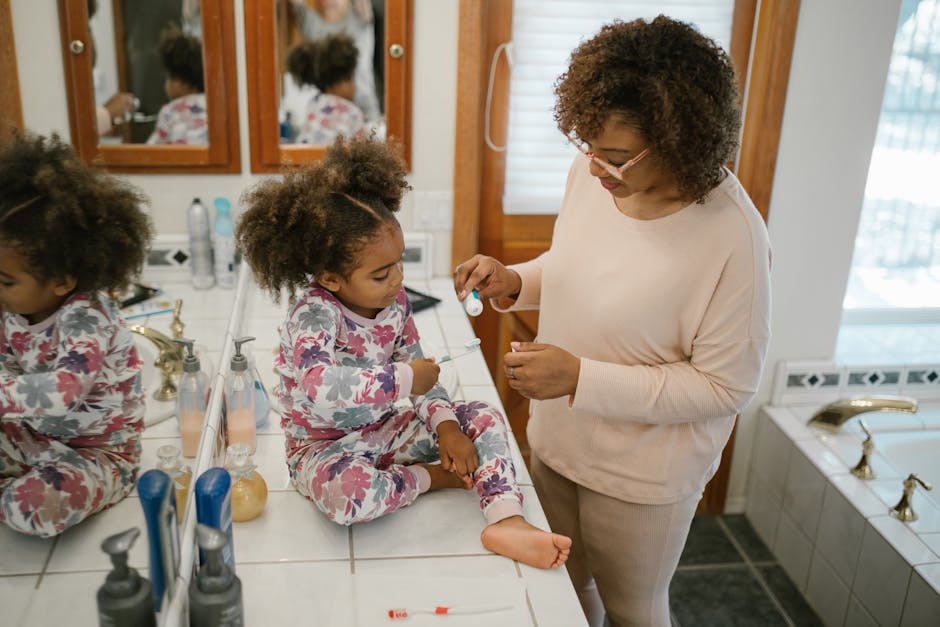
"I already washed them" is the sentence you'll hear nine mornings out of ten, delivered with total confidence, from a kid whose hands are still visibly smudged with something orange. You know it isn't true. They know you know. And yet here you are again, standing at the bathroom door, playing referee for a thirty-second task that shouldn't need a referee at all. This is exactly the gap a hygiene habit app for kids is built to close, not by nagging louder, but by moving the reminder off your shoulders and onto a screen your child actually checks on their own. Because the real problem was never that kids don't understand hygiene. It's that the whole system depends on you remembering, repeating, and checking, every single day, for years.
Parents describe this exact cycle on forums and in app reviews: kids forget or resist basic tasks without constant prompting, the routine holds for a week or two and then quietly dissolves, and the parent ends up as what one mother bluntly called "the chore tracking app for the family." Meanwhile the competition for your child's attention is brutal. Children ages 8 to 10 now average around 6 hours of screen time a day, and kids 8 to 12 log roughly 5 hours and 33 minutes of pure entertainment screen time, not counting homework. Thirty seconds of handwashing has to compete with that. It rarely wins on its own.
Why "wash your hands" repeated nine times a day stops working
Here's the thing nobody tells you when your child is small: hygiene habits aren't hard because they're complicated. Brushing teeth, washing hands, taking a shower without turning it into a forty-minute splash festival, these are simple physical tasks a six-year-old can absolutely manage. What makes them hard is that they're invisible once done and easy to skip when nobody's watching. There's no natural consequence five minutes after skipping a handwash before dinner. The cavity shows up in eight months, not that night. So the only thing standing between "did it" and "didn't do it" is you, saying the same sentence for the fourth time before 8am.
That repetition wears you down faster than it wears the kid down. You start to dread the transition moments, bathroom before bed, hands before snack, because you know it's going to take reminding, maybe some low-grade negotiation, possibly a small standoff over the sink. And the sticker chart you made with good intentions back in September? It's probably still on the fridge, half-filled, ignored since week three. That's not a failure of willpower on your part. Research on behavior and routines backs up what you already feel: charts and basic reward systems tend to lose their pull after about two weeks unless something keeps refreshing the motivation underneath them.

Veja o Sparky em ação
Um mascote, estrelas e recompensas escolhidas em conjunto - numa única app familiar.
What actually changes when the habit lives on the kid's own screen
The shift that makes a real difference isn't more rules. It's relocating who's responsible for remembering. When a child opens their own app and sees "brush teeth, wash hands before dinner, shower" waiting for them, something changes in the dynamic. It stops being your request and starts being their list. You set the tasks once. They see them daily, check them off, and watch a small streak build without you saying a word. That's the core mechanic behind a hygiene habit app for kids done well: it hands the reminder job to a mascot or a star counter instead of to your voice, and kids respond differently to a screen cheering them on than to a parent repeating themselves.
Real rewards matter here more than most parents expect. Virtual coins and badges inside an app get dismissed by kids almost as fast as they're earned, parents openly call them "coins nobody cares about." What sticks is something the child picked themselves, a trip for ice cream, an extra half hour outside, a small toy they've had their eye on. Stars earned toward something tangible and jointly chosen turn hygiene from a chore into a countdown the kid is actually invested in. One mother of a seven-year-old noticed that brushing teeth and washing up stopped being a fight entirely once the reward on the other end was something her daughter had helped choose, not something assigned to her.
Gentle streaks matter just as much as the reward itself. A streak that resets to zero after one missed night during a cold or a late bedtime teaches a child that effort doesn't count unless it's perfect, and that's a lousy lesson for a five-year-old or an eleven-year-old alike. Systems built with grace days, where a sick day or a rough night doesn't wipe out three weeks of progress, keep the motivation light instead of turning it into quiet pressure. This is one of the places an app like Sparky can take some of that daily mental load off your plate, by letting the child own the checklist while you stay the one who sets it up and watches it work from a distance.
Six hygiene habits worth anchoring before age ten
Not every hygiene task deserves equal weight on a young kid's list. The ones that make the biggest difference, and that children can genuinely own by themselves with a little scaffolding, tend to cluster around a short, repeatable set.
- Washing hands after using the bathroom and before meals is the single habit worth anchoring first, because it's quick, it's testable by smell and sight, and it prevents more illness than almost anything else on this list.
- Brushing teeth twice a day, morning and before bed, works best as two separate tasks rather than one, since kids tend to remember the morning round and completely forget the second.
- Showering or bathing independently, including actually using soap rather than standing under water for ten minutes, is a habit most seven to nine-year-olds can take over with a visual checklist nearby.
- Brushing or combing hair before leaving the house matters more for older kids starting to care about how they look to friends, and it's an easy win to build early confidence around self-care.
- Trimming nails or at least checking them weekly is one parents often forget to assign at all, which is exactly why it belongs on a list instead of staying in your head as a thing you'll "get to."
- Using a tissue and washing up afterward during cold season sounds small, but kids under eight rarely do it without a visible reminder, and it cuts down dramatically on classroom and household germs.
Setting the system up without turning bath time into a performance review
Start small, smaller than feels sufficient. Three tasks, not ten. A long list of hygiene chores on day one guarantees overwhelm and a kid who shuts down before they've even tried. Pick the two or three habits causing the most friction in your house right now, handwashing and the evening brush are usually the obvious culprits, and build from there once those feel automatic.
Let your child pick the reward, not just the task. This single step does more for buy-in than anything else you'll try. A reward imposed by you feels like another rule. A reward chosen together, even something as modest as picking the movie on Friday night, feels like a deal they agreed to, and kids defend deals they made themselves far more than ones handed down.
Keep the streak visible but forgiving. If your child misses a day because they were sick or you were traveling, don't let the whole counter crash back to zero. A system with grace days teaches persistence instead of perfectionism, and it keeps you from becoming the parent who has to deliver bad news about a broken streak on top of everything else going on that evening.
Check in after two weeks, not two days. Novelty carries almost any new system for the first few mornings. The real test is whether brushing teeth is still happening without a reminder in week three. If it's slipping, that's not a sign to abandon the whole approach, it's usually a sign the reward needs refreshing or the task list needs trimming back down to just one or two things again.
Three things to set up before tomorrow morning
Pick one habit that's been the daily battle in your house, probably handwashing or the evening brush, and make that the only thing you track this week. Sit down with your child for five minutes and let them choose what they're working toward, something real and specific, not vague screen time but an actual thing they can picture. Then step back and let the checking-off happen without you standing over it, even if the first few days feel like you're doing less than usual. That discomfort is actually the point. You're not disappearing from the routine, you're just no longer the one carrying it alone.
Hygiene habits aren't glamorous and nobody throws a party over a kid who finally washes their hands without being asked twice. But they're the quiet, repeated stuff that adds up over years, and you deserve to spend less of your evening repeating the same sentence at the bathroom door. Small, honest wins, a clean streak, a reward your kid actually wanted, a morning where you didn't have to say anything at all, those are worth more than they look.
Baixe Sparky grátis
Acesso antecipado, sem anúncios e sem compras dentro da app - só você e a criança.