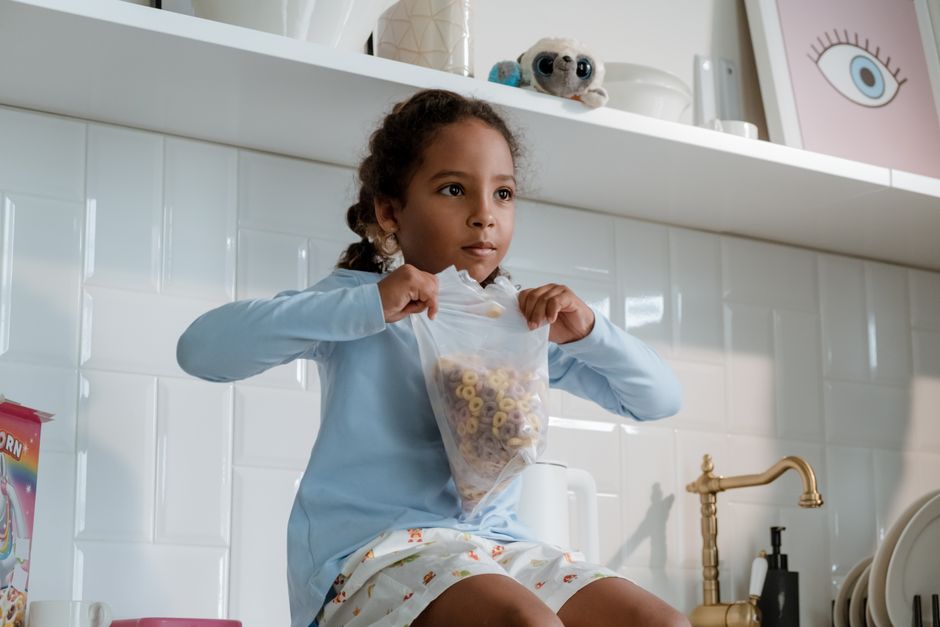
The school bag is zipped. The left shoe is on. The right one is still under the table, and your seven-year-old is staring at the cereal like it is a puzzle with missing pieces. You already said “shoes” twice. You can feel the clock in your chest. This is not laziness. This is a brain that starts three things at once and loses the thread before any of them finish.
If you have been hunting for an ADHD kids routine app, you are usually not looking for another badge tree. You want the morning to stop depending on your voice. You want a list the child can see without you standing over it. You want tasks small enough that they do not look like a mountain. And you want that without turning the kitchen into a performance review.
Parents of kids with ADHD (diagnosed or just “this is how our house runs”) describe the same loop. You write the list. Day one is magic. Day four, the list is still on the fridge and nobody looks at it. You become the reminder system again. It is easier, some days, to put the shoes on yourself. Then you feel guilty for doing that, and tired for having argued, and still late.
This piece is about shrinking the job until it fits a real attention window, putting the list where the child actually looks, and keeping rewards honest so the whole thing does not collapse after two weeks. No lecture about “just be consistent.” Consistency is the thing that is hard when working memory is leaky and time feels foggy. We will talk about what to put on the list, how long each piece should last, and what to do when they mark it done and the towel is still on the floor.
When working memory drops the second shoe
ADHD is not a motivation problem first. It is a start-and-hold problem. A child can want to get out the door and still lose the sequence: bathroom, clothes, bag, shoes. Your words become wallpaper. “We have to go” does not land as a sequence. It lands as pressure.
That is why paper charts fade. They sit in the adult’s visual field. The child is already scanning for the next interesting thing. Common Sense Media's 2023 report found children 8–12 average 5 hours 33 minutes of entertainment screen time daily, not counting schoolwork. Those hours compete with the tiny windows where a habit can actually form. Research on typical attention spans suggests rough windows — around 10 to 15 minutes for younger primary-age children, stretching toward 20 minutes for pre-teens — and children with ADHD often sit at the shorter end of those ranges. If a morning “routine” is really a 40-minute obstacle course, you are asking a brain to hold more than it can hold.
One mother of an eight-year-old described it like this: he could recite the whole list if she asked, then still walk past the toothbrush. Reciting is not doing. Doing needs a cue in the moment, a start that is tiny, and a finish he can see. Another family with two children noticed that the older one (who does not have ADHD) could run a kitchen-wall list. The younger one needed the list on a screen he already opened, with one job at a time, not eight boxes staring at him.
You are not failing because you remind. You are filling in for executive function. The goal is to move that function onto something the child can tap, not to shame anyone for needing scaffolding. A University of Minnesota longitudinal study by Marty Rossmann found that kids who did regular chores from an early age were more likely to be successful adults — completing education, starting careers, and maintaining relationships. The point is not a perfect child. It is protecting 15 to 20 minutes a day from disappearing into another scroll.

Veja o Sparky em ação
Um mascote, estrelas e recompensas escolhidas em conjunto - numa única app familiar.
Build a list that fits 12 minutes, not your adult brain
Start by cutting, not adding. Pick three morning jobs and two evening jobs. That is enough. “Get ready” is not a task. “Put on socks” is a task. “Clean your room” is a threat. “Put dirty clothes in the basket” is a task. Age-appropriate chores for this group are the ones a child can finish without a parent as project manager: bed pulled up (not hospital corners), backpack on the hook, plate to the counter, teeth with a timer they can see.
Match the clock to the age, not to your calendar. For a five-year-old, a visual countdown of two or three minutes per job is plenty. For a nine-year-old, a 12 to 15 minute focus block can hold a small cluster: clothes, bag, water bottle. Stop before they melt. If they melt, the list was too long, not they were “noncompliant.”
Write the order the way the room actually works. Bathroom first if that is where they stall. Shoes last if shoes are the thing that vanishes. Recurring tasks beat a fresh negotiation every morning. Autorepeating the same five items is kinder than a Sunday meeting that invents a new system.
Keep your own job short too. You set the list. You do not narrate every step. If you need proof because “I already did it” is a regular line, photo proof on one messy task (bed, bathroom, floor) lets you approve from your phone without a kitchen trial. You are not installing a spy camera. You are closing the argument.
Sparky is built for exactly this — the child's tasks live on their screen, stars map to rewards they chose, and you can approve photo check-ins from your phone without a kitchen argument. That is the whole point of an ADHD kids routine app that is worth keeping: fewer spoken reminders, more ownership, no extra subscription drama while you are already tired.
Stars that buy ice cream, not imaginary coins
From talking to parents, the pattern is consistent. Virtual coins nobody cares about. Sticker charts that last about two weeks. Habit apps downloaded and deleted in a cycle. The ones that stick tend to use real rewards the child helped pick: ice cream, a small toy, a later bedtime on Friday, a board game with you. Not 40 badges. Not a shop full of cartoon swords. One family I spoke with — Maya, nine, and her dad — swapped a fading fridge chart for five stars toward Friday ice cream they had both named in advance; she started opening the list because the prize was hers, not another cartoon coin.
Rewards are not a moral failure. For a brain that does not feel time, a star that moves toward something concrete is a bridge. Tie the star to effort and finishing the small job, not to a perfect week. Gentle streaks with a grace day treat a late night or a sick morning as ordinary. Consecutive-day pressure turns the number into a verdict. Kids with ADHD already collect verdicts.
Answer the bribe objection honestly. A bribe is “do this now or no tablet, and I invented the prize in anger.” A planned reward is “five stars and we get the thing you chose on Sunday.” You are teaching a loop: start, finish, notice, enjoy. Intrinsic motivation grows after a child has repeated success, not before. If they only work for the prize at first, that is still practice. You can fade the prize later. You cannot fade a fight that never got a first win.
Watch for the trap where you remain the family brain. If every star needs your speech, you are still the app. Let them open the list. Let them tap done. You check once, not twelve times. Multi-parent homes need the same list, same rules, same grace. One adult as streak keeper is how the system dies on the weekend.
What to try this week without a new wall chart
Tonight, sit for ten minutes, not a summit. Name three morning tasks in the real order of your hallway. Name two evening ones. Agree on one reward that is actually worth having. Write the time each job should take. If it is more than 15 minutes for a child under ten, split it.
Tomorrow, you say the name of the first task once. Then you wait. If they stall, point at the list, not at their character. Use a visible countdown if they freeze at the start. When they finish, you notice the finish, not the five things still wrong. The wet towel can be tomorrow’s single extra job, not tonight’s trial.
If they mark it done and it is not done, do not expand the lecture. Shrink the task and add proof on that one item. If they ignore the screen the way they ignored the dusty kitchen list, the list is still too long or the reward is still yours, not theirs. Kids ignore tools that feel like evaluation. They open tools that show the next tiny move and a prize they picked.
Charts only last two weeks. That is because they are decoration — they live in your visual field, not theirs.
Doing it yourself is faster today. It is also more expensive in October, when you are still the only one who holds the sequence.
Paper is free. It is also invisible to a child who does not look up.
Apps with ads and monthly fees feel like another job. Complicated RPG layers lose a five-year-old, and streaks without grace become stress.
Screen time as the only prize can backfire if the house is already at six hours. Mix prizes. Keep the earned screen small and named, not an open tap.
You will still have chaotic mornings. ADHD does not vanish because the list is prettier. What can change is who holds the sequence. When the child can see the next 12 minutes, start them, and cash in something real, you get a little of your voice back. That is enough of a next step: three jobs, one timer that matches their age, one reward they care about, and you out of the middle as often as the day allows.
The right shoe will still hide. You will still be late sometimes. You are allowed to want a quieter script anyway. Protect a short window. Make the jobs small. Let them own the tap. Then go find your coffee while the list does a little of the talking.
Baixe Sparky grátis
Acesso antecipado, sem anúncios e sem compras dentro da app - só você e a criança.