
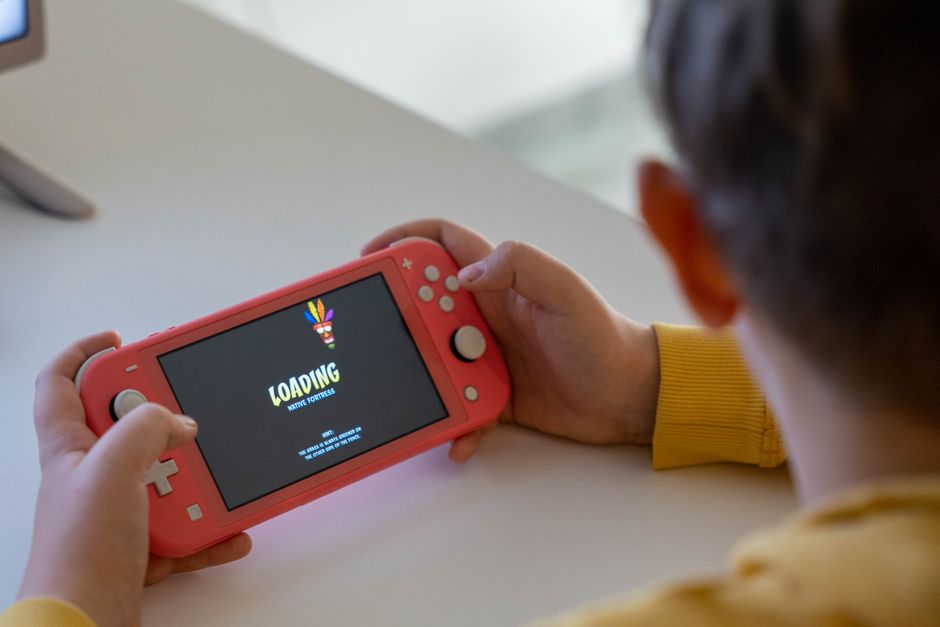
It's 6:40 on a weeknight and your ten-year-old is holding the tablet at arm's length, negotiating like a tiny lawyer: "Just ten more minutes, I'm literally one level from the boss." You've heard this exact sentence, or one close to it, maybe four times this week already. Screen time rewards for kids sound simple on paper, earn the screen, do the task, everyone's happy, but in practice most families end up stuck in the opposite pattern: the screen comes first, and the chores, the reading, the actual responsibilities get squeezed into whatever's left. Kids ages 8 to 10 now average around 6 hours of screen time a day, and for ages 8 to 12 it's closer to 5 hours and 33 minutes of pure entertainment time, not counting homework. That's not a judgment on any one household. It's just the water everyone's swimming in right now, and it changes the whole conversation about rewards.
The idea of using screen time as a reward isn't new. Parents have been trading it for chores and homework for decades. What's different now is the scale. When a device is already the default activity, "you can have your tablet if you finish your tasks" stops being a reward and starts feeling like negotiating for something your kid half assumes is theirs anyway. That shift is why so many screen-time reward systems fizzle out fast, not because the concept is flawed, but because the setup around it usually is.
The hours we're already losing before the reward even starts
Here's the uncomfortable math. Two-year-olds are logging about 129 minutes of screen time a day, more than double the guideline. Preschoolers aged 2 to 5 average 4 to 5 hours against a recommendation of under one. By age 10, 42 percent of kids already have their own smartphone, and that number jumps to 71 percent by age 12. None of this is about any single parent doing something wrong. It's about a device that's genuinely built to be the most interesting thing in the room, competing against teeth brushing, bed making, and a ten-minute reading log that just can't compete on excitement.
That competition is exactly why screen time works so well as a reward, when it's set up right. It's not that screens are bad and should be rationed like medicine. It's that a reward only has power if it's something the child genuinely wants and doesn't already have unrestricted access to. If the tablet is already sitting on the counter, available most of the day, there's nothing left to earn. The families who get the most mileage out of screen time rewards are usually the ones who've made the screen a little scarcer first, not punitively, just enough that earning it means something.
Guarda Sparky in azione
Una mascotte, stelle e premi scelti insieme - in un'unica app per la famiglia.
Turning "ten more minutes" into something a kid actually earns
One mother of a nine-year-old described exactly the struggle behind this article's research: her son resisted routine, hated chores, and the tablet had become the thing she threatened to take away rather than the thing he worked toward. The flip that helped wasn't a new app or a stricter rule. It was reversing the direction of the sentence. Instead of "no tablet until your room is clean," it became "twenty minutes of tablet time once your morning list is done." Same outcome, same effort required, completely different emotional tone. One is a punishment hanging over the day. The other is a target he's walking toward.
Behavioral research backs this up pretty plainly: rewards work best when they're consistent, predictable, and tied to effort rather than to some perfect, unbroken outcome. That last part matters more than people expect. If a child loses the reward because they forgot one step out of five, or because the room is "clean" but not "clean clean," the system starts to feel arbitrary, and kids check out of arbitrary systems fast. The goal is to tie screen time to effort shown, not to a flawless result judged by an exhausted parent at 7pm.
This is also where a lot of families find that letting the child see their own progress, rather than hearing it secondhand from a parent, changes the tone completely. Something like Sparky works well here because the child checks off their own tasks and watches the stars add up toward something they picked themselves, screen time or otherwise, instead of waiting for a parent to remember, announce, and referee the whole thing.
Five ground rules that keep the system from turning into begging
A reward system built on good intentions can still collapse by week two if a few practical details aren't nailed down early. These are the things that tend to separate the systems that stick from the ones that quietly die on the fridge.
- Decide the exchange rate before you start, not in the moment. Something like "fifteen minutes of earned screen time per completed morning routine" needs to be fixed in advance, because negotiating the rate in real time, mid-tantrum, is a losing game for everyone.
- Keep the task list short enough that a child can hold it in their head. For ages 7 to 9, that's roughly three to five things, matching the window where their focus naturally holds, somewhere around 12 to 15 minutes per task before attention drifts.
- Separate "screen time as reward" from "screen time as babysitter." If screens are already filling the gaps during dinner prep or a work call, there's nothing left to earn, and the whole system loses its leverage.
- Let the reward menu include non-screen options too. A child who gets to choose between twenty minutes of a game or staying up ten minutes later to read with a flashlight starts treating screen time as one option among several, not the only currency that matters.
- Build in a grace day. If a child is sick, had a rough night, or the routine just didn't happen because life got in the way, treat that as normal rather than a broken streak. Kids who feel punished for an off day tend to disengage from the whole system faster than kids who get a quiet pass once in a while.
What to try this week, step by step
If you want to test this without overhauling your whole household, here's a version that doesn't require buying anything or rearranging your evenings.
- Pick two to three daily tasks your child already half-does, things like making the bed, packing their own backpack, or a ten-minute reading block, rather than inventing brand new chores from scratch.
- Set the screen time reward at a fixed, modest amount, somewhere between fifteen and thirty minutes depending on age, and write it down somewhere visible so nobody's relitigating the number every night.
- Let your child see their own progress during the day, whether that's a simple checklist, a whiteboard, or an app that doesn't require you to be the one tracking it. The less you have to remind, the longer this lasts.
- Give it two real weeks before judging whether it's working. The first few days often go suspiciously well because the novelty is doing the work; the real test comes once that wears off.
- When it starts slipping, which it will, resist the urge to add more rules. Usually the fix is smaller: one task was too vague, the reward felt too far away, or a grace day was overdue.
What you're aiming for isn't a perfect streak or a flawless chart. It's the moment your child starts asking "did I earn my time yet?" instead of you asking whether they've done their tasks. That's a small shift, but it's the one that actually takes the nagging off your plate.
None of this erases the bigger picture, the hours, the averages, the fact that screens are genuinely everywhere now. But screen time rewards for kids don't have to be about fighting that tide. Done with a little structure and a lot of consistency, they can be one of the few tools that turns a source of daily friction into something your child is quietly proud to work toward, one checklist, one earned twenty minutes, at a time.
Scarica Sparky gratis
Accesso anticipato, niente pubblicità e niente acquisti in-app - solo tu e tuo figlio.