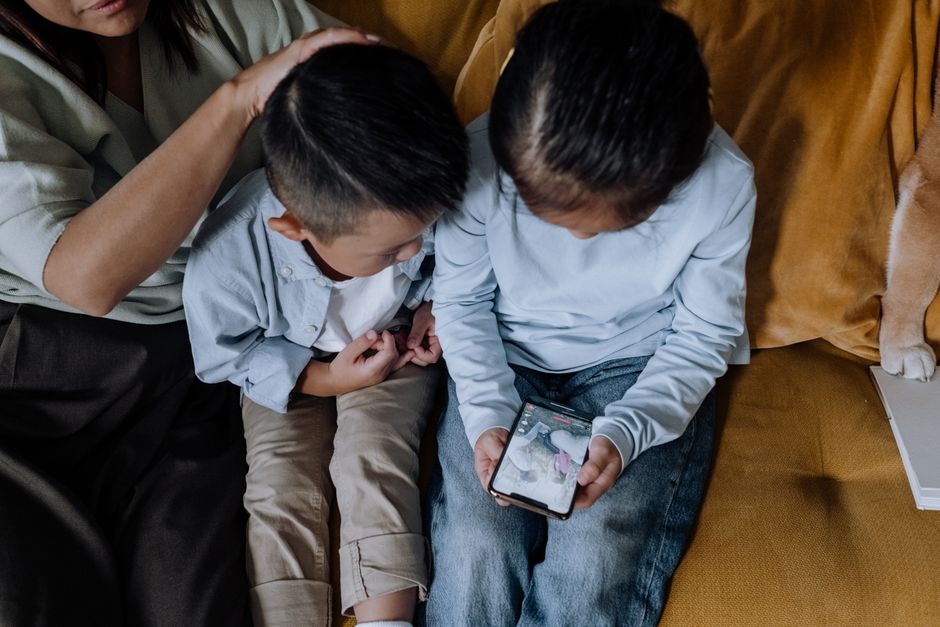
The tablet is still warm in her lap at 4:22, and the backpack has not been opened. You asked once at 4:05. You asked again while the snack bag crinkled. You are already doing the math in your head: fifteen minutes for unpacking, ten for a snack that is not a second screen, twenty if homework even starts. None of that math is happening on her clock. It is happening on yours, and you can feel the evening shrinking before dinner is even on the stove.
That squeeze is why parents type kids time management app into a search bar at 9 p.m. You are not hunting for another grown-up calendar with cartoon stickers. You want the next hour to stop living only in your head. Most chore apps for kids add a layer of management rather than removing one. Kids 8–12 average 5 hours 33 minutes of entertainment screen time per day, according to Common Sense Media. By 10, 42% of US kids have a smartphone; by 12 it is 71%. A University of Minnesota longitudinal study found that children who started doing chores at ages 3 and 4 were more self-sufficient and successful in their mid-20s than those who began chores as teenagers or not at all (Rossmann, 2002). The real fight is not “more productivity.” It is which 15 to 20 minutes you protect before the next episode starts itself.
Focus windows are short on purpose. Ages 4 to 6 hold about 10 to 12 minutes. Ages 7 to 9 hold 12 to 15. Ages 10 to 12 hold 15 to 20. Adult Pomodoro clocks ignore that. Paper lists ignore it too. You end up as the family timer, the family reminder, the person who still knows whether the shoes made it to the mat. Parents say it plainly: they have downloaded and deleted a lot of habit apps. Virtual coins nobody cares about. Sticker charts that last about two weeks. You are still the program manager. This piece is about a smaller clock, owned by the child, that actually fits a Tuesday after school.
What “time management” even means at age six versus age eleven
At six, time is not a calendar. It is a feeling. “Five more minutes” sounds like forever or like nothing, depending on the game. If you hand a first grader a long list and a grown-up stopwatch, you have not taught time. You have taught them that you will stand there until the list is done. One mother of a six-year-old noticed that her son could finish putting away blocks if the job was one picture and a short countdown. The same child melted when three jobs sat on the fridge at once. That was not laziness. That was a brain that still needs one container at a time.
At nine or eleven, the story changes, but not as much as we hope. They can read a clock. They still will not feel the evening closing unless something visible is counting. A 9-year-old who “really struggles with routine, being active, and chores” is often not refusing work. He is losing the start. Randomly asking kids to do chores after a long school day is how you get a dusty kitchen-wall list. The list did not fail because it was paper. It failed because it never owned the next twelve minutes. You still had to read it out loud.
Age-appropriate chores matter more than fancy features. Make their own beds every morning is a real job for many seven-year-olds if the standard is “covers pulled up,” not hotel corners. A ten-year-old can run a 15-minute homework start, then a snack, then a short tidy. Keep the block inside their focus window. When the block is longer than their attention, they drift back to the screen that already won the afternoon. You are not competing with a chore chart. You are competing with six hours of glow.
Ownership is the piece most tools skip. Completing a task because you hovered is not time management. It is compliance under supervision. Parents describe the same loop: kids resist or forget without constant reminders, enthusiasm fades, they check boxes with no feeling of “this is mine,” and the adult still carries almost all of the mental load. The goal is not a prettier list. It is the sentence “I am no longer the chore tracking app for the family.”

Guarda Sparky in azione
Una mascotte, stelle e premi scelti insieme - in un'unica app per la famiglia.
Why most kids time tools collapse after the novelty week
You already know the two-week pattern. Sticker charts and similar systems lose appeal and stop working after about two weeks. Apps lose spirit. Notifications fire when nobody is home. Kids mark things done without doing them. Streaks quietly turn into a score you did not mean to keep. One parent said they had been through so many chore and routine apps trying to get basic stuff done without the daily nagging. Another said they still felt like the program manager, even with an app open.
Heavy gamification does not fix that. Fifteen character levels and forty badges still need you to tap approve. Virtual currency sits unused. A $7.99 subscription next to a free paper list is a hard sell when you are tired. Ads on a child’s screen feel wrong. Shared tablets hate extra logins. Multi-parent homes break when only one adult remembers the password. If setup is too clever for a busy morning, you will do the job yourself. “It is easier to just do it myself” is not a character flaw. It is what happens when the tool is heavier than the sock on the floor.
Rewards get a bad reputation they only partly deserve. “This feels like bribing” is a fair fear if the prize is random and huge. Behavioral work is boring and consistent: rewards that are predictable, tied to effort, and chosen by the child. Real rewards beat coins. Ice cream. A small toy they actually pick. One parent told us a Friday ice cream trip replaced a nightly 20-minute standoff over toothbrushing. That is not magic. That is a finish line the child can see this week, not a leaderboard they will ignore by Thursday.
Timers fail the same way when they copy adult work culture. A rigid 25-minute block feels punitive to a seven-year-old. Younger kids do not care about long stats or consecutive-day counts. Illness, late sports, a hard day: if those break a streak with no grace, the number becomes quiet evaluation. Gentle streaks with grace days keep the tone light. Routines matter more than perfect consecutive days. Photo proof, when a family wants it, lets a child finish and a parent approve from the phone without turning the kitchen into a hearing. None of that requires a 13+ maze of accounts if the child is six.
A Tuesday clock you can actually hand to them
Start smaller than you think. Pick one window, not the whole household constitution. After school is honest: snack, bag, one short job, then homework start. A kids routine app works best when it owns one window, not the whole evening. Keep the first work block inside their age window. Ten minutes for a kindergartener. Fifteen for a third grader. You can add a second block later. You cannot add dignity back if the first session already felt like a lecture.
Write jobs they can finish without you narrating. “Tidy room” is a trap. “Put dirty clothes in the basket” is a job. “Open the folder and put the worksheet on the table” is a job. Recurring tasks beat random asks. The same three after-school moves, every school day, until they feel like a path, not a surprise. If two adults share evenings, both of you use the same list. Inconsistency is how kids learn that one parent is the real app and the other is optional. If two adults share evenings, both point at the same list.
Put the list where they look, not where you lecture. Their screen, a shared tablet in shared-device mode, a simple child view with stars they understand. Task-level timers help more than a giant countdown for the whole afternoon. Visual countdowns are kinder than a voice in the doorway. If they have ADHD wiring or just a long school day, short focus sessions reduce the freeze. You are matching how children’s attention works, not how a productivity blog assumes it works.
Choose the reward together, then keep it boringly consistent. Stars toward something worth having. Update the prize when it goes stale; that is normal, not failure. Do not use extra entertainment screen as the only currency if you are already fighting six hours. A walk, a later story, a small treat on Friday still counts. If you try Sparky, keep it as a list they run, not a dashboard you manage from the couch. Completely free and ad-free matters here because another subscription is the objection that kills the experiment before Wednesday.
Expect cheating and fading. Kids will tap done too early. You answer once, calmly, and you reset the job, not the relationship. Novelty will dip. That is when you change one task or one prize, not the whole system. Grace days for sick nights keep the streak from turning mean. You are teaching them to start, to stop, and to see a block of time as theirs. That is executive function in street clothes, not a lecture on calendars.
This week: three moves, then stop tinkering
1. Name one window tonight. After school or before bed. Not both. Write three age-appropriate tasks in language a tired child can read. Attach one timer that matches their age, not yours. Agree on one real reward they help pick. Tell them you will not stand in the doorway unless they ask. Then you practice keeping that promise, which is harder than downloading anything.
2. Run it once tomorrow without additions. If they stall, shrink the block by a few minutes instead of raising your voice. If two parents are in the house, both of you point at the same list.
3. By Friday, audit what finished without you. Keep those. Drop the ones that still need a speech. Chores become more like a routine when the clock is short, visible, and theirs. You will still have messy Tuesdays. You might also get a backpack that opens at 4:22 without a third reminder, which is the whole point of looking for a kids time management app in the first place.
You do not owe anyone a perfect system. You owe your kid a few protected minutes that are not another autoplay. Start there. Adjust next week. That is enough.
Scarica Sparky gratis
Accesso anticipato, niente pubblicità e niente acquisti in-app - solo tu e tuo figlio.