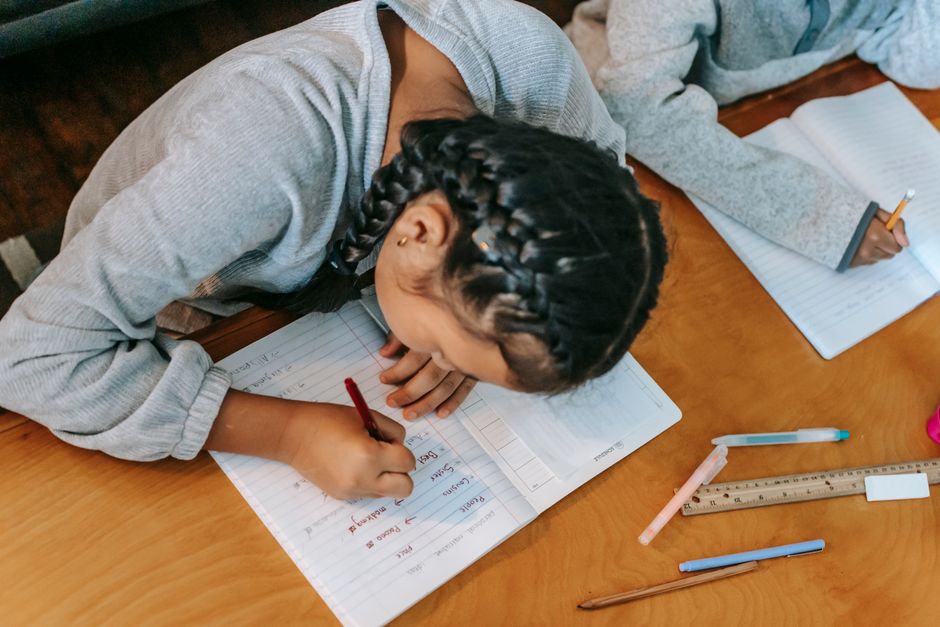
The backpack hits the floor with that familiar thud. A crumpled worksheet slides out, still smelling like the classroom. Your child is already halfway to the sofa, asking if they can "just rest for a second." You know what that second becomes. Ten minutes later the tablet is on, a sibling is hungry, and the worksheet is under a jacket. You hear yourself say the same sentence you said yesterday, and the day before that.
That is the real starting line for a homework routine for kids. Not a pretty chart. Not a speech about grades. A tired after-school hour where screens, snacks, and leftover school energy all fight for the same short window. According to Common Sense Media's 2021 report, children ages 8 to 12 average 5 hours and 33 minutes of entertainment screen time a day — not counting schoolwork. Homework does not lose because your child is lazy. It loses because the competing option is brighter, closer, and requires zero starting effort.
You are not imagining the mental load either. Parents say they become the family tracking system: who started, who stalled, who "forgot" the last two problems. Charts go up. Charts get dusty. Apps get downloaded and deleted. The complaint is almost always the same: "We've been through so many chore and routine apps trying to get the kids to do basic stuff without the daily nagging." Homework sits in that pile with teeth brushing and backpacks. It is a daily task that needs a start time, a finish line, and a child who can see it without you standing in the doorway.
This piece is about building that start time in a real home, with real ages, and with the honesty that some evenings will still wobble. You will get a sequence you can run tonight, numbers that match how long kids can actually focus, and a way to stop being the person who holds the whole plan in your head.
The after school routine is not a homework hour unless you name it
Most fights are not about math. They are about the unnamed gap between "I'm home" and "now we work." If nothing is named, the snack-and-screen slide wins. One mother of an eight-year-old described it as walking into a house that already had a plan, and the plan was not hers. Coat off. Fridge open. Show queued. By the time she mentioned the worksheet, she was interrupting joy, not starting a routine.
Name a next step before anyone sits down. It can be small. Water, bathroom, five minutes of movement, then the table. The point is not a family meeting. The point is that homework has a slot that does not wait for you to remember it. In a family with two children aged six and nine, the older one used to "need to decompress" until dinner. Decompress meant a full episode. After they agreed the decompress was a snack and a stretch, not a show, the worksheet stopped being the enemy of rest. Rest happened first. Work happened second. The fight moved because the order was no longer up for debate every afternoon.
Keep the slot short on purpose. Pediatric focus windows are narrow: about 10 to 12 minutes for ages 4 to 6, 12 to 15 minutes for 7 to 9, and 15 to 20 minutes for 10 to 12. That is not a productivity podcast talking. That is how long a child's attention usually holds before they need a reset. If you ask a seven-year-old for forty silent minutes, you are not teaching grit. You are teaching them that homework is a wall. Two or three short blocks with a stretch between them beat one long siege.
Protect those minutes from the bigger numbers. If a ten-year-old already has hours of screen time in a day, homework is not competing with "a little rest." It is competing with a habit that already owns the evening. You do not need a lecture about screens. You need a start that happens before the device is even in the room. Put the tablet in a bowl by the door. Put the worksheet on the table while the snack is still in the bowl. Sequence beats willpower.
Voir Sparky en action
Une mascotte, des étoiles et des récompenses choisies ensemble - dans une seule app familiale.
Make the homework schedule visible so you stop being the reminder
Kids resist or forget when the task lives only in your mouth. If they cannot see what "done" looks like, they wait for you to say it. That is how you stay the program manager even after you bought a chart. Paper lists on the kitchen wall go dusty for the same reason sticker charts fade after about two weeks: the child is not running the system. You are.
Write the homework block as a few age-appropriate tasks, not one giant "do homework." For a five-year-old that might be: take the folder out, sit at the table, finish the two tracing pages, put the folder back. For a nine-year-old: open the assignment, set a 15 minute timer, complete the first section, check the backpack for tomorrow. Each piece is something they can mark without you hovering. Ownership starts when they can point at a next action without asking you what comes next.
Timers help when they match the child, not when they feel like a courtroom. A visual countdown for 12 minutes is a focus session. A buzzing adult Pomodoro that scolds them for standing up is a fight. If your child has a hard time starting, the timer is for the start, not the whole packet. "We work until the circle is empty, then we stand up." That is enough. Parents of kids who struggle with routine often want a checklist and a reward system because the start is the hard part, not the content of the worksheet.
Rewards work when they are real, predictable, and tied to effort. In-app points only work if the child opens the app. A tired nine-year-old on a Tuesday doesn't open the app. Ice cream on Friday, a small toy they actually pick, extra time with you, a later Saturday cartoon: those are things a child can picture. Consistency matters more than size. If stars only appear when you remember, you are back to being the tracking app. If the child can see progress toward something they chose, homework becomes a path, not a surprise quiz on your mood.
You can keep this analog. A card on the table, a timer, a jar of stars. You can also put the same sequence on a child's own screen so they open it without you asking, the way some families do with daily habits in Sparky. Either way, the test is simple: can they start without your voice? If the answer is no, the system is still in your head.
Run the same short sequence even when the assignment looks huge
Huge packets scare kids and parents in the same way. You see twenty problems. They see forever. Break it the way you would break a messy room: one surface at a time. Sit. Open. First five. Check. Then the next five. You are teaching executive function without using the phrase. Starting, switching, finishing. That is the skill. The worksheet is just the material.
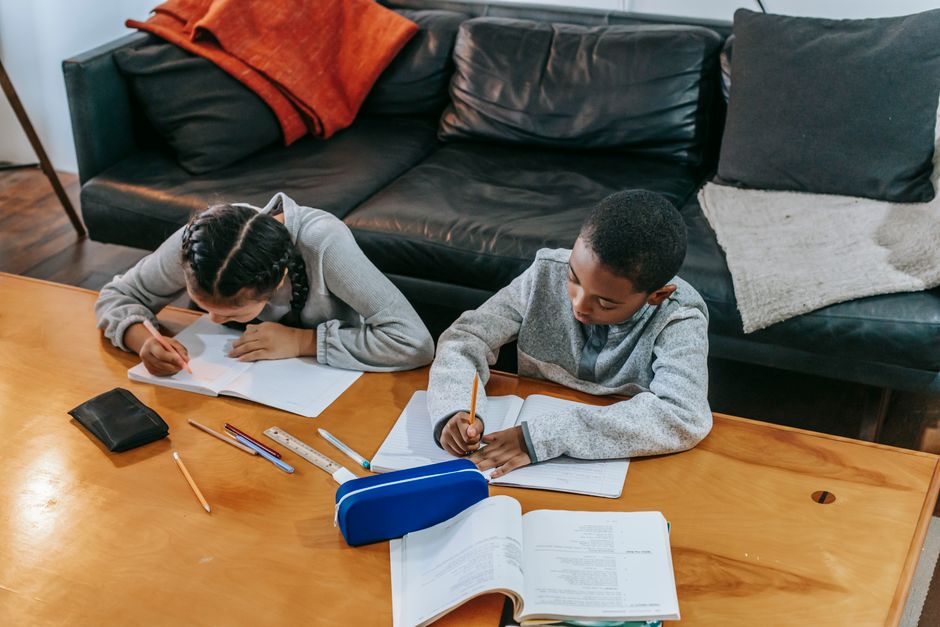
Stay nearby without narrating every line. One mother noticed that if she sat at the other end of the table with her own quiet task, her seven-year-old stayed in the chair. If she left to start dinner and kept calling from the kitchen, the pencil stopped. Presence is not the same as coaching every answer. If they are stuck, ask which part is stuck: reading the question, knowing the first step, or writing it down. Kids often freeze because the whole page feels like one blob.
Expect ordinary setbacks. Illness, late sports, a substitute teacher who sent home a surprise packet. A routine that treats every missed day as a broken streak becomes quiet pressure. Gentle streaks with grace days keep the tone light. You want "we usually do this after snack," not "we ruined the month." Parents already carry enough evaluation. Homework does not need to become another scoreboard you both dread.
Multi-adult homes need the same script. If one parent allows a show first and the other wants the table first, the child is not defiant. They are shopping for the easier adult. Write the order once. Snack, movement, homework block, then screens. Put it where both adults can see it. A sticky note inside the pantry door works. Both adults see it when the snack comes out. The child cannot play one against the other if the answer is already on the wall. Consistency is less glamorous than gamification, and it is what actually holds after week two.
Do not skip the close. Homework is not done when the last number is written. Folder in backpack. Bag by the door. Tomorrow's permission slip on top if there is one. That last minute is what saves the morning. It is also a task a child can own. You are not "just doing it yourself" because it is faster. You are training the end of the loop so you are not hunting for a worksheet at 7:40 a.m. with a sock in your hand.
Tonight: one table, one timer, one finish line
You do not need a new personality by Monday. You need one protected block this evening. Before anyone sits, say the order out loud: snack, bathroom, table. Put the device in another room. Set a timer that matches their age: 10 minutes if they are little, 15 if they are in the middle grades, 20 if they are older and the work is real. When the timer ends, stand up together, even if the page is not finished. Then do a second short block if needed. Stop while they can still feel successful.
Pick one real reward for the week, not a floating maybe. Let them choose it. Stars toward Friday ice cream beat a speech about responsibility. Responsibility grows when they can predict the path. If they mark a step done without doing it, do not turn it into a trial. Walk back, finish the step, then mark it. Calm and boring wins. Drama teaches them that homework is a show you both star in.
If it is easier to do it yourself tonight, that is a real feeling. It is also how you stay the only person who knows where the folder lives. Hand over the smallest piece you can live with: taking the papers out, starting the timer, putting the folder away. Former Stanford dean Julie Lythcott-Haims, drawing on decades of research, argues that children who do regular chores develop stronger work habits and adult resilience. Homework is one of those early practices. Not because a worksheet is magic, but because showing up for a short, named task is a muscle.
Some evenings will still unravel. You will still be tired. They will still ask for "one episode first." The routine is not a personality transplant. It is a repeated after-school shape: a start you can see, a block that fits a child's attention, a finish that belongs to them. Tomorrow you run the same shape again. That is enough for now.
Téléchargez Sparky gratuitement
Accès anticipé, sans pub et sans achats intégrés - juste vous et votre enfant.