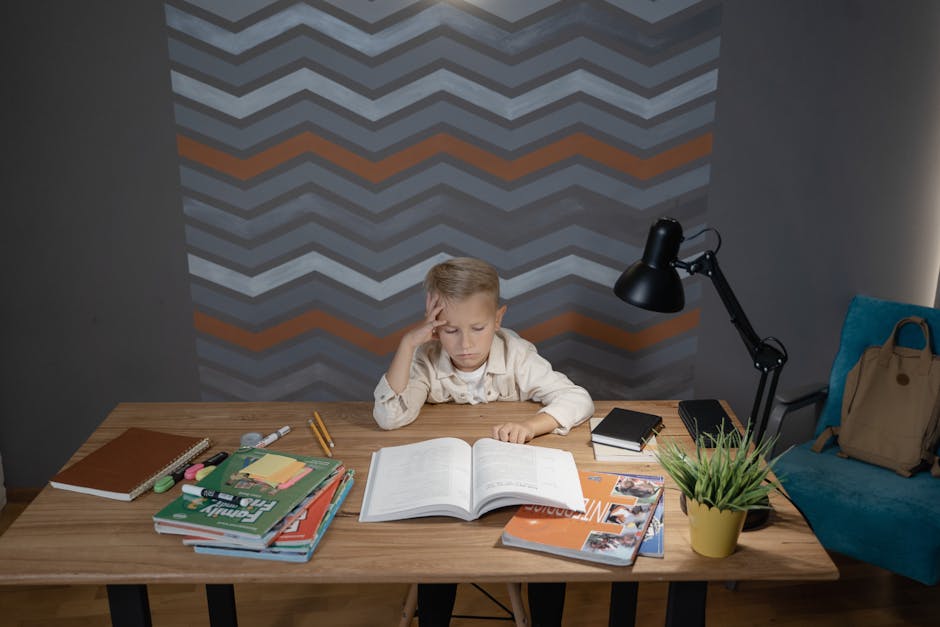
Six worksheets, one math packet, and a permission slip that needs a signature by tomorrow are spread across the coffee table in no particular order, and your daughter is on the floor sorting them by color instead of subject. She's not being defiant. She genuinely doesn't know where to start, and neither, if you're honest, do you at 6:15 on a Tuesday. This is the exact moment a homework checklist for kids is supposed to solve, and it's also the exact moment most homework checklists fail, because the list you wrote in September assumed a level of organization your nine-year-old hasn't grown into yet. A good checklist isn't a to-do list you hand down. It's a map of the small decisions a kid has to make before they even open a book, and most lists skip straight past those decisions to the part where the work gets done.
Here's what usually happens instead. You print something off Pinterest in August, tape it above the desk, and it works beautifully for about twelve days. Then a worksheet gets left in a locker, a Wednesday gets busy, and the list quietly becomes wallpaper. Nobody looks at it again until you're both frustrated and it's 8pm. That's not a failure of willpower on anyone's part. It's a design problem. Kids ages 7 to 9 have a real focus window of roughly 12 to 15 minutes before their attention naturally drifts, and 10 to 12 year olds max out around 15 to 20. A checklist that assumes a kid can sit and grind through 45 minutes of homework in one uninterrupted block is fighting biology, not laziness.
The four decisions a homework checklist actually needs to make for a kid
Before a child can do the homework, they have to answer four questions, usually without anyone asking them out loud: what do I have, where does each thing go, how long will it take, and what happens when I'm done. Most paper lists only address the first one, if that. A stack of loose papers on the counter tells a kid "you have homework" but not which subject comes first, whether the reading log counts as ten minutes or thirty, or what the reward is for finishing before dinner instead of after. When a checklist answers all four questions instead of one, the nagging drops almost immediately, because the kid isn't waiting on you to make the next decision for them.
This is also where screen time sneaks into the conversation, whether you invite it or not. Kids ages 8 to 12 are logging an average of 5 hours and 33 minutes of entertainment screen time a day, not counting schoolwork, and that number is only climbing as phones show up earlier. By age 10, 42 percent of kids in the US already have one. Every one of those hours is time that isn't going toward the 15 to 20 minutes of focused, unsupervised work that actually builds independence. The Harvard Grant Study, which followed people for decades, found that early and consistent chore and responsibility habits were tied to greater professional success and happiness as adults. Homework is the daily rehearsal for exactly that kind of self-direction, which is part of why it's worth protecting a real slot for it instead of letting it get squeezed between shows.

Voir Sparky en action
Une mascotte, des étoiles et des récompenses choisies ensemble - dans une seule app familiale.
Building the checklist by age, not by hope
One of the most common mistakes is writing a checklist for the kid you wish you had rather than the one currently avoiding eye contact at the kitchen table. A six-year-old and an eleven-year-old need completely different lists, even in the same household. Here's a starting point broken out by what's realistic for each stage:
- For ages 5 to 7, keep the list to three or four items with pictures, not paragraphs: unpack the backpack, put the homework folder on the table, do one worksheet with a parent nearby, pack the folder back up when it's done.
- For ages 8 to 9, the list can grow to five or six steps and start including sequencing: check the agenda or planner first, do the hardest subject before the easiest one, take a five-minute break between subjects, and have a parent check the work before it goes back in the bag.
- For ages 10 to 12, the checklist should shift from step-by-step instructions to a self-check format: gather everything needed for tonight, estimate how long each subject will take, work in one or two focused blocks of 15 to 20 minutes with a short break between, and confirm everything is packed for tomorrow before screen time starts.
- Across every age, build in a line for "what I'm stuck on," even if it's just a blank space to write one word. It gives a kid permission to name confusion instead of quietly giving up and calling it done.
Notice that none of these lists include "do all your homework" as a single item. That's not a task, it's a category, and categories are exactly what kids stall out on. Break the category into the three or four moves that actually make it happen, and the resistance drops because there's no ambiguity left to argue about.
Why the list on the wall goes quiet after two weeks, and what actually keeps it alive
Parents describe this pattern constantly: the chore or homework chart on the kitchen wall gets dusty within a month, not because the system was bad but because nobody updated it once the child's needs changed. A checklist that's right for October is often wrong by January, once a kid has outgrown one of the steps or added a new subject that needs its own line. If you're the one holding the list open in your head, checking it, reminding about it, and re-explaining it every evening, you're not really using a checklist. You're still the tracking system, just an unpaid, exhausted one.
Two things tend to fix this without turning into a whole project. First, review the list every two or three weeks, not every day. A five-minute conversation at the start of a Sunday, asking what's working and what feels pointless, keeps the list alive because your kid had a hand in updating it. Second, separate the reward from the streak. Real, chosen rewards, like picking the movie for family night or a small treat they actually want, tend to hold attention far longer than virtual points nobody cares about. And streaks work better when they're gentle, with grace days built in for the night someone's sick or there's a late practice, rather than a hard reset that makes one missed evening feel like starting over from zero. This is exactly the gap a tool like Sparky tries to fill: the checklist lives on the child's own screen, the streaks stay light instead of punishing, and you're not the one holding the whole system together from memory.
It's also worth saying plainly: a checklist that requires you to check every box for your child isn't building independence, it's just moving the nagging from verbal to visual. The goal is a system your kid can look at on their own, without you hovering in the doorway asking if the math sheet is done yet. That shift, from you managing the list to your child managing it, is the entire point, and it usually takes a few weeks of stepping back before it feels natural for either of you.
What to try this week
Start smaller than you think you need to. Pick one weeknight, not the whole week, and write a checklist with your child that has no more than five items on it, using their words for the steps, not yours. Put it somewhere they'll actually see it, whether that's taped to the desk or set up on their own device, and resist the urge to remind them about it out loud once it's posted. Let the list do the reminding. If it flops the first night, that's information, not failure, adjust one item and try again the next night. Give it two weeks before deciding whether it's working, because the first few days are always the shakiest, and most families quit right before the routine would have settled in.
None of this needs to be perfect on the first try, and it won't be. Homework will still be a little bit of a fight some nights, because that's just what happens with kids and tired brains at the end of a school day. But a checklist that actually matches your child's age, gets revisited every few weeks, and hands the decisions back to them instead of to you will quietly do more than any amount of reminding ever could.
Téléchargez Sparky gratuitement
Accès anticipé, sans pub et sans achats intégrés - juste vous et votre enfant.