
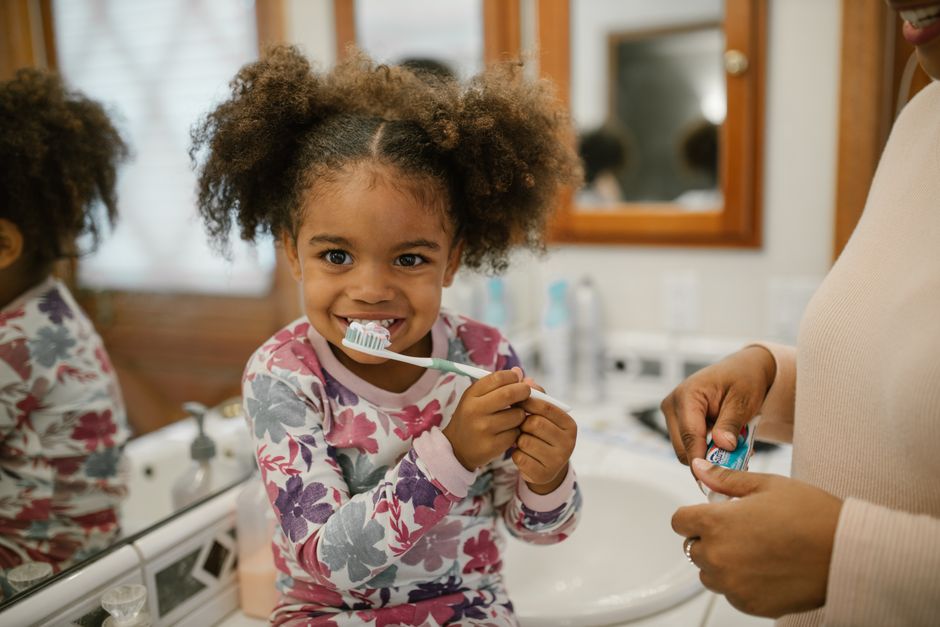
The toothpaste cap is off again. You hear water, then silence, then a triumphant “Done!” that lasted maybe twelve seconds. You ask the usual question. They swear they brushed. You can still see last night’s dinner on the back molars when they grin.
Twice a day sounds tiny until you add it up. Fourteen moments a week. Fifty-six in a month. You are the one counting them, and you are tired of being the timer, the witness, and the prosecutor. A teeth brushing tracker for kids is not a cute extra. It is a way to move that count off your shoulders and onto a list the child can see without you standing in the doorway.
This is not about perfect enamel or a lecture on cavities. It is about the same fight that shows up with shoes, backpacks, and bedtime. Kids ages 4 to 6 can hold focus for about 10 to 12 minutes. Ages 7 to 9 get 12 to 15. Ages 10 to 12 stretch to 15 to 20. Brushing only needs two of those minutes, twice. The problem is not the minutes. It is that nothing in the house currently belongs to them except the argument.
Parents say the same thing in different words: they have been through charts, they have downloaded and deleted habit apps, virtual coins nobody cares about, and a kitchen-wall list that got dusty. They want age-appropriate tasks the child actually tracks. They want real rewards, not a performance review. And they want to stop being the family brain for something as small as mint foam.
A father of two in a three-bedroom house ran a fridge chart for six weeks. Morning boxes filled themselves. Night boxes stayed empty unless he stood in the hall. He was not dealing with a lazy child. He was dealing with a list in the wrong room. After brushing, nobody walked past the fridge. The tracker has to live where the toothbrush lives, or it becomes one more thing you remember for them.
That is the job a teeth brushing tracker for kids is actually hired to do. Not to shame. Not to turn a bathroom into a clinic. It is hired to make two short, boring, easy-to-fake tasks visible, so you can stop using your voice as the only record in the house.
Why two minutes still needs a visible score
Brushing is invisible work. When a child makes a bed, you can see the duvet. When they brush, you get a wet toothbrush and a story. That gap is where the third reminder lives. You are not “overreacting.” You are filling in missing evidence with your voice.
Kids also treat morning and night as two different countries. Morning is rush. Night is collapse. If the tracker only lives in your head, night always loses. One mother of a six-year-old noticed her son would “win” mornings after school photos started, then skip nights for a week because nobody was late for anything. The pattern was not laziness. It was a missing evening slot that felt optional.
Screen time makes the slot even smaller. Children ages 8 to 12 average around 5 hours and 33 minutes of entertainment screen time a day, according to Common Sense Media. Two minutes of brushing is easy to skip when the next dopamine hit is already queued. You are not competing with toothpaste. You are competing with a rectangle that never asks for two minutes of effort.
A tracker works when it is dumb and local. Same two tasks, same place, and one rule: mark it after the foam, not before. Photo proof is optional and useful for the child who marks things done without doing them. You approve from your phone. The kitchen does not become a courtroom. You are no longer the chore tracking app for the family on this one habit, which is often the habit that starts the whole morning fight.
A shift-working nurse with an eight-year-old learned this the hard way. She could not stand in the bathroom at 7:10 a.m. on the days she left at 6. Her partner filled in, then forgot, then over-corrected with a lecture. The child learned that brushing was a mood, not a mark. Once the two tasks sat on a shared list in the bathroom, the empty night box did the reminding. She still helped with the back teeth on her days off. She stopped being the only memory in the house.
There is a hidden cost to staying the witness. Every extra “Did you brush?” trains the child to wait for your voice before the habit exists. After a few hundred prompts, they are not forgetful. They are outsourced. Dentists often want two minutes, twice a day, which is 14 slots a week and 728 a year. If even half of those slots need a parent standing in the doorway, you have signed up for hundreds of inspections. The tracker is cheaper than that. It does not make the enamel. It makes the count belong to them.
Photo proof has a trade-off you should name out loud. It catches the wet-brush fake. It also can turn a two-minute job into a performance. Use it for a short stretch when the checkmarks are lying. Drop it when the foam is real for a week. If you keep the camera forever, you have not built a habit. You have built a surveillance job you will eventually resent, and a child who brushes for the photo instead of for the teeth.
Mira Sparky en acción
Una mascota, estrellas y recompensas elegidas juntos - en una sola app familiar.
What goes on a brushing chart for kids so it survives week three
Keep the list tiny. Morning brush. Night brush. That is the whole list for the first fortnight. If you add floss, mouthwash, and “put the cap on” on day one, you have built a wall chart that will last exactly two weeks, the fate parents already know.
Write the tasks in the child’s words. “Brush top and bottom” beats “oral hygiene.” For a four- or five-year-old, add a 2 min timer they can see. For a seven-year-old who rushes, the timer is the job, not your hovering. For a ten-year-old, skip the cartoon timer if it feels babyish. Let them own the checkmark. Ownership is the point, not the mascot.
Tie stars to something they actually want. Ice cream on Friday. A small toy they picked. Extra story, not extra screen if screen time already crowds the day. Rewards work when they are consistent, predictable, and tied to showing up, not to a perfect dentist report. You are paying for the habit of starting, not for a lifetime of enamel.
Use grace. Illness happens. A late night happens. If one missed brush breaks a streak and the house goes quiet, the number became a grade. Gentle streaks with a grace day keep the count light. Routines instead of consecutive-day panic. Younger kids do not care about long stats anyway. They care that tonight still counts.
If two adults live in the house, agree on the same two tasks and the same reward. Multi-parent inconsistency kills trackers faster than boredom. One of you cannot be the secret exception. The child will find that door in a day.
A teacher and a warehouse supervisor with a five-year-old and a nine-year-old built a 12-box bathroom chart in one Sunday burst: brush, floss, tongue, timer, cap, song, rinse, “smile check.” By Wednesday the five-year-old was in tears and the nine-year-old was marking boxes in bulk before school. They cut it back to two tasks. Interest returned in three days. The lesson was rude and useful. Volume feels like parenting. Volume is how trackers die in week three.
Use a reward rule you can keep when you are tired. A working range that holds up in real houses:
- Ages 4 to 6: 3 to 5 completed brushes buy a small, same-week prize. Friday is already far away.
- Ages 7 to 9: 8 to 10 brushes (about a week of mostly showing up) buy the prize they named in advance.
- Ages 10 to 12: 12 to 14 brushes, or a two-week stretch, if they want something bigger. They can see a longer runway.
- One grace miss per week does not wipe the board. Two misses in a row means you talk, not that you cancel the whole system.
Name the prize before the first star. “We will see” is not a reward. It is a delay. Write the trade in one line the child can read: 8 night brushes = the Lego set on the shelf, or 5 complete days = extra chapter, not extra tablet. If you pay in screen time, you are feeding the thing that already crowds the slot. Story, outing, choice of dinner, a cheap toy they picked: those hold up better.
Leave these off the tracker until the two brushes are boring: floss, mouthwash, “no snacks after,” “put pajamas on,” and any dental lecture disguised as a task. Stacking bedtime onto brushing feels efficient. It makes the checkmark mean five jobs. When one job fails, they all fail, and you are back in the doorway.
A week of practice that fits a real bathroom
Day one, you set the two repeating tasks together. You do not hold a family meeting. You stand by the sink, you show where the check goes, and you let them press it once after a real brush. That first press is the whole lesson.
Days two to four, you stay nearby but you stop narrating. If they mark it early, you wait. “Show me the foam” is calmer than “You always lie.” If they forget, the empty box is the reminder, not your speech. You can still help with the back teeth. Help is not the same as taking the task back.
Days five to seven, you look at the week, not the drama. Six out of fourteen is a start, not a character flaw. Move the reward closer if two weeks feels like forever to a five-year-old. Move it farther if a nine-year-old is collecting stars for something bigger. Update the prize when interest fades. Sticker charts die because the prize never changes. You change the prize. You do not rebuild the whole system.
Watch for the fake complete. Wet brush, dry mouth. If that shows up, add photo proof for a week, then drop it. The goal is trust with a receipt, then trust without one. Do not turn every night into an inspection forever. That keeps you as the program manager, which is the job you are trying to quit.
If mornings are chaos, park the tracker on a shared tablet in the bathroom, not in your pocket on the bus. Notifications when you are out of the house are easy to ignore. The child needs the list where the toothbrush lives. Recurring tasks, no extra logins, no ads fighting for the same two minutes. Complicated setup dies on a Tuesday at 7:10 a.m.
A split-house week will test this faster than a tidy nuclear one. One seven-year-old lived Sunday to Wednesday with one parent and Thursday to Saturday with the other. Paper charts never survived the backpack. Each house had different rules, so night brushing became optional again. They copied the same two task names in both bathrooms and agreed the stars traveled, using a shared digital list like Sparky so the job moved between houses without another sheet of paper. The child still missed a night. The empty box traveled too. That was the point. The tracker has to be the same job in both places, or the child will treat one house as the holiday from teeth.
Two bathrooms in one house create a quieter failure mode. The child brushes in the upstairs sink and the tracker lives downstairs. Same bug as the fridge chart. Put a list in each room that actually has a toothbrush, or pick one sink as the only legal place for the habit. Convenience beats purity. A tracker nobody can reach at 8:40 p.m. is decoration.
If you share a phone with the child for this, lock the rest of the apps before the two minutes start. A tracker that sits next to a game icon will lose. The bathroom is not a media center. Two minutes, mark, out. That sequence is the practice. The week is only there so the sequence can get boring, which is what success looks like.
What to do tonight, not next Sunday
Pick one brush, not both, if both feel like a mountain. Night is usually the one that slips. Write it once. Agree the star. Agree what the stars buy. Put the list where they can reach it. Then leave the room after the first successful mark, even if you still want to coach the molars.
Expect a dip after the novelty week. That dip is not proof the child is “too young for real responsibility.” It is proof the system needs a small refresh: a new prize, a timer, a grace day, a photo for three nights. It is easier to just do it yourself. You already know that sentence. Research by Marty Rossmann at the University of Minnesota found that children who did household chores from an early age showed better outcomes in relationships and careers as adults. Two minutes of brushing is a chore in disguise. Protect those minutes the way you protect a show they already started.
This week, keep the sprint small enough that Tuesday cannot wreck it.
- Tonight: add one repeating task called whatever they call brushing. Stand at the sink for the first mark only.
- Tomorrow morning: do not add the second task yet unless night already happened without a fight. One solid slot beats two empty ones.
- Midweek: if the box is being ticked early, delay the mark until after foam. If it is never ticked, move the list closer to the toothbrush, not closer to your lecture.
- Friday: pay the prize if they hit the number you named. Do not move the goalposts because the week felt messy to you.
- Weekend: add morning brush only if night is already boring. Boring is the green light.
Give the next 30 days a ceiling so you do not keep reinventing the chart. Weeks 2 and 3, change the prize once if interest drops, and use photo proof for no more than seven days if the wet-brush trick shows up. Week 4, count real slots, not speeches. A usable target is 10 to 12 marked brushes out of 14, with you out of the doorway on most of them. If you are still narrating every circle of the mouth, the tracker is not doing the job yet. Shrink the help. Keep the list.
If you want the child to see their own list, with stars toward a reward they chose, a simple tool like Sparky can sit in the bathroom instead of another dusty paper. Use it or use a notebook. The tracker is the habit of marking the work. The app is optional. Your voice getting quieter is the actual win.
Tomorrow morning, listen for the twelve-second “Done.” Then look at the box. If it is empty, that is the conversation. If it is full, you can keep walking to the kettle. That walk is the whole point of a teeth brushing tracker for kids: not a perfect mouth, just one less fight you do not have to win with your throat.
Descarga Sparky gratis
Acceso anticipado, sin anuncios y sin compras dentro de la app - solo tú y tu hijo.