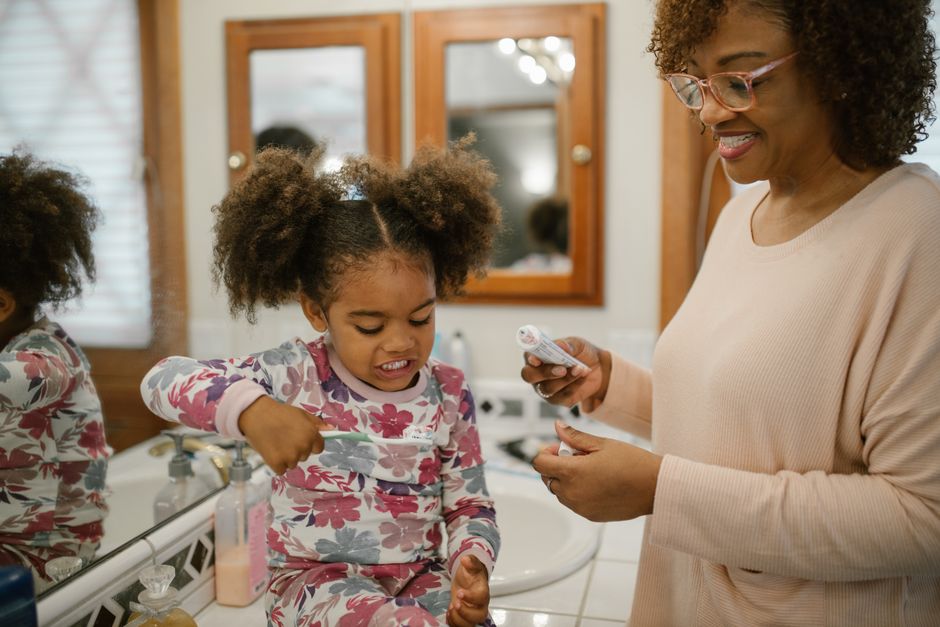
Toothpaste foam sliding down the side of the sink, a brush dangling from small fingers while the bristles never actually touch a molar, your kid humming a song that has nothing to do with the thirty seconds that just passed. If that's the scene in your bathroom most nights, you're not failing at anything. You're just living with a kid whose sense of time hasn't caught up with what two minutes of brushing actually requires. That exact gap, between what should happen at the sink and what actually happens, is why so many parents end up searching for a kids tooth brushing app around 8 PM on a random Tuesday, usually right after a dentist visit that didn't go the way they hoped. A hygienist mentions plaque buildup, or a molar that's starting to look a little gray, and suddenly the sticker chart taped to the mirror two months ago feels like a joke.
Here's the thing nobody tells you up front: brushing isn't really a willpower problem for most kids. It's a time-perception problem wrapped in a boredom problem, with zero visible payoff until a checkup six months away. An adult can tolerate two minutes of mild tedium because we understand the trade. A seven-year-old does not have that wiring yet. So they rush, they skip the back teeth, they call it done at the first sign of mint flavor hitting their tongue. An app doesn't fix the biology. What it can do is make those two minutes feel less like a chore being inflicted on them and more like something they're steering themselves, with a timer they can actually see counting down and a reason to finish that isn't just "because I said so."
Two minutes is a long time when nobody's counting it for you
Ask most parents how long their child actually brushes and you'll get a guess, not a number. That's normal. Nobody stands in the bathroom with a stopwatch every single night. But kids are the same way, except worse, because they genuinely cannot estimate two minutes with any accuracy. Give a nine-year-old a mental countdown and they'll check in at what feels like the halfway point and be shocked to learn only twenty seconds have passed. This is the same reason a ten-year-old asks "how much longer" four times during a ten-minute car ride. Time blindness isn't laziness. It's just how a developing brain works, and it shows up at the sink exactly like it shows up everywhere else.
A visual countdown changes that instantly, and this is where a dedicated app earns its keep over a regular kitchen timer. Watching a bar shrink, or a character on screen doing something while the seconds tick down, gives a child something concrete to track instead of an abstract number they have to trust. It also removes the parent from the role of human stopwatch standing in the doorway saying "keep going, keep going" for two minutes straight, which gets old for both of you by night three. The research on attention spans backs this up loosely too: younger kids do better with short, visually anchored tasks than with open-ended instructions to "just brush well." Nobody brushes well on command. They brush well when there's a clear start, a clear middle, and a clear end they can see coming.
Mira Sparky en acción
Una mascota, estrellas y recompensas elegidas juntos - en una sola app familiar.
Why real rewards beat the sticker chart that's gathering dust
Plenty of parents have tried the laminated chart with the smiley stickers, and plenty of parents have watched it fall apart in under two weeks. It's not a flaw in the parent. Sticker charts run on novelty, and novelty has a short shelf life with kids, especially once the stickers themselves stop feeling special. Virtual coins inside an app have the same problem if there's nothing real behind them. Parents say it plainly in forums and reviews: virtual coins nobody cares about don't move the needle, but earning stars toward something the child actually picked, ice cream on Friday, a small toy they chose themselves, works in a completely different way. The reward isn't the point. The visible progress toward a reward the child had a say in choosing is the point.
This matters more for brushing than for almost any other daily task, because brushing has no natural payoff a child can feel. A made bed looks different. A tidied room looks different. Clean teeth look exactly the same as dirty teeth to a seven-year-old staring in the mirror. Without some visible marker of progress, there's nothing pulling them toward the habit except your voice in the hallway, and that voice gets tired fast. A streak that fills in night after night, paired with a reward the family actually agreed on together, gives the habit a shape it wouldn't otherwise have. This is roughly the gap a Sparky setup tries to close: the child sees their own task, taps it done, and watches the stars add up toward something they chose, instead of you being the one who remembers, reminds, and checks.
Building a brushing routine that still runs itself in week three
The honest failure point for almost every routine, app or paper chart, isn't day one. It's somewhere around day twelve to eighteen, right when the initial excitement wears off and the task starts feeling like, well, a task again. A few things seem to make the difference between routines that survive that dip and ones that quietly die on the kitchen wall, dusty and ignored.
- Keep the task specific enough that a child can self-check it. "Brush teeth" is vague. "Brush until the timer ends, top and bottom" gives them something concrete to measure themselves against, which matters because kids want to know they did it right, not just that they did it.
- Let grace days exist. If a streak breaks the first time your child is sick or falls asleep in the car on the way home, that streak becomes a source of guilt instead of motivation almost overnight. Gentle streaks with grace days keep the number feeling like encouragement rather than a test they can fail.
- Pick the reward together and revisit it. A reward that excited your child in September can feel stale by November. Checking in every few weeks about what they're actually working toward keeps the whole thing from running on autopilot and losing its pull.
- Resist checking every single brush for a teaching moment. If every night ends with "you missed a spot," the task starts carrying tension it didn't have before, and that tension is what makes kids start avoiding the task altogether.
None of this requires a complicated setup. It requires consistency in the few variables that actually matter, and it requires you to step back from being the one who notices, reminds, and double checks every single night. That stepping back is usually the hardest part for a parent, not the easiest, because it means trusting a seven-year-old with something you've been managing for years.
Three things worth setting up before tonight's brushing
You don't need a week of planning to test this out. Three small decisions tonight will tell you more than a month of good intentions ever could.
First, decide on one task, not five. "Brush teeth, top and bottom, until the timer ends" is enough. Adding flossing, mouthwash, and face washing to the same card on night one is a recipe for overwhelm, and overwhelm is exactly what kills new routines before they start. Second, pick a reward that's small, real, and chosen with your child rather than for them. It doesn't need to be expensive. It needs to be something they actually want, because that's what gives the stars meaning instead of making them just another number on a screen. Third, agree out loud on what counts as done. If your child thinks tapping the checkmark is the goal and you think clean teeth is the goal, you'll end up right back in the negotiation you were trying to avoid, just with a new tool involved.
Try it for two weeks before judging it. That's the window where most routines either find their footing or quietly fade, and two weeks is short enough that you'll know quickly whether this particular approach fits your particular kid.
There's no version of this that removes every bit of friction from brushing teeth, and anyone who promises that is overselling. What a kids tooth brushing app can genuinely do is shrink the part where you're the one remembering, timing, and nagging, and hand a little more of that back to the kid who's actually holding the toothbrush. Some nights it'll still be a mess. Most nights, with a bit of patience and the right small reward on the other end, it won't be.
Descarga Sparky gratis
Acceso anticipado, sin anuncios y sin compras dentro de la app - solo tú y tu hijo.