
Forty-five seconds. That's how long your eight-year-old spent in the shower this morning, water running the whole time, and he came out with dry hair, dry ears, and a perfectly straight face insisting he "washed everything." You know he didn't. He knows you know. And yet tomorrow morning you'll probably have the exact same conversation, because a kids hygiene routine that only exists in your head as a list of things you check on doesn't actually run itself. It runs on reminders, and reminders run out of steam fast, especially at 7:40am when everyone's trying to find a shoe.
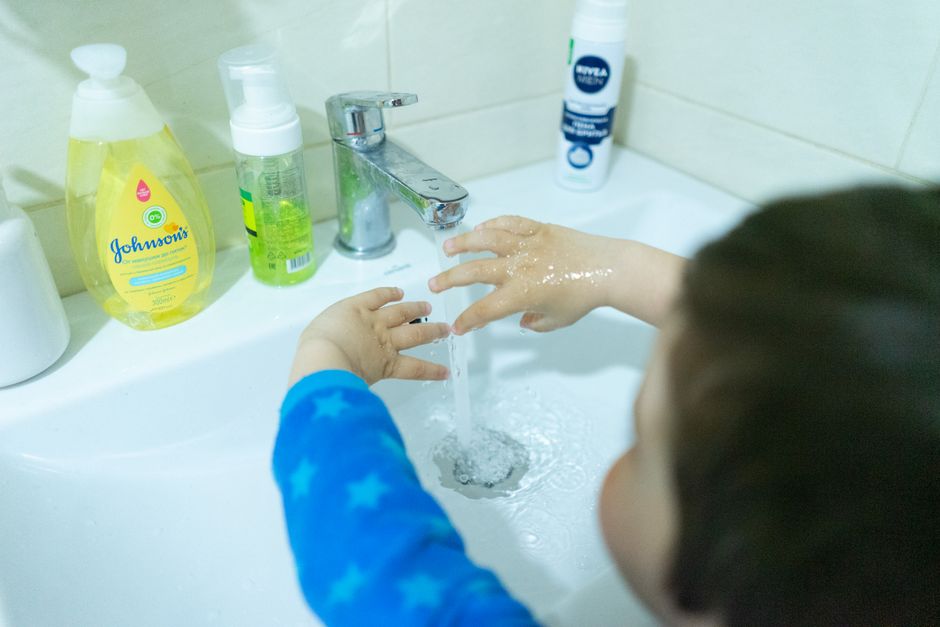
Here's the thing nobody tells you when your kid is four and you're just grateful they'll let you brush their teeth without a fight: hygiene habits don't get easier as kids get older, they just get more invisible. A four-year-old's hand-washing happens right in front of you at the sink. A ten-year-old's happens behind a closed bathroom door, and you're trusting a tap sound and a towel that's slightly damp. Somewhere between those two ages, you go from supervising to guessing, and most parents never actually build a system for that transition. They just keep asking the same questions louder.
This isn't about germs, mostly. It's about the fact that hygiene is one of the few daily routines where a child can fully fake it, and faking it works often enough that there's no real incentive to stop. A quick rinse looks the same as a real wash from the hallway. That's the actual problem worth solving, not the soap itself.
The habits that actually deserve a spot in a daily routine
Before building any system, it helps to separate what genuinely matters daily from what's parental anxiety dressed up as a rule. A realistic kids hygiene routine for most households between ages 4 and 12 comes down to a short, repeatable list rather than a long one nobody can hold in their head.
- Washing hands before meals and after the bathroom, which is the single habit with the clearest real-world payoff and the one worth being strictest about.
- Brushing teeth morning and night for roughly two minutes, not the twelve-second sprint most kids default to when unsupervised.
- A daily or near-daily shower or bath depending on age, activity level, and, honestly, how much they sweat that day at the playground.
- Combing or brushing hair before leaving the house, which sounds minor but is usually the first habit to vanish once a kid starts dressing themselves.
- Clean clothes, including socks and underwear, swapped daily rather than "if they still smell fine," which is a standard no ten-year-old should be trusted to judge alone.
- For kids nine and up, starting to introduce deodorant as a normal step rather than a mortifying conversation that happens three years too late.
Six items is enough. Parents who try to track fifteen things end up tracking none of them, because the list itself becomes another chore. One mother of a seven-year-old told us she'd had a hygiene checklist taped inside the bathroom cabinet for months, and by the time she noticed it was gone, nobody in the house could say when it had fallen down.
Mira Sparky en acción
Una mascota, estrellas y recompensas elegidas juntos - en una sola app familiar.
Why the reminders keep failing even when the kid "knows" the routine
Here's where most hygiene routines quietly break, and it's rarely a knowledge problem. Ask almost any seven-year-old what the steps are and they'll rattle them off correctly: wash hands, brush teeth, comb hair. They know the list. What they don't have is the internal cue that makes the list happen without you standing there. That cue, in adults, is mostly habit plus a bit of social awareness, the kind that makes you notice your own hands feel grimy. Kids that age haven't built that sensor yet, and nagging doesn't install it. It just outsources the job to you, permanently.
Parents describe this exact cycle across forums: kids resist or forget daily tasks without constant reminders, routines drop off a few weeks after a strong start, and the parent ends up being, in one mother's words, "the chore tracking app for the family." Hygiene is actually one of the worst offenders here because it's private. You can't glance across the room and see whether teeth got a full two minutes the way you can see whether a bed got made. You're relying entirely on trust, a towel, and a kid who's already thinking about breakfast.
What tends to work better is shifting the cue away from your voice and onto something the child checks themselves. That's a small but real difference. A visible, child-facing list that updates and gives a tiny bit of satisfaction when something's done, whether that's a star, a sticker, or a line on a chart, moves the trigger from "Mom just asked me" to "I haven't done my thing yet." A few families using Sparky for exactly this have mentioned that hygiene tasks were the ones that stopped being a daily argument first, probably because they're short, they're clearly either done or not, and a star shows up the second the kid taps it, not after a parent remembers to check.
Handing the routine over without losing track of what's real
The honest tension in any hygiene routine is that you want ownership, but you also can't fully verify a two-minute brush from the kitchen. The goal isn't to catch every missed thirty seconds. It's to build enough structure that the honest attempt becomes the default, and the odd skipped day doesn't spiral into a habit of skipping.
A few things make that handover smoother in practice. Keep the number of steps visible somewhere the child looks anyway, like next to the mirror or on their own screen, rather than only in your memory. Use a timer for brushing, since most kids genuinely don't know what two minutes feels like until they've watched it pass a few dozen times, and a visual countdown works far better than you counting out loud, which just reads as pressure. Separate morning and evening versions of the routine, because a ten-year-old doesn't need a full shower reminder at 7am and a hair-combing reminder at 8pm, and cramming everything into one list makes it feel heavier than it is. And let natural consequences do a little of the work when they're mild enough to be safe, like letting a kid notice their classmate mentions how their hair looks, rather than you saying it first every single time.
Real, chosen rewards tend to outperform anything abstract here. Parents consistently report that virtual coins or vague praise don't move the needle, but a routine building toward something the child actually picked, an extra ten minutes before bed, a small treat, a trip to choose a new toothbrush color, works because the child can see exactly what the stars are for. Age-specific attention spans matter too. A six-year-old can hold focus on a single two-minute task without much trouble, but a long list of grooming steps read aloud at once will lose them by item three. Shorter, separated tasks beat one long morning checklist almost every time.
What to do when the routine falls apart for a totally normal reason
It will fall apart sometimes, and that's not a failure of the system, it's just what happens when a kid gets sick, stays up too late at a sleepover, or goes through a growth spurt that throws off every other habit in the house too. The mistake a lot of parents make is treating a broken streak like a broken routine, when really it's just a pause. Building in grace days, a sense that missing one night of a full wash because of a stomach bug doesn't erase three weeks of progress, keeps the whole thing feeling sustainable instead of like a performance review.
Watch for a few honest signs that the routine needs adjusting rather than more reminders: a kid who's suddenly resistant to a step they used to do fine, a smell that wasn't there a month ago, hair that's visibly unbrushed by the time you see them at breakfast despite claims otherwise. These usually mean the task has quietly outgrown the system, not that the kid is being defiant. A nine-year-old who's started needing deodorant needs that added to the list, not a lecture about why they're "being lazy" about their old routine.
The one thing worth changing this week
If you only fix one piece of a kids hygiene routine this week, make it visibility. Move the list, or the steps, or whatever structure you're using out of your head and onto something your child checks without you prompting it. Pick five or six tasks, not fifteen. Attach something real your child actually wants, not an abstract point total. And give yourself permission to let one missed night be just a missed night, not the end of the whole effort.
None of this makes hygiene glamorous, and no system turns a reluctant ten-year-old into someone who loves brushing their teeth. But the goal was never enthusiasm. It was getting to a point where you're not the one remembering every single step, every single day, for every single kid in the house. That's a real win, even if it comes one short shower at a time.
Descarga Sparky gratis
Acceso anticipado, sin anuncios y sin compras dentro de la app - solo tú y tu hijo.