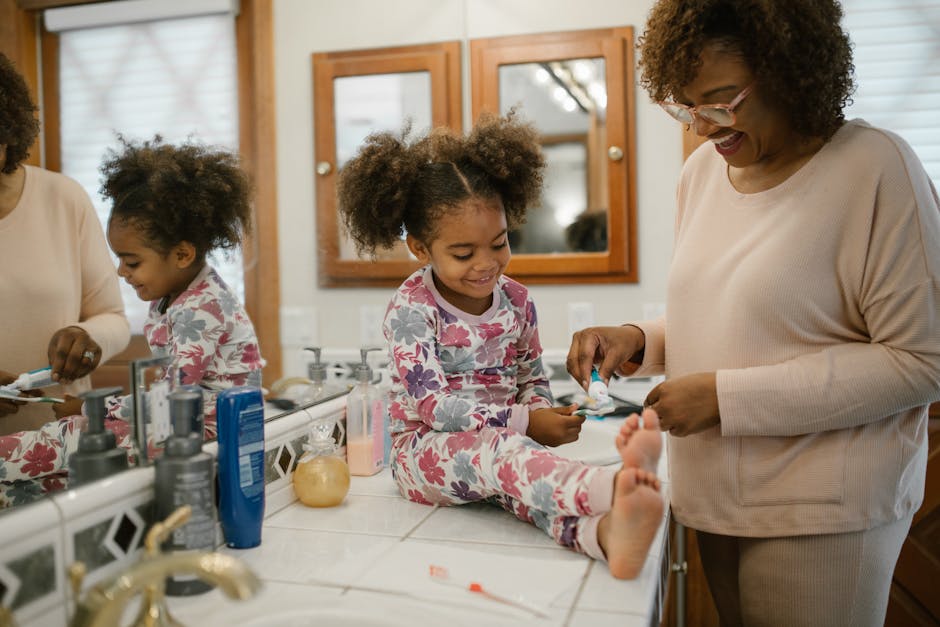
Toothbrush bone dry at 7:40 a.m., toothpaste cap nowhere in sight, and an eight-year-old swearing up and down that he "already did it." You know he didn't. You've seen this exact standoff more mornings than you can count, and honestly, you're tired of being the one who remembers everything from floss to fresh socks. A solid kids hygiene routine checklist isn't about turning your house into a boot camp. It's about handing your child a short, clear list of things their body needs every day, so you stop being the human alarm clock for teeth, hands, and hair.
Here's the part nobody tells you when you print that first cute chart off Pinterest: most hygiene charts die within two weeks. Not because kids are lazy, but because the list is too long, too vague, or stuck on a wall nobody looks at after day three. Parents on forums say it over and over: "the list of tasks posted on the kitchen wall was dusty" within a month. The fix isn't a fancier chart. It's a shorter, smarter one, paired with a rhythm your child can actually hold in their head without you repeating it five times.
Why ten items on a chart turn into zero items done
Kids ages 7 to 9 can hold focus for roughly 12 to 15 minutes before their attention genuinely drifts. That's not defiance, that's wiring. So when a hygiene checklist has twelve tasks crammed onto it, most kids glance at it, feel overwhelmed, and walk away without doing any of it. A nine-year-old who "struggles with routine," as one parent put it while asking for help building exactly this kind of system, doesn't need more rules. He needs fewer, clearer ones, repeated at the same time every day until his body just does them.
There's also the screen time problem sitting quietly in the background. Kids ages 8 to 12 now average around five and a half hours of entertainment screen time a day, and by age ten, 42 percent already have their own smartphone. Every one of those minutes is competing directly with the two or three minutes it takes to brush teeth properly or wash a face before bed. You're not just building a hygiene habit. You're protecting a tiny window of time from a much louder, much shinier alternative.
Picture a two-kid household running identical bedtime charts, fourteen boxes each, color-coded by task type. Within a week, the older sibling, age eight, had stopped reading past the fifth row because scanning that much text before school ate into the twelve minutes he could focus for. The parents assumed he was being defiant. The actual mechanism was simpler: the chart demanded sequential reading and recall under time pressure, which works against how a habit forms, not with it. They cut the morning side down to four items, kept the same categories but one row instead of three, and completion rose within two weeks, not because the tasks got easier, but because the chart could be read in a single glance instead of scanned like homework.
And real rewards beat virtual ones, every time. Parents say it plainly: "virtual coins nobody cares about" don't move a child, but working toward something tangible, like an extra bedtime story, a small toy, or a trip for ice cream on Friday, does. If you're using any kind of star system, let your kid help choose what the stars eventually buy. That single change is often what separates a checklist that lasts two weeks from one that lasts all year. This is the exact idea behind tools like Sparky, where the child sees their own tasks and picks the reward with you, instead of you nagging and tracking everything alone.
There's a trade-off worth naming before you attach any reward to a task: once a sticker or an extra story is tied to brushing teeth, pulling that reward away later can make the task feel optional again, even after months of it looking automatic. The workaround most parents land on is a slow fade, not a hard stop. Keep the reward for the first six to eight weeks while the behavior is forming, then quietly stretch the interval, a reward every other day, then twice a week, until the task survives on its own momentum rather than the prize attached to it.
A rough test for whether a chart is too long: ask your child, a week in, to list every item on it from memory, without looking. If they can only name half, the list is functioning as a poster, not a routine, and it needs cutting before it needs reinforcing.
Below is a checklist broken into morning, evening, and weekly tasks. Keep it short per age group, post it where your child actually stands (next to the sink, not the fridge), and let them check things off themselves. A five or six year old might only manage three of the morning items; a ten year old can handle the full list plus the weekly extras.
Mira Sparky en acción
Una mascota, estrellas y recompensas elegidas juntos - en una sola app familiar.
Morning hygiene tasks (6)
Mornings fail for a boring reason: everything happens in roughly the same eight-minute window, so any task that depends on a decision, which shirt, which socks, did I already brush, adds friction exactly where there's none to spare. The six tasks below are ordered the way most families find works, brushing and washing first while the body is still half in bed-mode and resistance is lowest, nail and clothes checks last once the child is actually dressed and can see what needs fixing.
Brush teeth, two minutes
Set an actual timer instead of guessing. Most kids stop at thirty seconds unless something tells them to keep going. A cheap two-minute hourglass by the sink works better than a phone timer, because a phone within reach turns "brushing time" into "phone time" for most kids past age seven.
Wash face and hands
A quick rinse with soap, not a splash and run. Good for after breakfast crumbs too.
Comb or brush hair
Keep a brush right by the mirror so there's no excuse about not finding one.
Check clothes are clean
Teach kids to smell-check or spot-check their shirt before putting it on, not after someone else notices.
Deodorant, if needed
Usually relevant from around age nine or ten. Keep it matter-of-fact, no big announcement.
Quick nail check
Dirt under nails is the first thing a teacher or coach notices. Takes ten seconds to glance, and pairs well with the hand wash since the kid's hands are already wet and in front of them.
Don't launch all six at once. In week one, run just brushing and face-washing, the two tasks with the clearest payoff, clean mouth, clean face, and the easiest timer. In week two, add hair and the clothes check once the first two are happening without a reminder. Nail checks and deodorant are naturally the last to stick because they don't have an obvious immediate result, so expect them to need a verbal nudge for longer than the others, and don't read that as the system failing.
A quick benchmark worth watching: if a six or seven year old still needs the brushing timer called out loud every single morning after six weeks, the task likely needs to move earlier in the sequence, right after waking rather than after breakfast, since attention decays over the course of the routine itself, not just over weeks of practice.
Evening hygiene tasks (5)
Evenings fight a different battle than mornings: fatigue instead of rush. By 7 p.m. a six-year-old's attention span has usually been spent on homework, dinner negotiations, and the day's general chaos, so evening tasks need to piggyback on something that's already happening, not stand alone as one more decision to make.
Brush teeth before bed
This is the one that gets skipped most, right after dessert, right before sleep. Pair it with a story or song so it feels like part of bedtime, not an extra chore.
Shower or bath
Doesn't need to be nightly for younger kids, but it needs a fixed night or two so it's not negotiated from scratch each time.
Dirty clothes in the hamper
Not the floor, not the chair. One small rule that saves you a daily scavenger hunt on laundry day.
Wash face before bed
Especially helpful once a kid starts getting breakouts around nine or ten. Keep it gentle, no lecture about it.
Lay out tomorrow's clothes
Not strictly hygiene, but it removes one more morning decision that eats into brushing and washing time.
Picture a family where bedtime brushing kept getting pushed to "after the story" and then quietly skipped once the child fell asleep mid-page. The fix wasn't a stricter rule, it was reordering: brushing moved to right after bath, before pajamas, while the child was still upright and in the bathroom anyway, and the story became the reward that only started once teeth were done. Compliance didn't change because anyone got stricter. It changed because the task stopped depending on a tired kid remembering it at the one point in the evening they're least likely to remember anything.
There's a hidden trade-off in how often a child showers that's worth knowing before you set a "nightly" rule out of habit rather than need. Daily showering for a six or seven year old who isn't yet sweating much or playing contact sports often does more to dry out skin than it does to remove anything meaningful, while a ten or eleven year old who's started sports or puberty-related body odor genuinely needs it most nights. Matching frequency to the kid in front of you, rather than a fixed number, avoids both the dry-skin complaints and the days where a kid who actually needs a wash talks their way out of it.
Weekly hygiene extras (4)
Weekly tasks fail for a different reason than daily ones: there's no fixed time of day attached to them, so they're the easiest to simply forget exist. A task tied to "every Sunday" competes with everything else that happens on a Sunday, and it loses most weeks unless it's attached to something equally routine.
Nail trim check
Once a week, check if nails need cutting. Older kids can learn to do their own with supervision.
Hair wash
Two to three times a week is plenty for most kids. Daily washing isn't necessary and can dry out hair.
Clean water bottle and lunch bag
A quick Sunday wipe-down keeps it from becoming the thing nobody wants to open on Monday morning.
Help change bedsheets
Even just pulling off the old pillowcase teaches a kid that clean sheets don't appear by magic.
Picture a household where the water bottle and lunch bag wash kept getting skipped because "Sunday" meant something different every week, sometimes grocery day, sometimes a sports tournament, sometimes nothing at all. Attaching the task to Sunday dinner cleanup, right after the dishes anyway, instead of to the day itself, meant it finally had a fixed trigger that existed every week regardless of what else was happening. The task didn't get easier. It got attached to something that was already guaranteed to happen.
Letting a ten or eleven year old trim their own nails under supervision is worth the independence, but it carries a small real risk: kids new to clippers tend to cut too short at first, leading to sore fingertips that make them avoid the task afterward. The safer rollout is to supervise the first several trims fully, let the child do the easy fingers while you do the thumbs, and hand over full control only once nail length feels like a two-week-old habit rather than a brand-new skill.
Introduce weekly extras one at a time, roughly a month apart, after the daily morning and evening tasks have settled. Nail trim checks and hair washing are the easiest two to start with because they have a visible result a child can see. Water bottle cleaning and bedsheet changing tend to stick better once a child already has two or three weekly habits in place to attach the new one to, rather than starting cold.
You don't need all fifteen of these running at once, and you definitely shouldn't introduce them all on the same Monday. Pick three or four for this week, let your child check them off themselves, and add more once the first batch feels automatic rather than forced. A hygiene routine that sticks isn't the longest one on paper. It's the one short enough for a tired kid, on a tired morning, to actually finish without a fight.
Descarga Sparky gratis
Acceso anticipado, sin anuncios y sin compras dentro de la app - solo tú y tu hijo.