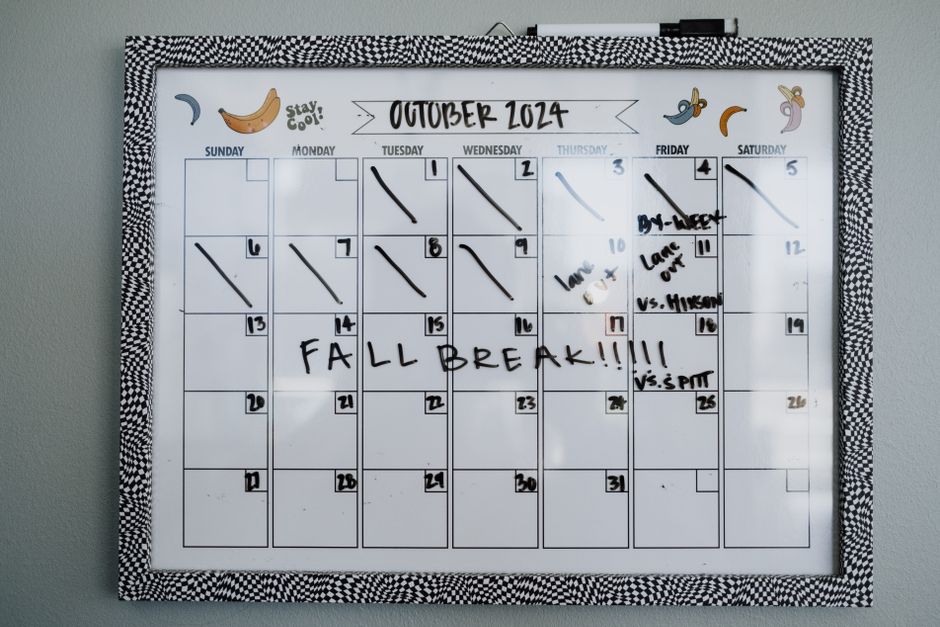
Your daughter walks in, dumps her backpack by the shoe rack, and disappears into her room before you've even asked how her day went. By the time you check on her twenty minutes later, she's three episodes deep into something on the tablet and the homework folder is still zipped shut. You didn't plan for this to happen again today. It just did, the same way it did yesterday. This is exactly why so many families end up searching for an after school routine planner in the first place, not because they want another chart on the wall, but because the hours between the final bell and dinner have quietly become the hardest part of the day to manage.
It's not really about laziness, and it's not about bad parenting either. Kids ages 8 to 12 are already logging an average of 5 hours and 33 minutes of entertainment screen time a day, not counting anything school-related, and ages 8 to 10 alone average around 6 hours. That's not a judgment, it's just the backdrop. After a full day of sitting still and following instructions, a screen is the path of least resistance, and it wins by default unless something else is already in place to compete with it. An after school routine planner isn't about banning the tablet. It's about deciding, ahead of time, what happens before it, so you're not negotiating from scratch every single afternoon.
What follows isn't theory. It's the version of this that actually holds up past the second week, because that's usually where these things fall apart.
Why the hours between 3 and 6pm are harder than mornings
Mornings have structure built in. There's a bus to catch, a bell that rings, an external deadline nobody can argue with. Afternoons have none of that. The only deadline is dinner, and dinner is flexible, which means everything in between is up for negotiation, and kids are remarkably good negotiators when the stakes are low and the rules are fuzzy.
There's also the matter of depleted executive function. A child who has spent six hours regulating their behavior, following classroom rules, and sitting through instructions they didn't choose comes home with very little willpower left over. Asking her to independently decide "now I'll do homework, then I'll tidy my room, then I'll practice piano" is asking her to run a marathon right after she finished one. This is why randomly asking kids to do chores in the afternoon so often turns into a standoff. It's not that she's defiant. It's that nobody told her brain what order things come in, so her brain picks the easiest option, which is almost always the screen.
A planner fixes this not by adding willpower, but by removing the need for it. If the order is already decided, decided together, before anyone is tired or irritated, there's nothing left to negotiate in the moment.

Mira Sparky en acción
Una mascota, estrellas y recompensas elegidas juntos - en una sola app familiar.
Building a planner that survives Wednesday
Most after school charts die around day ten or eleven. The sticker sheet goes from exciting to ignored, and the whole thing starts collecting dust on the kitchen wall. Parents describe this pattern constantly: sticker charts and similar systems lose their appeal and stop working after about two weeks, almost like clockwork. The fix isn't a fancier chart. It's building the thing with fewer moving parts from the start.
- Sit down with your child on a Sunday, not a Tuesday afternoon when everyone's already frazzled, and ask what order they'd like things to happen in. Giving them even two choices out of five tasks changes how they feel about the whole list.
- Cap it at four or five items. A snack, a short rest, homework, one chore, and free time is plenty. Anything longer turns into a chore itself, which defeats the purpose.
- Write the time windows loosely, not rigidly. "After snack" works better than "4:15pm sharp" for most households, because real afternoons don't run on a train schedule.
- Put one genuinely desirable thing at the end, whether that's screen time, a show, or outdoor play, so the list has a visible payoff instead of just more obligations.
- Review it together once a week, not every day. Daily check-ins turn into nagging fast, and nagging is exactly what you're trying to get away from.
One mother of a nine-year-old described her son as someone who "really struggles with routine, being active, and chores" and wanted a checklist and reward system that didn't feel like punishment. That's the right instinct. A planner that reads like a list of consequences will get resisted the same way any list of consequences does. One that reads like a map of the afternoon, with something good waiting at the end, gets followed because following it is simply easier than arguing about it.
Matching the plan to how long your child can actually focus
Here's something a lot of homemade planners get wrong: they assume a child can sit with one task for as long as an adult can. They can't, and it's not a discipline problem, it's just biology. Kids aged 4 to 6 realistically hold focus for about 10 to 12 minutes at a stretch. Ages 7 to 9 stretch to roughly 12 to 15 minutes. Kids 10 to 12 can usually manage 15 to 20 minutes before their attention genuinely needs a reset. An afternoon planner built around 45-minute homework blocks is fighting biology every single day, and biology tends to win.
Breaking homework into two 12-minute sessions with a 5-minute stretch in between does more for a second-grader than one unbroken 25-minute sit. A visual countdown helps too, because kids this age don't yet have a reliable internal sense of how long "a few more minutes" actually is. This is one of the places where a tool genuinely earns its keep instead of just adding another screen to manage. Sparky lets a child see their own afternoon list on their own screen, broken into short chunks that match their actual attention span, so the reminder doesn't have to come from you every time.
What keeps the planner alive after the first two weeks
The novelty always wears off. That's not a failure of the system, it's just what novelty does. What separates a planner that lasts from one that turns into wallpaper is whether the reward at the end feels real to the child. Virtual coins nobody cares about don't survive contact with a bored nine-year-old. A reward the child actually picked, ice cream on Friday, twenty extra minutes before bed, a small toy they've been eyeing, does.
Grace days matter more than most charts admit. A child who gets sick, or has a late soccer practice, or just has a genuinely rough day, shouldn't watch a streak reset to zero and feel like the whole week was wasted. Gentle streaks that allow for the occasional missed day keep the motivation light instead of turning the number itself into a source of pressure. The goal was never a perfect record. It was an afternoon that runs smoother than it used to.
And there's a quieter win worth naming here, the one a lot of parents are really after when they go looking for a planner in the first place. It's the moment you realize you're no longer the one chasing, reminding, repeating yourself three times before anyone moves. You're not the family's chore-tracking app anymore. The list does that part now, and your kid checks it because it's theirs, not because you asked for the fourth time.
Your next three afternoons
Don't try to fix the whole week at once. Pick tomorrow. Sit down for ten minutes tonight, write four items with your child, put the best part last, and see what happens. Then do the same thing the day after. By Thursday you'll know more about what your particular kid needs than any generic chart could tell you, because every household's "after school" looks a little different, and the planner that works is the one shaped around your actual afternoon, not someone else's.
Descarga Sparky gratis
Acceso anticipado, sin anuncios y sin compras dentro de la app - solo tú y tu hijo.