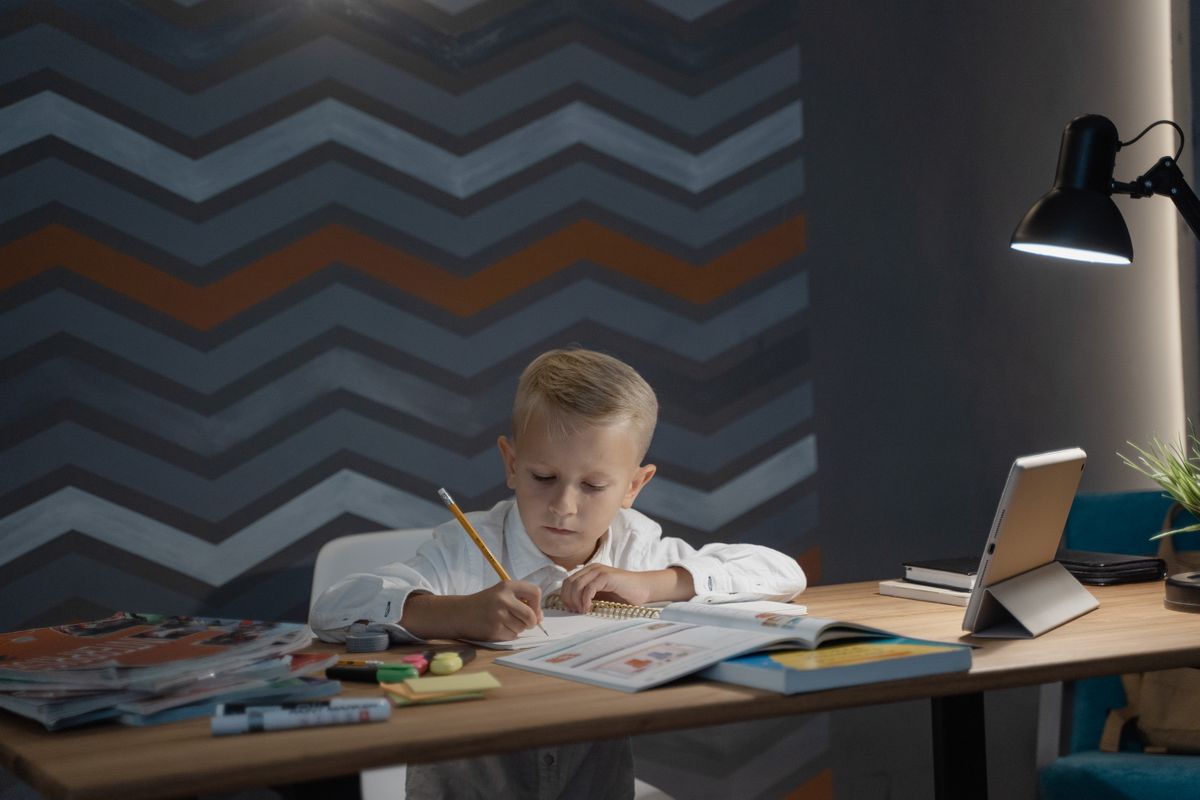
After school attention is already expensive. The backpack lands on the floor, the snack question begins, and a child who held it together all day suddenly has very little patience left. This is the worst moment for a routine app to show ads, offers or unrelated prompts.
Parents often think about ads as a privacy or purchase issue. Those concerns matter, but the daily routine cost is more immediate. An ad changes the subject. A child opens the app to check a task and leaves asking for a game, a toy or more screen time.
The after-school attention window is short
Many children have a narrow window after school when they can handle one or two simple responsibilities. Put shoes away, empty lunchbox, start homework folder. If the screen introduces a new request during that window, the task loses its place.
A no-ads habit app protects the moment by keeping the screen boring in the best way. The child sees only the task, the mascot, progress and the reward system the family chose. Nothing inside the tool competes with the routine.
See Sparky in action
A mascot, stars and jointly-chosen rewards - in one family app.
Why unrelated prompts create extra parenting work
Every ad or offer can become a new conversation. Can I get this? What is that game? Why can't I click it? The parent then has to manage disappointment before the original task even starts. The app may have created more work than it removed.
This is especially true after school because the child is already shifting from outside demands to home expectations. The fewer new decisions you introduce, the easier it is for the routine to stay intact.
What a quiet screen makes possible
A quiet screen lets the habit stay the main event. The child opens Sparky, sees the task and checks progress without being pulled sideways. The parent can ask about the lunchbox instead of explaining why an advertised toy is not happening today.
No ads will not make every afternoon smooth. Children still get tired, hungry and frustrated. But it removes one avoidable source of noise at the exact moment when the family needs fewer negotiations, not more.
The real cost is not only the click
An ad does not have to be clicked to disrupt a routine. Sometimes the damage is the question it creates. What is that game? Can I have it? Why does that kid have it? The task that was supposed to take thirty seconds becomes a conversation about something the family never chose.
After school, those extra conversations are expensive. Children are hungry, parents are shifting from work to home, and the household is trying to move through a narrow transition. A quiet app protects that transition by refusing to introduce a new agenda.
Why ad-free matters even for careful parents
A careful parent can say no to purchases and block obvious risks, but that does not remove the attention cost. The child still saw the prompt. The parent still had to respond. The routine still lost its clean line from open app to complete task.
This is why ad-free design is not just a premium feature. For a child's habit app, it is part of the habit architecture. The screen should support the family agreement, not compete with it.
What a quiet after-school routine looks like
A quiet routine might be only three steps: shoes by the door, lunchbox on the counter, homework folder open. The child sees the list, checks the first task and gets a small signal of progress. Nothing in the app asks them to leave that path.
The parent can then spend their energy on the real child in front of them: Are they tired? Do they need food? Is homework actually possible now or better after twenty minutes outside? Removing ads leaves room for those human decisions.
How to explain it to children
You can tell a child, this app is only for our tasks. No toy ads, no game ads, no surprises. That sentence builds trust. The child knows the screen will not suddenly pull them into a request they have to defend.
Sparky is built around that kind of quiet. It cannot make every afternoon easy, but it can keep the routine space clean enough for the child to see what matters next.
How to use this without rebuilding the whole routine
The idea behind “Why no ads matter after school” works best when it starts small. Choose one repeated scene: the first school-morning move, the after-school drop zone, the bedtime transition or the weekend chore list. A narrow test gives the child something concrete to try and gives the parent useful evidence instead of another ambitious system to maintain.
Keep the rest of the routine familiar for a few days. If every card, reward and rule changes at once, you will not know what helped. If only one step changes, you can see whether the child starts sooner, asks fewer clarifying questions or needs your voice a little later in the sequence.
What to watch during the first week
Do not measure only completed tasks. Watch the beginning. Does your child look at the list without being sent to it? Do they touch the first object sooner? Do they stall in the same place every day? Those details show where the routine is clear and where the hidden friction still lives.
A strong sign is when the child begins to narrate the task in their own words: first this, then the star, I already did that one. That language means the routine is moving from the parent's memory into the child's ownership. The change may be quiet, but it is the part that lasts.
When to stop pushing
If the child is sick, hungry, overtired or coming off an unusually hard day, more structure may not help. The goal on those days is not to prove the system works under every condition. The goal is to protect enough trust that the child can return to it tomorrow.
That does not mean dropping the boundary. It means reading the difference between a one-off hard day and a repeated pattern. One bad evening is not a failed routine. Five similar evenings are useful information that the wording, timing or reward needs attention.
Where Sparky fits
Sparky can hold the list, stars and rewards in a place the child can see. It cannot replace the parent's judgment, and it should not try to. The useful split is simple: the app carries the repeatable structure, while the parent notices mood, timing and whether the task is still the right size.
The best outcome is not a child who never forgets. It is a child who knows where to look when they do forget, and a parent who does not have to restart every routine from zero.
Download Sparky free
Early access, no ads and no in-app purchases - just you and your child.