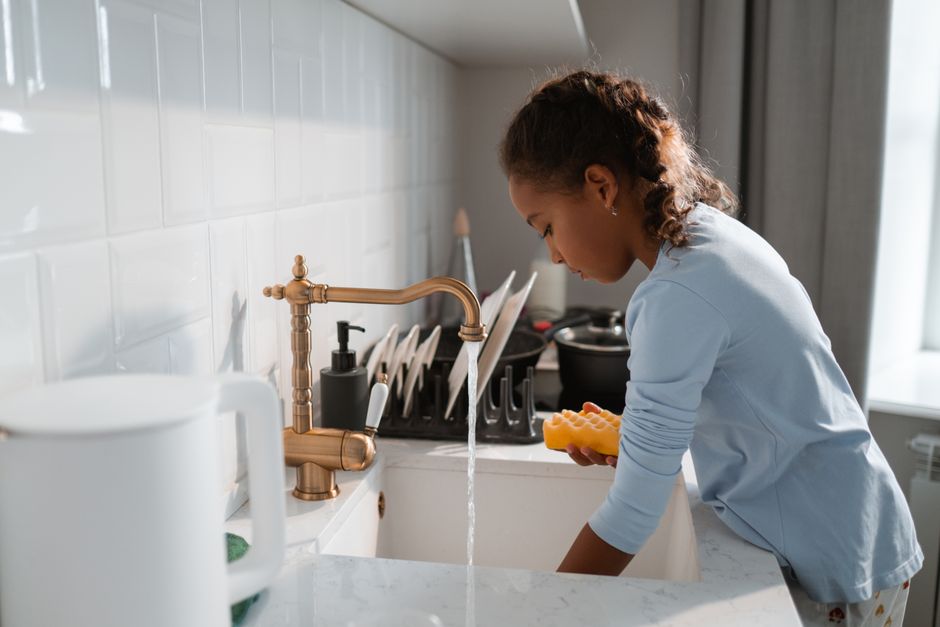
The backpack hits the floor with that soft, heavy thud, and before the shoes are all the way off, your child is already looking at you. Not for a hug first. For the schedule. “What do we do now?” lands in the doorway like it has every weekday since September. You still have the grocery list half-open on your phone, a younger sibling peeling off a sock in the wrong room, and three transitions stacked in your head that nobody else can see. You answer on autopilot - snack, bag, homework, free time - and feel the familiar click of becoming the house clock again.
Most of us already have pieces of a system. A morning checklist on the fridge. A bedtime song that works when you are in the room. An after-school “plan” that lives mostly as a sentence you say out loud. The day still frays at the handoffs. That is the quiet pain of parenting school-age kids: not that you lack ideas, but that you are the only person carrying the full arc from wake-up to lights-out. A true family routine organizer app is less about prettier chores and more about holding those three windows so a child can see the next step without you narrating it every time.
You are tired of being the walking timer. Tired of the third reminder that turns into a tone you do not like in your own voice. Tired of evenings that restart from zero because the afternoon never quite landed. This is not laziness on anyone’s part. It is a design problem. The sequence only exists in your working memory until the kids can open it, run it, and care about finishing it on their own screen - not only when you are standing in the doorway.
Why a family routine organizer app works when charts don't
Paper charts and kitchen lists usually cover one slice of life. Morning brush-and-dress. Or “clean your room on Saturday.” Real weekdays break in three places that feel nothing alike.
Morning is a launch. Bodies are slow, clocks are loud, and everyone is negotiating minutes. After school is a reset. Energy crashes, screens call, backpacks stay half-open, and the house tilts toward chaos before dinner even starts. Evening is wind-down. The same child who argued about shoes at 7:40 a.m. now stalls on pajamas because the day still has leftover noise in it. One wall chart almost never speaks to all three moods.
In a family with two children aged six and nine, the older one can recite the morning list and still need you for the after-school pivot. The younger one does fine with pictures at bedtime and falls apart when homework appears without a clear “then free time” edge. Sibling differences are not a failure of the routine. They are proof that the day is three different jobs. When parents say “we have a routine,” they often mean “I know what should happen.” When the routine actually runs, the child can see the tasks for that window, mark them done, and move without a live narrator.
Screens make the middle handoff harder. Common Sense Media's 2021 report found children ages 8–12 average around five and a half hours of entertainment screen time per day outside schoolwork. That is not a moral lecture. It is competition for the short windows where habits form. Research on children's attention suggests focus windows are short — often under 15 minutes for younger school-age kids — which means an undefined 'free' block reliably gets filled by the nearest screen. If the reset has no visible edge, the tablet fills the gap by default, and you become the person who has to pry the afternoon back into shape.
Monday can look polished. By Wednesday the paper list has vanished under permission slips, the “after school we always…” sentence has holes in it, and you are back to calling steps from the kitchen. That fade is normal when the plan lives where only the parent stands. Visibility has to travel with the child.
See Sparky in action
A mascot, stars and jointly-chosen rewards - in one family app.
Why you keep answering “what’s next?” even after you explained it
The fight is rarely pure defiance. The sequence is trapped in adult working memory. You hold the order: empty the lunchbox, wash hands, snack, twenty minutes of reading or math, then outside or a show. Your child holds the feeling of being home and hungry. Until the next step is something they can open themselves, you remain the interface.
If that sounds familiar — you've explained the sequence, you've written it on the fridge, and you're still the one who gets asked — the problem isn't repetition, it's visibility. Ownership is not a speech about responsibility. It is a child who can see Launch, Reset, or Wind-down without borrowing your brain.
Age changes the shape of the list, not the need for it. Kids four to seven do better with fewer, more visual steps - three to five max per window, short words, clear done-states. Kids eight to twelve can own slightly longer sequences if the tasks still match energy. A nine-year-old after a long school day is not the same person as a nine-year-old on Saturday morning. Matching tasks to the window matters more than matching them to a perfect chore encyclopedia.
There is also the honesty parents whisper to each other: sometimes it is easier to just do it yourself. Shoes get on faster. The bag gets packed. The night ends sooner. The cost shows up later as the same questions, the same tone, the same sense that the house only runs when your mind is online. Marty Rossmann's longitudinal research at the University of Minnesota found that children who participated in household tasks from an early age showed better outcomes in their twenties across career, relationships, and independence. The daily version of that truth is smaller. Protect fifteen or twenty minutes where the child practices the arc, not only where you complete it for them.
Sticker charts that live only on the fridge often last about two weeks. Enthusiasm is real; sustained visibility is rarer. Virtual coins nobody cares about die faster. What tends to hold is progress toward something the child helped choose - ice cream, a small toy, a weekend choice - paired with a streak that stays gentle instead of turning into a nightly performance review. Motivation sticks when finishing feels good and fair, not when you become bank, judge, and nag in one body.
Launch, Reset, Wind-down: the arc a child can actually run
Name the three windows out loud with your kids and keep the language plain. Launch is how we leave the house without you holding three unfinished loops. Reset is how we come home without the afternoon dissolving. Wind-down is how we end the day without restarting negotiations from zero. A family routine organizer has to cover all three, or you will keep patching the hole with your voice.
For Launch, think body and bag: bathroom, clothes, breakfast bite, teeth, shoes, pack-check. For Reset: unpack, lunchbox out, hands, snack, one focused block, then earned free time. For Wind-down: toys or desk clear, pajamas, teeth, tomorrow’s bag touch, lights toward quiet. You do not need twenty items. You need the few that stop the day from leaking.
For a six-year-old, Reset might be four picture-backed steps: unpack, hands, snack, thirty minutes of play before you check in. For a nine-year-old, the same window might include a self-timed 15-minute reading block before the show — the sequence is longer, but it still ends with something earned.
Put the plan where the child opens it - their own view on a shared tablet, a phone they are allowed to use for this, a simple screen that is theirs for the routine - not only on the wall you pass while making dinner. That is exactly what Sparky is built for — the parent sets the three windows, the child opens their own view, and the streaks and rewards are chosen together, not handed down. Parent sets the tasks. Child runs the list. That split is the whole point. If every checkmark still requires your approval in the room, you have a prettier version of the same job.
Keep rewards jointly chosen and small enough to hit within a week or two. Stars toward a real thing beat abstract points. Gentle streaks with room for ordinary life - sick days, late practices, the night everything went sideways - keep the number from becoming pressure. Kids mark done; you spot-check when needed; you step out of the constant narration. That is the gap closing between “we have a routine” and “the routine runs.”
Five quiet moves for the week you stop being the only clock
You do not need a perfect Sunday overhaul. You need a short, ordered pass that fits a tired household.
- Map the three daily handoffs on a scrap of paper: Launch, Reset, Wind-down. Write what actually breaks in each - not the ideal day, the real one.
- Pick three to five child-owned tasks per window for ages 4–12. Fewer for the younger ones, slightly longer sequences for older kids if energy allows. Every task should be something they can finish without a speech.
- Put the plan where the child opens it, not only where you stand. If they cannot see the next step alone, you will keep answering “what’s next?”
- Agree one small reward path together. Let them help name the prize. Keep it predictable and tied to effort across the window, not to a flawless month.
- Run two quiet days before adding more. Watch where the list is ignored, where screens swallow the reset, where a sibling needs a shorter version. Adjust the tasks, not your volume.
If you want that child-facing layer without building another forgotten chart, Sparky is already built around the three windows you just mapped - parent sets the tasks, the child sees them on their own screen, stars and jointly chosen rewards and gentle streaks make the arc feel like progress instead of a battle. Use it as scaffolding for ownership, not as a new thing for you to manage at midnight.
Expect uneven days. Different ages in one home will not move in lockstep. After-school crashes are real. Routines that shine on Monday will wobble by Wednesday until the handoffs are truly visible. That is not you failing the system. That is the system meeting actual children.
It sounds like a backpack emptied on the second ask, not the third. Map tonight's three handoffs. Hand one window over. The day holds better when more than one person can see what comes next.
Download Sparky free
Early access, no ads and no in-app purchases - just you and your child.