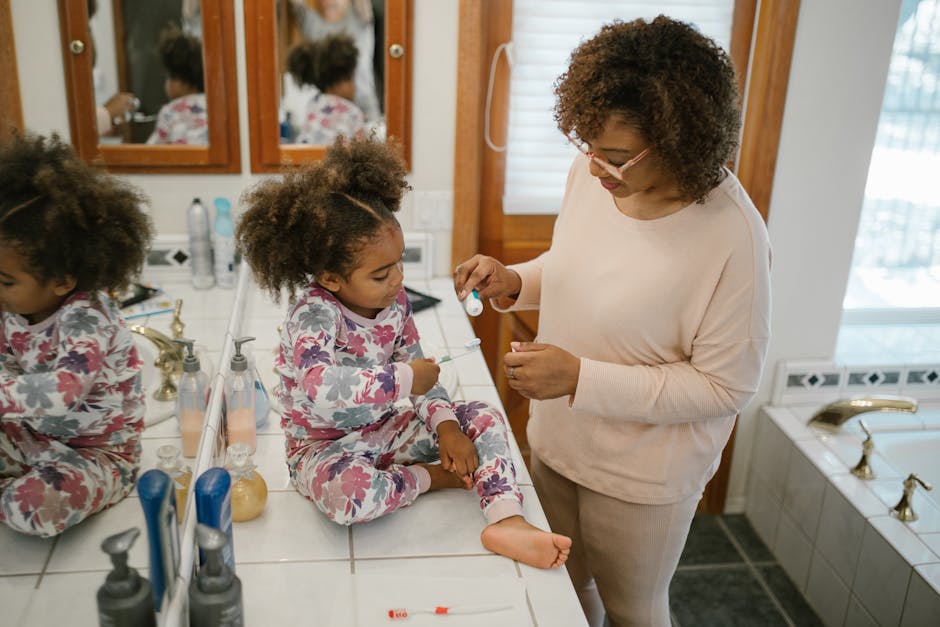
The bathroom light is still on and you are already halfway down the hall with a lunchbox in one hand. Behind you, a child calls “I’m done!” with the confident tone of someone who has brushed only the front teeth, left the faucet running, and draped a damp towel over the hamper lid like a flag of almost. You turn back. You finish what they started. You tell yourself it is faster this way, and for that morning it is. By the third day of the week, you can feel the weight of it: you are not teaching kids self care habits so much as renting them out of your own head every single day.
That is the quiet trap. You care about hygiene. You have given the pep talks. You have pointed at the mirror and named every step. Still, “ready” lives in your memory, not theirs. When the sequence stays with you, the child waits for your voice. When they drift off half-done, you close the loop so the bus does not leave without you. Guilt shows up next, because you hear yourself nagging about socks and soap, and you wonder why basic care still needs a narrator.
Self care for ages four to twelve is not a character trait you install with one serious talk. It is a short, visible loop the child can start, finish, and mark done without a third verbal prompt. Until that loop is theirs, mornings and bedtimes keep defaulting back to you as the walking checklist. The good news is smaller than a total life overhaul. A few right-sized steps, a clear order, and ownership of the “done” mark change more than another round of louder reminders.
Why “I already brushed” still leaves toothpaste on the sink
Kids are not trying to trick you every time they claim the job is finished. Often they performed the motion and stopped when it felt long enough. A six-year-old can stand at the sink, move the brush, and still miss the back molars. A nine-year-old can wash hands in a splashy blur and leave the towel on the floor because “done” was never defined past the water. You know the difference between a passable face wash and a wet chin. They are still learning what the finished picture looks like.
Shared bathrooms make this worse. One child is dressing while another needs the sink. Someone is hunting clean socks while you hold a sandwich bag. Time pressure turns you into a closer of open loops. You wipe the counter. You hang the towel. You re-brush in thirty seconds because you cannot watch green film stay on the teeth. It feels kind in the moment. Over weeks it trains a simple pattern: if I stop early, an adult finishes.
There is also the sibling problem. A preschooler needs fat, simple steps. An older child can handle floss, deodorant, or packing a sports kit. When you run one vague “get ready” script for both, the younger one freezes and the older one half-listens. Kids self care habits stall not because parents ignore hygiene, but because the house still runs on adult memory. Paper charts on the wall often become wallpaper after two weeks. Weekend lectures fade by Tuesday. Your voice becomes the only reliable system, and everyone gets tired of it - including you.
The complaint we hear most often is not about toothpaste itself — it is that only one person in the house knows the order counts, and that “done” only counts when a parent has checked. Ownership of the check-off matters more than prettier art on the fridge.

See Sparky in action
A mascot, stars and jointly-chosen rewards - in one family app.
What age-right self care habits actually look like
Adults love virtue words. Responsible. Independent. Take care of yourself. To a child, those phrases are fog. What runs is a sequence: wash face, brush teeth, put dirty clothes in the basket, put on clean socks. Short beats long. Three to five self-care tasks beat a wall of twelve tiny boxes that no one finishes before the door. Attention windows are narrow at this age - sustained attention on low-interest tasks is typically short at this age — researchers estimate anywhere from five to fifteen minutes depending on the child and context — so a lean loop fits better than a long checklist.
Age fit is not about lowering standards. It is about chunk size. A four- or five-year-old can own “wash hands with soap until they smell clean,” “brush with help only on the back teeth,” and “put pajamas in the basket.” A seven-to-nine-year-old can add face washing, hair check, and packing tomorrow’s underwear without you hovering. Ten-to-twelve-year-olds can take floss, deodorant, sports kit, and a quick mirror check - still as a visible order, not a vague expectation floating in the air.
Agreeing what “done” looks like for the tricky task saves you both. Wet toothbrush plus a face that looks clean in the mirror. Hands that do not smell like snack. Socks on feet, not stuffed in a pocket. When the standard is concrete, you stop re-litigating every morning. When the child can see the order - on a card, a simple list, or their own screen - they are not guessing what comes next while you shout from the kitchen.
Rewards stay light or they sour. Heavy reward schedules can crowd out the intrinsic satisfaction of finishing — once the prize disappears, so does the habit. Keep rewards tied to effort and the act of checking off, then fade them over two to three weeks as the loop becomes automatic. Stars toward something the child actually chose beat virtual coins nobody cares about. A small treat, extra story time, a weekend ice cream the family already liked - tied to effort and completed loops, not unbroken perfection. Streaks work best when they stay gentle. A late night happens. Illness happens. The win is restarting the same short sequence tomorrow without a shame speech. Perfect consecutive days are a brittle goal; a repeatable personal routine is the real one.
The same-week setup that moves the checklist out of your mouth
Casual attempts fail for a boring reason. One chart goes up. You narrate for three days. Then life gets loud and you become the system again. The setup has five moving parts. Get them in place once and you stop being the moving part.
Try this same-week setup as ordered steps, not a forever program.
- Pick only three to five self-care tasks for the main window you care about most - morning bathroom or bedtime wash-up. Resist the urge to fix the whole day at once.
- Write them in the child’s language, in the real order of your house. “Wash face” before “brush teeth” if that is how your sink works. “Dirty clothes in basket” before “clean shirt on.”
- Agree what “done” looks like for one tricky task. Say it out loud once. For brushing, maybe wet bristles and a quick smile check in the mirror. For hands, soap smell and towel hung, not tossed.
- Move the check-off into the child’s hands. A simple mark they make, a sticker they place, or a tap on their own list. If you keep the pen, you still own the loop.
- Choose one small jointly picked reward or star rule. Keep it predictable and light. Update it when it goes stale. Do not build a complicated economy you will hate managing.
- Run three days with you as backup only. You may point once to the sequence. You do not re-list every step from the hallway. If something is half-done, send them back to their own list instead of finishing it yourself unless safety or the clock truly requires it.
Expect friction. Kids who used to wait for your voice will test the new edge. Siblings at different ages may need two slim lists, not one crowded board. Tired evenings will tempt you to close every loop again. Notice the temptation. Closing everything teaches waiting. Sending them back to the sequence teaches the habit.
Screen time already eats large chunks of the day for school-age kids - often many hours of entertainment alone - so protecting a short self-care window is not about perfection. It is about which fifteen minutes you refuse to outsource to another reminder battle. Kids who practice self-directed routines early show stronger self-regulation at school age — a finding that holds across multiple longitudinal studies, including work from the Minnesota Longitudinal Study of Risk and Adaptation. You do not need a study on the bathroom wall. You need a loop the child can run when you are packing lunch.
When reminders train waiting instead of care
More nagging feels like effort. It often trains the opposite skill. If the only signal that starts brushing is your raised voice, the child learns to wait for the signal. If you re-check every thirty seconds, they learn that your eyes are the real finish line. Kids self care habits grow when the start cue is the sequence itself and the finish cue is their own mark.
Parent guilt sits right beside this. You hear yourself sound sharp about soap and you hate it. You finish the job so the morning does not collapse, then feel like you failed at teaching independence. You are not lazy. You are carrying the mental load of a routine that never fully transferred. Naming that gap is kinder than another lecture aimed at yourself.
Gentle repair beats a perfect-streak fantasy. Missed brushing after a late return home is ordinary. The repair is small: same short list tomorrow, no monologue about character. If they marked something done without doing it, tighten the “done” definition once, calmly, and keep the mark in their hands. Do not snatch the whole system back unless you want to be the family checklist again.
Tools can hold the sequence when paper goes dusty and your memory is full. Some families keep a card by the sink. Others use a simple child-facing list so the order is not trapped in one adult’s head. If you want that loop on the child’s own screen - parent sets the self-care tasks, child runs them with stars, gentle streaks, and rewards you chose together - Sparky is built for exactly this handoff — parent sets the tasks, child marks them done, no reminder battles required. Free during early access. Try Sparky. The point is not the brand. The point is who holds the sequence when you are already holding the lunchbox.
Tonight, write three self-care steps in your child’s words for the next morning or bedtime, in the order they actually happen at your sink. Let them mark the first one done themselves, even if the mark is messy. That single transfer - from your voice to their loop - is the beginning of care that sticks, because it finally belongs to them.
Download Sparky free
Early access, no ads and no in-app purchases - just you and your child.