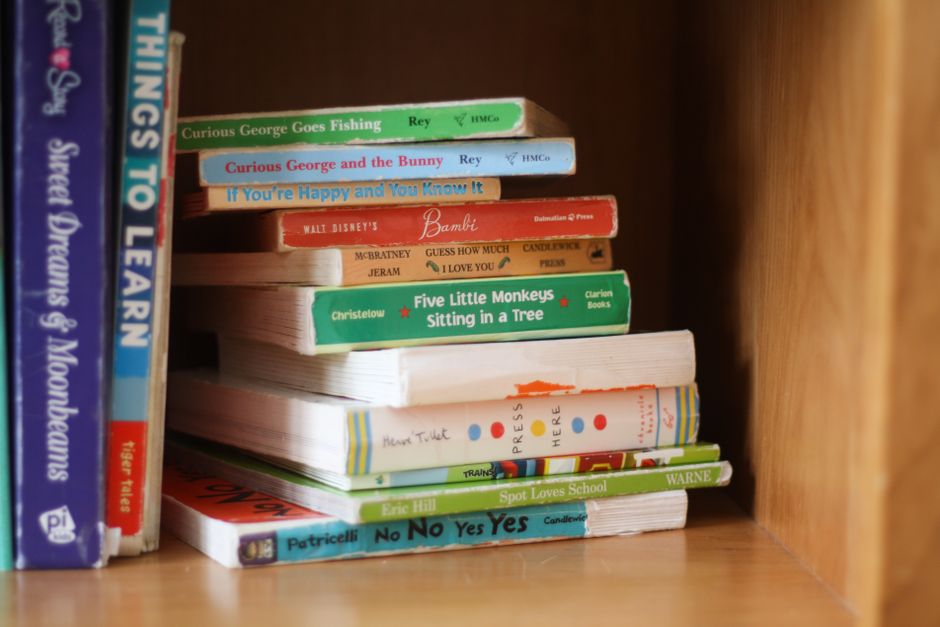
Four library books, two weeks overdue, and when you finally ask your daughter how far she's gotten in the one she begged to borrow, she shrugs and says she's "basically on chapter two." She was on chapter two last Tuesday too. The bookmark hasn't moved, the due date keeps sliding, and somewhere between homework and dinner and the ten minutes she spends scrolling on your old phone, reading quietly fell off the list without anyone deciding it should. This is exactly the gap a kids reading habit tracker is supposed to close, not by nagging harder, but by making the fifteen minutes visible enough that nobody has to ask about chapter two again.
Here's the thing nobody says out loud: kids ages 8 to 12 are logging something like 5 hours and 33 minutes of entertainment screen time a day, not counting schoolwork. Against that number, fifteen minutes of reading looks almost quaint, and it's no wonder it gets squeezed out first. It's quiet, it's unglamorous, and unlike a game or a show, nothing lights up or dings when your child finishes a page. A tracker doesn't compete with a screen by being flashier. It competes by giving reading the one thing it was always missing at home: a visible trail that proves it happened.
Why the bookmark stops moving by week two
Most families don't fail at reading because their kid can't read. They fail because the system asks for the wrong thing. A reading log that wants twenty minutes signed off every night turns into a guessing game by Thursday, parents signing for reading that was really five minutes of actual words and fifteen minutes of a kid staring at the cover art. The chart on the fridge gets dusty. The sticker runs out and nobody buys more. And somewhere in there, the child quietly learns that reading is a box to check for a grown-up, not something they're doing for themselves.
One mother of a seven-year-old described it almost exactly like this: the list of tasks posted on the kitchen wall was dusty within ten days, and reading had been crossed off the family's mental list long before anyone admitted it out loud. That's not a discipline problem. It's a design problem. A tracker built around a parent's signature keeps the parent in charge of noticing. A tracker built around the child's own screen, where they see their own progress without anyone standing over them, shifts the noticing to the person who actually needs to feel it, the kid holding the book.
There's a hidden cost to signature-based systems that most parents don't clock until a year or two in. Once a child figures out that a parent's initials, not the actual reading, are what makes the chart move, the chart stops measuring reading at all. It starts measuring how convincing the child can be at the kitchen table. By nine or ten, most kids are sharp enough to know exactly how little they can get away with and still get the checkmark, and most parents are tired enough by 8pm to let it slide. The system doesn't collapse loudly. It just quietly stops meaning anything, while everyone involved keeps pretending it still does.
Picture a household with two kids sharing one fridge chart, ages eight and eleven. The older one started filling in days she hadn't actually read, partly to keep pace with her younger brother, partly because the chart had turned into a competition nobody meant to start. Their mother caught it when she asked a simple follow-up question about the book and got a blank stare. The confrontation that followed wasn't really about the missed reading, it was about the lying, and it soured the whole household on the chart. Three weeks later nobody had reading on their mind at all, because the tool built to encourage honesty about a small daily habit had instead made that habit adversarial between parent and child.
If you want a quick gut check on whether your current system has already slid into this trap, ask three questions. Does the tracker require your signature or your presence to count as complete. Does your child know the exact minimum effort that satisfies it without you noticing. Has a conversation about the chart ever turned into a conversation about trust instead of about the book. A yes to any of these means the tool has quietly become about managing you, not about the reading itself, and it's worth resetting before the resentment outlasts the habit you were trying to build.

See Sparky in action
A mascot, stars and jointly-chosen rewards - in one family app.
Tracking sessions, not stopwatch minutes
Here's where most reading charts get the mechanics wrong: they treat a ten-minute session and a thirty-minute session as the same single checkmark, or they obsess over total minutes in a way no child under twelve actually experiences time. Attention spans are narrow and age-specific, something like 10 to 12 minutes for a 4 to 6 year old, 12 to 15 for a 7 to 9 year old, and 15 to 20 for a 10 to 12 year old. A tracker that respects that window, instead of asking for a flat twenty minutes regardless of age, is asking for something a child can actually deliver without a fight at the end of a long day.
What works better in practice is counting the session itself, not the clock. Did they open the book today. Did they read something, even three pages, even a graphic novel, even the same chapter book for the fifth night in a row because they're genuinely into it. A streak built on "did you read today" survives a tired Tuesday in a way a streak built on "did you hit twenty minutes" does not. And when a streak does break, because of a late night or a cold or a weekend at grandma's, a gentle system with a grace day or two treats that as completely normal instead of as a failure that resets everything back to zero. That one design choice is the difference between a tracker a kid checks with pride and one they quietly start avoiding because the number makes them feel behind.
Streaks carry their own failure mode worth knowing before you build one. Some kids, usually the ones who already lean a little anxious or perfectionist, stop caring about the book entirely and start caring only about not breaking the number. The reading becomes a formality, something to get through fast so the streak survives, and the actual comprehension or enjoyment quietly drops out of the picture. Grace days help, but they're not a complete fix on their own if the only thing being celebrated is the length of the chain. The fix is keeping the conversation anchored on the book, not the streak, even while the streak counter keeps running in the background.
That's close to what happened in one household with a ten-year-old who turned reading into a numbers game. He kept the streak alive for weeks, but when his mother asked him what happened in the chapter he'd supposedly just finished, he couldn't say. He'd been flipping pages fast enough to log a session without absorbing a sentence of it. What changed things wasn't ending the streak, it was adding one small checkpoint: once a week, he had to tell someone one thing that happened in whatever he'd read that week. No grading, no quiz, just a sentence out loud. The streak kept going, but the reading came back with it.
If you're setting this up for the first time this week, the sequence is simple. First, pick the minimum session length for your child's age band rather than guessing at a round number like twenty minutes. Second, agree out loud on what counts as a session, three pages, one chapter, ten minutes, so there's no argument about it later. Third, log the session right when it happens rather than trying to reconstruct the week on Sunday night, because same-day logging is what makes the tracker feel real instead of like homework. Fourth, build in one or two grace days a week from the start rather than adding them after the first missed night turns into a fight. Fifth, do a weekly check-in instead of a daily interrogation, one quick question about what they read, not a quiz, just enough to confirm the pages are landing.
This is part of why we built the reading task inside Sparky to run on sessions and streaks with grace days, not a stopwatch, so a short night doesn't undo three good ones, and the child is the one checking it off, not you standing in the doorway asking if they're done yet.
Making the reward worth putting the phone down for
Virtual coins nobody cares about. That's the exact complaint parents keep repeating about the apps they've already tried, and reading trackers are no exception. A star that converts into nothing real teaches a child to chase the star, not the book, and the moment the novelty wears off, usually around week two, the whole system goes quiet. What tends to actually work is boring and obvious: let the child pick the reward, make it small and real, an ice cream after five reading sessions, a trip to pick one more library book of their own choosing, twenty extra minutes of a game they love on a Friday. The reward doesn't need to be expensive. It needs to be chosen by them, not assigned by you, because ownership is the whole point of the exercise.
In a family with two children aged six and nine, the older one cared about nothing until the reward became "pick the movie for family night" after five sessions in a row, and the younger one only cared when the reward was a single scoop of ice cream after finishing his first whole early reader. Same household, same tracker, two completely different motivators, and that's normal. The mistake is assuming one reward menu fits every kid in the house, or worse, assuming the tracker itself is the reward. It isn't. The tracker just makes the progress toward the reward visible enough that the child stops needing you to remind them it exists.
There's a trade-off worth planning for before you start, though. If the reward is the only reason the reading happens, the habit never actually transfers to the kid, it just stays borrowed. Reward the exact same thing, every single day, for months, and the day you stop handing it out is the day the reading stops too, because nothing was ever built underneath the reward to begin with. The fix isn't to drop rewards, it's to taper them deliberately once the habit takes hold, moving from a reward every session to a reward every few sessions to a reward that's more about recognition than product, so the habit has time to become the kid's own instead of staying something they're doing for you.
One family found this out the slow way. They kept a daily ice cream reward going for months because it worked so well nobody wanted to touch it. Then a busy week came along, rewards paused, and the reading paused right along with it, instantly. Nothing had been built to carry the habit once the reward disappeared. What they changed afterward was pulling the reward back to once a week instead of once a day, and adding a two-minute habit of the child telling someone their favorite moment from that week's reading. Within a month, the kid was picking up the book on days with no reward attached at all, because the habit had finally had room to become his instead of something earned.
Age matters more than most reward charts admit. A four to six year old responds best to something small, immediate, and tangible, a sticker, a treat, a few extra minutes of a favorite show right after the session ends, because the gap between effort and reward needs to stay short at that age. A seven to nine year old can handle a reward that's a few days out, an experience like choosing the weekend activity or picking the next library book themselves. A ten to twelve year old often responds better to autonomy than to prizes at all, being allowed to choose their own next book without a parent vetoing it, or getting to set the house reading time for a week, can do more than a treat ever will. Matching the reward type to the age isn't a nice-to-have, it's the difference between a reward that actually pulls attention away from a screen and one that gets shrugged off within a session or two.
What this looks like three nights from now
You don't need a full system to start. Pick one book your child is already even slightly curious about, something a little easier than their reading level so the first few sessions feel like a win instead of a slog. Set the bar low on purpose, five to ten minutes for a younger reader, fifteen for an older one, and let a session count as a session even if it's short. Decide together what five completed sessions earns, and let it be something they actually chose, not something you think they should want. Then get it off a chart that lives on the fridge and onto something they check themselves, so the habit belongs to them from the first night instead of becoming one more thing you have to remember to ask about. Expect a skipped night in the first week. Don't let it undo the whole thing. A grace day is not a failure, it's just Tuesday.
The honest truth is that no tracker reads the book for your kid, and no app replaces the ten minutes you spend asking what happened to the main character tonight. What a kids reading habit tracker actually does is smaller and more useful than magic: it turns a vague, easily-forgotten intention into something your child can see adding up, night after night, until the bookmark finally starts moving on its own.
Download Sparky free
Early access, no ads and no in-app purchases - just you and your child.