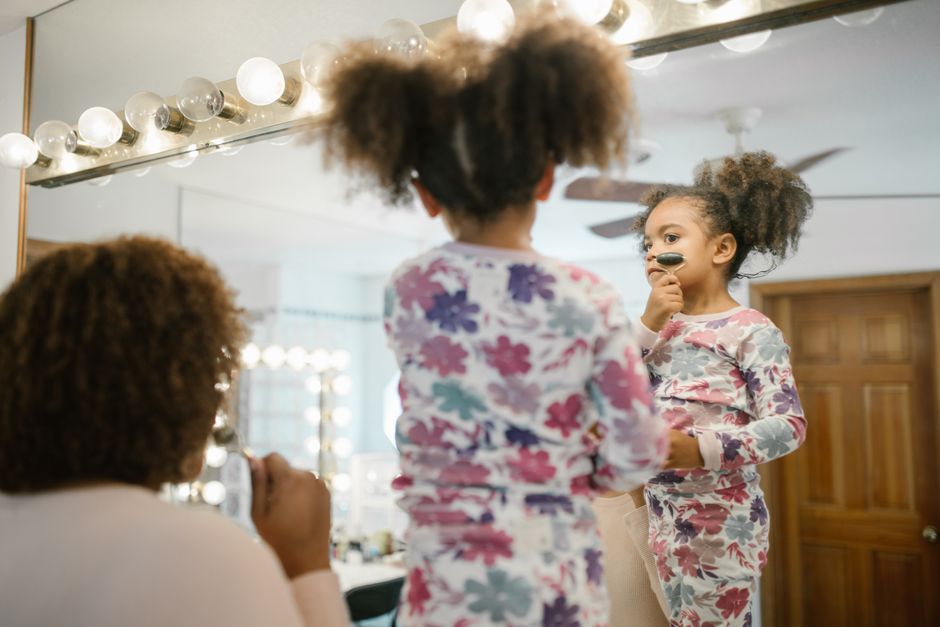
She is already in the hallway with the backpack half zipped when she hears it: the faucet, then silence, then the soft shuffle of feet toward the Legos. “I’m done,” her seven-year-old calls, face still shiny, toothbrush dry on the counter. She walks back. She starts the loop again. Teeth. Face. Hair. Clothes that were laid out last night and somehow ended up under the bed. Water bottle. She has taught every one of those steps a hundred times. He can recite them in order, proud as a quiz champion. And still, most mornings, she is the living soundtrack - the person who begins the sequence, restarts it after every detour, and finishes it with a tighter voice than she likes.
That gap is what sends parents hunting for a kids self-care routine app. Not because the child is “lazy,” and not because one more lecture will magically stick. Knowledge of the sink steps is not the same skill as owning the full self-care loop without a parent holding the mental checklist. Hygiene and get-ready moments sit close to the body. When they stay parent-owned, kids hear nagging. When they can see the sequence, mark each step themselves, and feel a small win on their own screen, the same steps start to feel like “my day, my body, my pride.” The rest of this piece is about that ownership gap - why it keeps opening, what quietly trains dependence, and how a short home trial can hand the loop back without turning you into a project manager in slippers.
You are not failing because you still remind. You are carrying a system that was never designed to live only in your head.
What actually breaks at the sink after “I know how”
Reciting is not running. A child can name brush, wash, dress and still freeze between steps until someone cues the next beat. Sequencing is work. Transitions are work. Competing distractions - a toy on the floor, a sibling arguing in the doorway, a tablet left face-up - pull attention hard, especially in the short focus windows kids actually have. Most parents of 4-to-6-year-olds report a usable focus window of roughly ten minutes before attention migrates — which is exactly the width you are trying to protect. Self-care is supposed to fit inside those narrow bands while the clock is loud and you are packing bags.
Then there is the “I’m done” that means step one only. Face washed. Hair untouched. Pajamas still on under the school shirt. Genuine memory gaps mix with hopeful exits. In a family with two kids sharing one bathroom, ages uneven, one child finishes fast and the other stalls, and the parent becomes traffic control. Screens compete too. Common Sense Media's 2023 census found kids aged 8–12 averaged roughly four hours of entertainment screen time daily — more than enough to crowd out a fifteen-minute wash-up window. Parents also admit they reach for screens to manage load, which is human, and then feel the sting when that same device eats the window for brushing and dressing.
None of this means your child cannot learn independence. It means the environment is noisy, the loop is multi-step, and verbal prompts from the doorway train a simple pattern: wait for Mom’s voice, then move. The more reliable that voice is, the less the child practices starting alone.
See Sparky in action
A mascot, stars and jointly-chosen rewards - in one family app.
Why the fridge chart dies while you stay the living app
Paper lists look calm on Sunday. By the second week they go dusty. Most parents notice the sticker chart is ignored before the month is out — not because the child is unmotivated, but because the novelty gap outpaces the habit gap - and because the child never holds the checklist. The parent still walks the hall asking “Did you…?” That hallway product is the real system in use. The wall is decoration.
Self-care is not quite the same as a chore list either. Making a bed is outer. Washing a face, brushing teeth, choosing clothes that match the weather - those feel personal. When the parent owns the loop, the child can read every prompt as control, not care. Resistance rises. Guilt rises on your side: they are old enough; why am I still managing basic care like a project plan?
Morning and evening are two different storms with the same step names. Mornings are rushed exits, sibling noise, missing socks. Evenings are tired bodies, “one more story,” a face-wash that turns into three trips back after “I’m done.” A single vague talk about “being responsible” never survives both weathers. What survives is a visible, kid-facing sequence that is short enough to finish, clear enough that “done” is agreed in kid language, and marked by the child - not by you from memory while you hunt for the library book.
Parents who make this shift almost always say the first thing they notice isn't cleaner teeth — it's fewer words out of their own mouths before 8 a.m. They knew the steps. The parent was still the one who opened every door in the sequence. The shift is fewer doorway reminders, and a child opening the routine alone before anyone asked. Small, concrete, not magic.
What a child-owned self-care loop actually needs
Ownership design is multi-layered. It is not one laminated sheet and a hopeful weekend. At home it usually needs four quiet pieces working together.
First, a short loop - four to six concrete steps the child can do without hands-on help for most of them. Long vague “get ready” collapses. Second, a shared definition of done in plain kid words: “toothbrush wet and used on top and bottom,” not “brush properly.” Third, the list lives where the child sees it and marks it - their view, not your phone notes or your working memory. Fourth, a gentle close: a star, a streak that stays kind, a small reward the child helped choose so the win feels real. Parents say again and again that virtual coins nobody cares about fade; ice cream, a small toy, extra story time - things the child actually picks - hold attention longer. A reward tied to showing up — not to a perfect streak — matters more than it sounds. A child who earns movie night after four out of five mornings keeps trying. One who loses it for missing Tuesday quits the game entirely.
Gentle streaks matter here. Punitive consecutive-day pressure turns a number into quiet evaluation. Grace for ordinary life - late nights, sniffles - keeps motivation light. The goal is not a perfect calendar. The goal is the moment you can feel, in your shoulders, that you are no longer the only self-care tracking system in the house.
A free, mom-built helper like Sparky sits in that lane when you want the sequence on the child’s screen with stars and jointly chosen rewards - not as a miracle, just as a way to stop carrying the whole loop alone. Marty Rossmann's longitudinal research at the University of Minnesota found that children who had age-appropriate household responsibilities from an early age showed stronger self-sufficiency and relationship skills in their mid-twenties — the same self-regulatory muscle that gets its first workout at the bathroom sink; protecting a short daily window for body-care habits is part of that story, even when screens fight for the same minutes.
A same-week kids self-care routine: handing the loop back in five days
You do not need a full household reboot. Try one window only for five days. Keep it small enough that a tired parent can run it without becoming the bank of rules.
Pick one self-care window only - morning get-ready or evening wash-up - not both. Choose the storm that hurts more right now.
List four to six concrete steps your child can mostly do without help. Write them the way they sound at home: brush teeth, wash face, put on clothes from the chair, fill water bottle, put dirty clothes in the hamper.
Agree the “done” definition for each step in kid language. Say it out loud once. If “brush teeth” means thirty seconds of real brushing, say that. If “clothes” means shoes by the door too, say that. Ambiguity is where “I’m done” fights start.
Move the list onto the child’s own view. Paper on their side of the sink, a simple card, or a child-facing screen - anywhere you are not the only holder of the sequence. Your notes app does not count as theirs.
Child marks each step. You coach only if asked. Stand farther away than feels natural. If they skip, wait one beat before you speak. The pause is the practice.
End with one small jointly chosen reward or star moment. Review after five days. Adjust one step - not the whole system. Maybe “hair” was too big and needs a comb already on the counter. Maybe evening needs one fewer step because bodies are done.
Expect mess in the middle. Toys will still call. Siblings will still barge in. Some mornings you will still finish the water bottle yourself because the bus will not wait. That does not erase the trial. It just means you protect the experiment from perfectionism. If they mark a step without doing it, tighten the done definition once, calmly, and move on. Photo proof or a quick look can help in some homes; in others, trust plus a random check is enough. Every child differs. Age, temperament, and how loud the house is all change the pace.
What you are building is the difference between knowledge and ownership. Knowledge lives in the recital. Ownership lives in start, sequence, mark, and close - without you as the soundtrack.
Tonight, or the next calm stretch you get, choose the single window and write the four steps on something your child can touch. Agree what done means for the first one only if the whole list feels like too much. Let them mark it. Notice what happens in your own chest when you do not restart the loop from the hallway. That lighter mental load is the point — fewer words from you at the door, more steps they own at the sink. If you want that structure already shaped for kids, Sparky is there as a soft option, free in early access, built by a mom who knows the sink standoff from the inside. You already taught the steps. The next work is quieter: design the loop so they can hold it.
Download Sparky free
Early access, no ads and no in-app purchases - just you and your child.