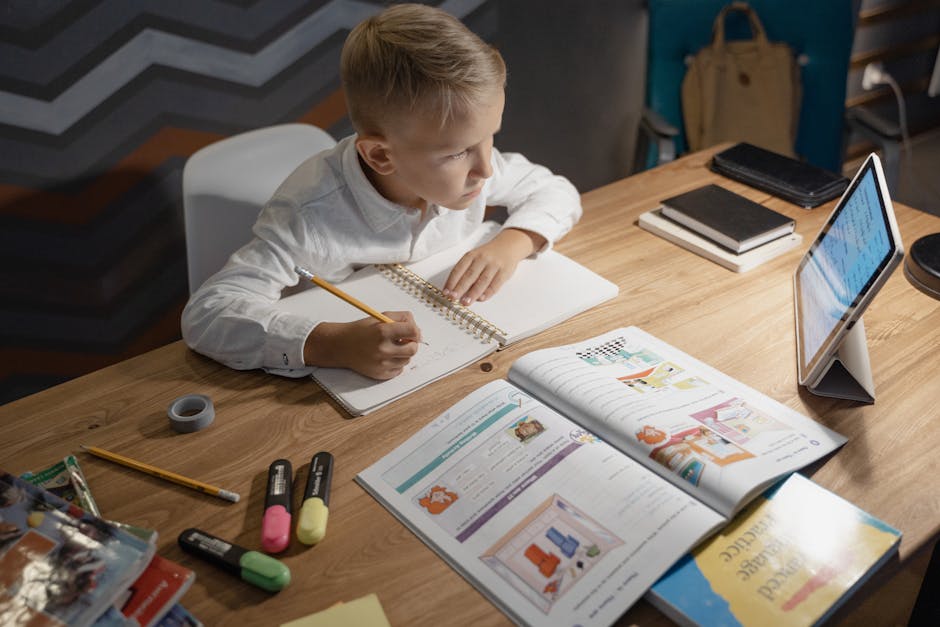
By the time the backpack thuds onto the kitchen chair, you already know how tonight's going to go, because it went exactly the same way yesterday, and the day before that. There's a folder somewhere in there with a math sheet half done, a reading log nobody signed, and a kid who will insist, with total conviction, that there's "basically no homework today." You've heard this exact sentence maybe two hundred times this school year. What you're really looking for isn't another nag-the-kid trick. It's a kids homework habit app that actually turns this nightly standoff into something that happens without you standing over the table saying the same three sentences again. That's a fair thing to want, and it's also harder to build than it sounds, because homework is a strange kind of task. It's not fun, it's not visible the way a messy room is, and nobody applauds when it's done.
Most families try a chart first. Stickers go up for a week, maybe two, and then the chart turns into wallpaper. Parents describe this almost word for word across forums: the list of tasks taped to the kitchen wall gets dusty, nobody looks at it anymore, and you're back to asking, then reminding, then threatening to take the tablet away. The problem was never the child's willpower. It was that a chart on a wall isn't where a nine-year-old's attention actually lives, and homework specifically needs something charts can't give it: a consistent trigger that happens at the same moment every single day, whether or not you're in the room to start it.
Why homework refuses to become a habit the way brushing teeth does
Brushing teeth has an obvious anchor. It sits right next to getting into pajamas, right before the story, at the same time every single night, in the same bathroom, with the same toothbrush waiting in the same cup. Homework has none of that built in. It floats. Some days it starts at 4:15, some days at 6:40 after soccer, some days it gets shoved to "after dinner" and then quietly disappears. A habit needs a fixed trigger, and homework is one of the only daily tasks in a kid's life that doesn't come with one automatically. You have to build the trigger yourself, and most families never quite get around to it, because life is busy and the trigger feels like one more thing to manage.
There's a second problem underneath that one. Kids ages 8 to 10 now average around 6 hours of screen time a day, and for ages 8 to 12 it's closer to 5 hours and 33 minutes of entertainment screen time alone, not counting school work. That's not a judgment on any single family, it's just the water everyone's swimming in. Homework has to compete for a slot against something genuinely more rewarding in the moment, and the trigger-plus-reward loop of a game or a video is just better engineered than "go do your worksheet." If homework doesn't have its own small reward built in somewhere, screens will keep winning that fight, quietly, every afternoon.
See Sparky in action
A mascot, stars and jointly-chosen rewards - in one family app.
The narrow window kids actually have, and why it matters more than the chart
Here's a number that changes how a lot of parents plan the evening once they hear it: a 7 to 9 year old's real, workable focus window is somewhere around 12 to 15 minutes. For a 4 to 6 year old it's closer to 10 to 12. Ages 10 to 12 stretch to about 15 to 20 minutes before attention genuinely starts to drain. That's not laziness, that's how the developing brain's executive function actually works, and it explains a lot about why "just sit there until it's finished" turns into tears at the table. A habit that respects that window, in short focused bursts with a clear stopping point, will hold far longer than one that expects a child to power through forty-five minutes in one sitting because that's how long the worksheet takes.
This is where a lot of well-meaning systems go wrong. They borrow adult productivity tools, like a straight Pomodoro timer built for a grown-up's attention span, and drop them onto a second grader who genuinely cannot hold focus for 25 minutes without a break. A homework habit built around a child's actual attention span, not an adult's, looks different: short sprints, a visible countdown so the end feels real and close, and a small acknowledgment the moment it's done. Not a lecture about effort. Just "done, nice, next thing."
Turning homework into a loop instead of a fight, step by step
The habit loop itself isn't complicated, even if getting there takes a bit of patience. It has three parts: a fixed trigger, a short routine, and a reward that actually means something to your specific kid. Here's how that plays out in practice, based on what actually sticks for families who've gotten past the two-week chart collapse.
- Pick one trigger and defend it like it matters, because it does. "Right after the after-school snack" works better than "sometime before dinner," because it's specific, repeatable, and doesn't depend on your memory to kick it off.
- Break the work into the smallest chunk that still counts as progress. Ten minutes on the worksheet, not "finish the worksheet," especially for the 7 to 9 crowd whose real focus window tops out around 12 to 15 minutes anyway.
- Use a visible countdown instead of a vague sense of time passing. Kids this age genuinely struggle to estimate time, and watching a timer tick down gives the brain a concrete finish line to aim for.
- Attach a reward that isn't a virtual coin nobody cares about. Parents say this constantly: real, child-chosen rewards, like ten minutes of a favorite show or a small treat picked out together, beat invisible points every time.
- Build in grace days on purpose. A kid who's sick, exhausted, or had a rough day at school isn't breaking the habit by skipping one day. Treat that as normal, not as a failure that resets everything to zero.
- Let the child see their own progress without you being the one who has to remember or announce it. This is the single biggest shift parents report: the moment the tracking moves off your mental to-do list and onto something the kid checks themselves.
That last point is the one that actually changes the evening. Most systems fail not because the reward was wrong, but because the parent stayed the one holding the whole thing together in their head, quietly becoming, as one mother put it, the chore-tracking app for the entire family. The habit only really sticks once your kid can glance at something and know for themselves what's next and what they've already earned, without asking you first.
What it looks like once your kid runs the habit without you narrating it
In a family with two children, ages 7 and 10, the evening used to run on a loop of reminders: "Did you start your reading?" then fifteen minutes later, "Are you actually reading or just holding the book?" Once homework moved to a short, timed block right after snack, with a simple visual progress the kids could check themselves and a small reward they'd picked together (a specific snack, not a vague "good job"), the mother said the biggest change wasn't that the kids stopped resisting entirely. It's that she stopped being the one who had to remember, start, and police the whole thing. That's really what most parents are asking for when they search for a kids homework habit app. Not a magic fix for a reluctant reader, just relief from being the constant trigger themselves.
This is the exact gap Sparky was built to close: the parent sets the task once, the child sees it on their own screen with a short timer suited to their age, and the streaks stay gentle on purpose, with grace days built in so one bad night doesn't wreck two weeks of progress. You can try Sparky for free, no ads, no subscription, and see whether having the habit live on your child's screen instead of your memory changes the 4:15 standoff even a little.
Two things worth trying before this Friday
You don't need to overhaul the whole evening to start. Pick one fixed trigger this week, the same fifteen minutes, the same spot, every school day, and let your child choose the reward that goes with it themselves, because ownership over the reward matters almost as much as the routine does. Then let the finish line be visible to them, not just something you announce. A countdown timer, a check mark they tap, a star they see land, whatever form it takes. Small, boring, repeatable. That's genuinely what a habit is, and it's a lot less dramatic than most sticker charts promise.
There's no version of this that works the same way for every kid, and some weeks it'll slip no matter what you set up, because that's just how real households run. But the families who get past the two-week wall aren't the ones with the best rewards. They're the ones who protected one fixed trigger long enough for it to stop needing a reminder at all.
Download Sparky free
Early access, no ads and no in-app purchases - just you and your child.