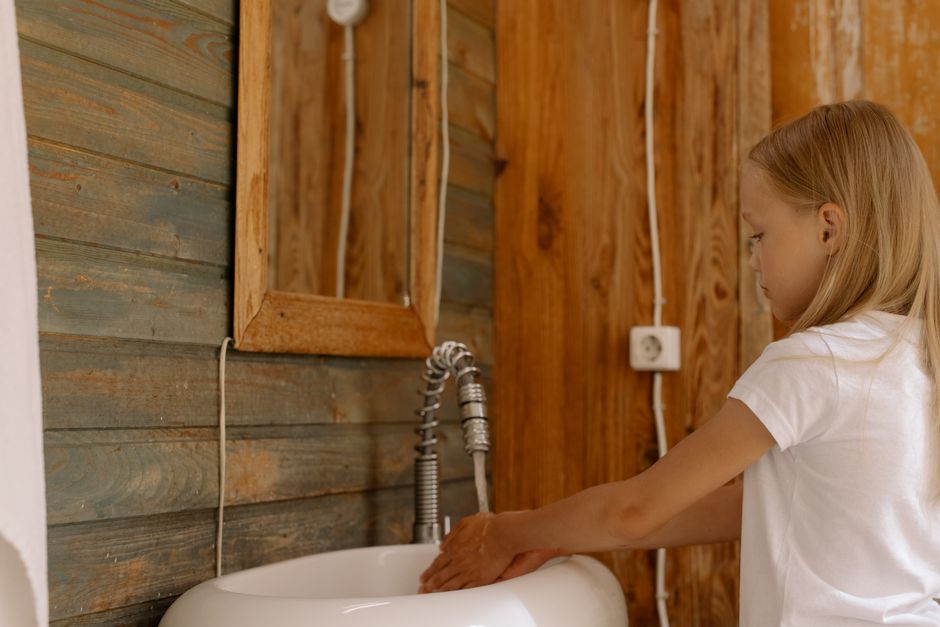
You walk past the bathroom and catch the towel in a heap, the sink ringed with toothpaste, the floor sticky where someone “rinsed.” Ten minutes earlier you asked for a quick wipe-down. You got a shrug and a promise. By dinner the same spots are still waiting, and so is your patience. That is the quiet loop a lot of us live in: not a huge mess, just the same small cleaning jobs that never quite become the child’s job.
Parents who search for a kids cleaning schedule app are usually not hunting for another pretty chart. They want the reminders to stop living only in their head. They want a short, visible plan their child can check without being told three times. They want cleaning to feel like a normal part of the day instead of a sudden inspection. The hard part is not inventing chores. The hard part is keeping a schedule alive after the first burst of goodwill fades, especially when screens already claim huge slices of the afternoon.
According to Common Sense Media's 2023 report, children 8–12 average about 5 hours 33 minutes of daily entertainment screen time. Those numbers sit right next to the tiny windows where habit work actually fits: in practical experience and common guidance, younger kids often manage only a short stretch of focused effort before attention drifts, with slightly longer windows as they move through elementary age. A cleaning schedule that ignores that math turns into a lecture. One that respects it can stick. This piece walks through what collapses, what to put on the list by age, how to hand the schedule to the child, and what to do this week without redesigning your whole house.
Why your cleaning chart stops working after week one
Paper lists fail in a boring way. You write neat boxes on Sunday. Monday looks hopeful. By the following weekend the sheet has a coffee ring and nobody has touched a checkbox. Sticker charts and basic apps often lose appeal after about two weeks for the same reason: the adult is still the operating system. You notice the crumbs. You open the conversation. You decide if it “counts.” The child may do the wipe once, then wait to be cued again. Ownership never moves.
Parents say this out loud in almost the same words: they have downloaded and deleted a lot of habit tools; virtual coins nobody cares about; they are still the program manager even with an app open. Another common line is that it is easier to just do it yourself. That is true in the moment. It is expensive over months. Research by Marty Rossmann at the University of Minnesota found that children who had chores starting in early childhood were more likely to have successful relationships and careers in their mid-twenties. You are not being fussy about a sink. You are protecting a short daily practice that teaches follow-through.
Randomly asking kids to do chores — “can you just tidy a bit?” — fails because “a bit” is not a task. Cleaning has its own friction. It is less glamorous than “earn screen time for reading.” Dust does not cheer. A full room reset can look endless to a seven-year-old. Age-appropriate chores need edges: which surface, which tool, how long, what done looks like. Without those edges, the child guesses, you correct, and both of you feel slightly defeated. Multi-parent homes add another crack. One adult marks things loosely. The other redoes the work. The schedule becomes a debate instead of a shared map.
So the real problem a kids cleaning schedule app should solve is not motivation theater. It is transferring the tracking load. When the child can see what is due, mark progress, and aim at a reward they actually chose, you stop being the family ledger for every sponge and sock. That shift is the whole game.

See Sparky in action
A mascot, stars and jointly-chosen rewards - in one family app.
What a kids cleaning schedule app actually needs to do differently
Start smaller than your ideal house. Three to five recurring cleaning tasks beat a museum of expectations. Match the length of the work to those attention windows. A four-year-old can put dirty clothes in the hamper and wipe a low table with a damp cloth for a few minutes. A six-year-old can clear their place, push in the chair, and do a two-minute toy scoop into labeled bins. An eight-year-old can make the bed to a simple standard, empty a small trash can, and wipe bathroom counters after you show the sequence once. A ten- to twelve-year-old can run a short bathroom reset, vacuum one room, or load a dishwasher rack if you have already taught the steps.
Write the task the way a child reads it. “Clean bathroom” invites argument. “Wipe sink and faucet, hang towel, put toothpaste away - 10 minutes” invites a finish line. If your child runs hot on overwhelm, a visual countdown or short focus session helps more than a scolding. Think kid-scale timing, not adult Pomodoro. Fifteen focused minutes on one surface beats an hour of half-hearted wandering.
Separate daily micro-cleans from weekly deeper ones. Daily might be bed, floor pickup in their zone, dishes to the counter, bathroom wipe after use. Weekly might be dust one shelf, wipe baseboards they can reach, or sort desk clutter. Mixing everything into one intimidating blob is how kids freeze. Recurring tasks that auto-repeat remove the Sunday planning tax on you. The schedule should feel boring in the best way - predictable, short, repeatable.
Define “done” out loud once, then stop renegotiating every night. Photo proof can help older kids: they snap the sink, you approve from your phone without turning the kitchen into a courtroom. Younger kids may need you nearby the first week, then a step back. Expect imperfect. A bed that is mostly smooth still counts if the standard was “covers pulled up, pillow at the head.” Raising the bar every time they succeed is how enthusiasm dies.
- If your child balks at a task, film a 20-second demo together on your phone and leave it in the app notes — kids re-watch their own tutorials more than yours.
- One task per room per day: don't let the bathroom list bleed into the bedroom list or the boundary disappears.
- Rotate one “stretch” task a month - for example adding mirror wipe - instead of exploding the list overnight.
- Agree on real rewards the child picks: ice cream, a small toy, choosing Friday’s movie - not endless virtual coins.
Handing the schedule to your child so you stop nagging the same spots
Ownership starts with who holds the list. If only you keep the board alive, the board is yours. Sit together for one calm stretch - not in the morning rush - and let them help choose which cleaning jobs go first. Kids buy in when the list includes something they already half-do and one thing that matters to the household. Explain stars or points as progress toward the reward they named, tied to effort and completion, not to being a perfect robot every single day.
Gentle streaks with grace days matter more than parents expect. Illness, late sports, grandparents visiting - those are normal. A system that treats every miss as a broken chain turns the number into quiet pressure. Routines and flexible streaks keep the tone light. You want “chores become more like a routine,” not a daily report card. If streaks start feeling like evaluation, dial them back and lean on the simple checklist and the reward jar.
Run the first seven days as practice, not a trial. You may still prompt once: “Your cleaning block is on your list when you’re ready.” Then walk away if safety allows. Resist redoing their work in front of them unless hygiene truly requires it. Redoing teaches that their effort was theater. If quality is off, coach once at a neutral time: show the missing step, reset the standard, move on.
Shared-device or simple child screen setups beat complicated logins for many families. Younger kids do not need long stats. They need big checkmarks, a star, and a sense that someone noticed without a speech. Older kids may like seeing the week fill in. Either way, the parent goal is the sentence so many people chase: I am no longer the chore tracking app for the family. Tools that stay ad-free and free of subscription traps help here too - another monthly fee is a weak sell when a paper list already failed for free. Sparky lets your child check off tasks from their own profile, pick a reward at the start of the week, and earn stars without you logging in to verify every step — the parent view updates in the background.
Watch for the fake-done problem. If a child marks complete without doing the work, pause rewards and add a quick verify step for a while - walk-by glance or photo - without shame. Curiosity works better than accusation: “Show me the sink so we can both see the standard.” Consistency between adults matters more than clever badges. Agree on the same five tasks and the same definition of finished.
Your first seven days with a kids cleaning schedule app (or without one)
Pick one zone only: bathroom sink and towel, or bedroom floor and bed, or kitchen place-setting clear. Write three tasks max. Attach one reward the child chooses that can be earned in a week, not a season. Teach the sequence once with them watching their hands, not your mouth. Set a timer that matches their age window. When the timer ends, stop - even if you see more dust. Stopping on time builds trust that cleaning is finite.
Park the schedule where the child actually looks - their device, a shared tablet, or a card by the light switch in that room. Your job this week is one prompt maximum per task, then silence. If they stall, shrink the task again. A two-minute wipe still trains the muscle. Protect those minutes from automatic screen drift. Screens will fill any open gap; the cleaning block needs a named slot after snack or before the show, not “sometime.”
At week’s end, review together for five minutes. What felt easy? What felt endless? Swap one task if needed. Refresh the reward if interest dipped. Novelty wears off when the prize goes stale or the list never changes. You are not failing if you adjust. You are maintaining the system. Parents who stick with age-appropriate tasks, visible progress, and real rewards often notice fewer fights over the same spots - not because the child became a different person overnight, but because the schedule stopped living only in the adult brain.
If you have been through many chore apps, keep expectations honest. No tool removes every reminder. A good kids cleaning schedule app - or a tight offline version of the same idea - reduces the volume and moves the checkmark into the child’s hands. That is enough of a win to feel the house breathe a little.
You do not need a perfect grid by Monday. You need one short cleaning block your child can finish, mark, and repeat without a speech from you. Protect the minutes, keep the list tiny, pay out rewards you both meant, and let ordinary days count. The towel on the floor will still fall sometimes. The difference is whether only you are assigned to notice - or whether the schedule finally belongs to them too.
Download Sparky free
Early access, no ads and no in-app purchases - just you and your child.