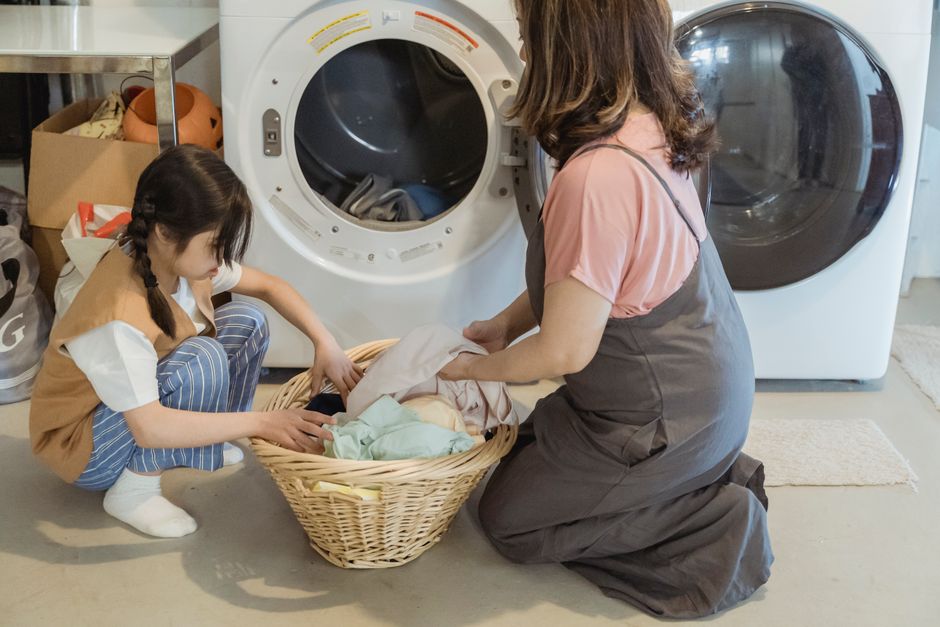
The laundry basket sits where you left it last night, still half full of socks that somehow never reach drawers. Your seven-year-old walks past it three times on the way to the tablet, each pass a little more automatic than the last. You open your mouth to say the line you’ve said a hundred mornings, then close it because you already know how that ends: a shrug, a “in a minute,” and you folding the clothes yourself so the day can move.
That is the quiet math a lot of us do. Kids aged 8–12 average around five and a half hours of entertainment screen time daily (Common Sense Media, 2023). Those numbers do not leave much room for the narrow windows kids actually have for focused effort - roughly 10–12 minutes for ages 4–6, 12–15 for 7–9, and 15–20 for 10–12. A kids chore chart app enters that squeeze not as another glowing rectangle, but as a way to claim a short, visible loop before the next video starts. Research by University of Minnesota developmental psychologist Marty Rossmann found that children who did household chores from an early age were more likely to be successful, have good relationships, and achieve academic and career success as adults. The fight is not “more rules.” It is protecting fifteen honest minutes that build ownership instead of another reminder from you.
Paper lists on the fridge go dusty. Random “can you please…” requests feel like luck to a child. You stay the walking checklist. This piece walks through why charts die, what a child-facing system has to hold, how to set one up without a weekend project, and a small next step you can try this week - without turning yourself into the family’s unpaid program manager.
Why the fridge list stops working by week three
You start strong. Colored markers, a column for each child, stars drawn by hand. For a few days everyone is proud. Then someone is sick, someone has a late soccer practice, and the grid goes blank. Parents say it plainly online: sticker charts and similar systems lose appeal and stop working after about two weeks. The novelty wears off. The list of tasks posted on the kitchen wall gets dusty. You are still the one who notices what did not happen.
Part of the problem is who holds the pen. When only you mark “done,” the child never feels the close of the loop. They completed the bed or the dishes, but the win lives in your head. Another part is scale. Age-appropriate chores matter. A four-year-old can put dirty clothes in the hamper and carry a plastic plate to the counter. A nine-year-old can load a dishwasher rack and wipe a table with a real cloth. When the chart asks for adult-sized output, resistance is rational, not lazy.
Screen time competes hard. Nearly half of parents lean on screens daily to manage load, yet the same screens crowd out the short focus windows habits need. Randomly asking kids to do chores after a long scroll session rarely lands. The request arrives as interruption, not as a known step in their day. Multi-parent homes add another crack: one adult enforces, the other forgets, and the child learns the system is optional depending on who is home.
So the chart is not “bad.” It is incomplete. It lives in adult space, depends on adult memory, and offers rewards that feel abstract - or none at all. Kids notice. They mark things done without doing them when proof is nowhere. They ignore notifications that fire while they are out of the house. They bounce off virtual coins nobody cares about. What they respond to, again and again in parent language, is real rewards tied to effort they can see: ice cream, a small toy they actually picked, extra time with a parent on something fun. Consistency and predictability beat unbroken perfection.

See Sparky in action
A mascot, stars and jointly-chosen rewards - in one family app.
What a child-owned chore loop has to include
A kids chore chart app only helps if the child can open it, see today’s work, do it, and mark it without waiting for you to narrate every step. That sounds simple. In practice it means a short list, not a life plan. Three to five recurring tasks beat a wall of fifteen. Recurring and autorepeating tasks matter so you are not rebuilding the board every Sunday night.
Visual progress has to be immediate. Stars, gentle streaks, a path toward a reward the child helped choose. Gentle streaks with grace days keep the tone light. Illness and late nights are normal; a system that treats them as moral failure turns the number into quiet pressure. Younger kids do not need long stats or consecutive-day drama. They need “I did it, I see the star, I am closer to the thing I picked.”
Timers help when they match real attention spans. A 10–12 minute focus session for a five-year-old is different from an adult Pomodoro. A visual countdown reduces overwhelm without feeling like a punishment clock if you frame it as “we work until the circle finishes, then we stop.” ADHD-friendly short bursts and clear starts and stops reduce the freeze that happens when a messy room looks endless.
Ownership also means the child is the one who claims the win. You can still spot-check. Some families like photo proof on a chore so a parent can approve from the phone without turning the kitchen into a negotiation zone. That is optional. The non-negotiable piece is that the child marks completion on their own screen or shared device mode, not through you as middleman. Parents describe the shift in one sentence they want to say out loud: “I am no longer the chore tracking app for the family.”
Objections deserve straight answers. “It is easier to just do it myself” is true on Tuesday night. It is expensive on the year. “Why pay monthly when paper is free” is fair - which is why free, ad-free tools without subscriptions or in-app purchases remove a real objection. “Rewards ruin intrinsic motivation” softens when rewards are occasional, child-chosen, and tied to effort, not bribes for basic decency. Research distinguishes between controlling rewards (bribes for compliance) and informational rewards (recognition of effort) — the latter don't erode motivation when they're child-chosen and tied to completion, not obedience. “My child is too young” usually means the tasks were too big. Shrink the chore, keep the loop.
Setting up a kids' chore chart app in one evening
Pick one stretch of day, not the whole calendar. Mornings and after-school are the usual pressure points. Sit with your child for ten minutes and name three age-appropriate tasks they already half-know how to do. Examples that travel well: make their own bed every morning to a “good enough” standard you both accept; put pajamas in the hamper; clear their plate; feed a pet with a measured scoop; hang a backpack on one hook; ten minutes of tidy-up with a timer. Write the standard out loud once so “clean room” does not mean museum-level for them and “floor visible” for you.
Choose one reward together. Not a virtual badge. Something small and real they care about this month - a gelato run, a new set of markers, choosing Friday’s movie. Set a star cost that is reachable in a week or two, not a semester. When they hit it, pay out fast. Delayed rewards for young kids feel like broken promises.
Decide who checks what. You might glance once after dinner. You do not need to hover at every star. If you want photo proof for bigger jobs, keep it for those only so the evening does not become an upload contest. For shared tablets, agree on a simple open-the-app habit after snack, not a login maze.
Protect the minutes. If screens already fill the afternoon, put the chore loop before the open-ended scroll, not after. You are not banning fun. You are ordering the day so the short focus window gets used while energy still exists. Say it in plain language: first the three jobs, then the game. Predictable order beats surprise demands.
Expect a messy first week. Someone will mark done early. Someone will forget. Correct once, calmly, and reset the expectation without a speech. Novelty fades in every system; what keeps a kids chore chart app alive is that the child still sees their own progress and a reward path that still feels worth having. Update the reward when interest cools. Swap one task when seasons change. Small refreshes beat starting over from zero.
If you want a light digital anchor while you practice, tools like Sparky keep the list on the child’s side with stars and jointly chosen rewards so your reminders can drop. Use whatever holds the loop. The method matters more than the brand.
Your next small step this week
Tonight, after dinner, ask one question: “Which three jobs feel fair for you right now?” Write them where your child can see them without asking you. Agree on one real reward and a simple star count. Tomorrow, run the loop once before screens. Notice what you did not have to say. That quieter kitchen is the point - not a perfect grid, not a perfect streak, just a child who can find the list, do the work, and feel the close of the day without you carrying 98 percent of the mental load.
Charts fail when they stay adult property. They hold when kids track age-appropriate chores themselves, when progress is visible, and when the prize is something they named. You will still help. You will still reteach. You just will not have to be the only app in the house that never gets to close.
Download Sparky free
Early access, no ads and no in-app purchases - just you and your child.