
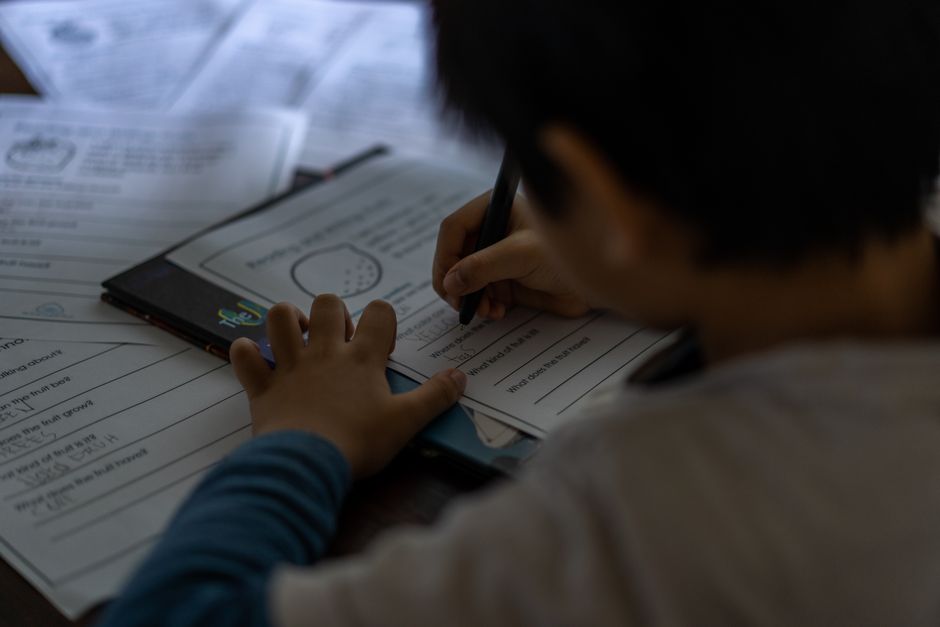
The worksheet is already crumpled at the corners. Your child has sharpened the same pencil three times, asked about snack twice, and somehow started a conversation with the cat. Dinner is forty minutes away. You can feel the old script warming up in your throat: start now, stop stalling, we do this every single day. You are tired of being the timer, the referee, and the walking calendar. You are not looking for a miracle routine system. You want a homework habit app for kids that turns this stretch of the afternoon into something shorter, calmer, and less dependent on your voice.
Homework is not the same fight as making a bed. It lands after a full school day, when focus is already thin and screens are calling from every corner of the house. According to Common Sense Media, kids ages 8–12 average around five and a half hours of daily entertainment screen time — not counting schoolwork. That means the fifteen or twenty minutes you need for reading, math practice, or a worksheet are competing with something bright, easy, and always available. No wonder the chair stays empty until you stand next to it.
Parents describe the same loop in plain language. Kids forget. Kids resist. Kids finish only when you hover. Paper charts on the fridge go quiet after about two weeks. Apps get downloaded, tried once, then ignored because the novelty wore off or the parent was still doing all the tracking. The real wish underneath is simple: fewer reminders, a little ownership, and a routine that does not need a speech every afternoon.
This piece is about building that loop at home. Not a perfect system. A practical one you can start small, keep honest, and adjust when life gets messy.
Why homework stalls even when your child is capable
Most kids who stall on homework are not lazy. They are depleted. School already asked them to sit, listen, switch tasks, and hold it together in a group. Coming home and opening another worksheet can feel like more of the same, especially if the first step is vague. “Go do your homework” is not a plan. It is a cloud. A tired brain stalls inside clouds.
Attention windows are shorter than many of us pretend. Research suggests focus windows for young children rarely stretch beyond ten to fifteen minutes before a break helps. When you ask a seven-year-old for a silent forty-minute block after school, you are asking for adult stamina. They push back, wander off, or start a fight about the pencil grip because the task feels endless.
There is also the ownership problem. If you hold the list in your head, open the folder, check every line, and announce when it is done, the work still belongs to you. Your child becomes the person who reacts. You become the homework habit app for the family. That is exhausting, and it teaches the wrong lesson: nothing starts until a parent starts it.
Screen time makes the stall sharper. After school, the easy path is a device. Parents often rely on screens to buy a few quiet minutes while they cook or answer a message, then suddenly the homework window is gone and everyone is late and short-tempered. Protecting a short, predictable homework block is not about being strict for its own sake. It is about deciding which fifteen minutes matter before the evening dissolves.
One mother of a nine-year-old noticed the same pattern every Monday through Thursday. Her son could do the work. He just never began until she sat down. The moment she left the room, the pencil stopped. She was not dealing with a skill gap. She was dealing with a start gap, and with a child who had learned that her presence was the real on-switch.
See Sparky in action
A mascot, stars and jointly-chosen rewards - in one family app.
What makes a homework habit app actually work for kids
A list on the wall is static. Homework is not. Some days there is a packet. Some days there is reading only. Some days there is a project that needs supplies you do not have at 5 p.m. A habit that survives has to be simple enough for a tired child to open alone, flexible enough for real school life, and motivating enough that finishing feels like progress toward something they care about.
Start with one clear after-school sequence, not a life overhaul. Bag down. Snack. Short break if they need it. Then homework in a fixed spot with a fixed first step. The first step should be tiny and visible: open the folder, write the date, read the first problem out loud. Tiny starts beat noble intentions. Kids who can open the sequence themselves stop waiting for your announcement.
Match the work to real focus windows. Break longer assignments into short sprints with a visual countdown. Ten minutes on math. Stand up. Water. Ten more if needed. For younger kids, even five focused minutes followed by a stretch can keep the whole thing from turning into a meltdown. Rigid adult Pomodoro timers often feel punitive. Short, age-scaled blocks feel doable.
Make progress visible without turning you into the scorekeeper. Stars, gentle streaks, or a simple “done” mark work when the child can see them on their own screen or card. Parents online say it plainly: virtual coins nobody cares about die fast. Real rewards the child helps choose - ice cream, a small toy, choosing Friday’s movie, an extra story - keep the system alive. Consistency and predictability matter more than fancy badges. Tie the reward to effort and completed steps, not to perfect scores every single day.
Build in grace. Illness, late sports, a hard day with friends - those are normal, not moral failures. Gentle streaks with room for an off day keep motivation light. When a streak becomes a daily performance review, kids tense up and parents start negotiating exceptions at the worst possible hour. You want a routine, not a courtroom.
Finally, put the tracker where the child can open it. If only you can check the boxes, you are still the system. The shift parents describe with relief sounds like this: I am no longer the chore tracking app for the family. Homework works the same way. When the list lives on their side, the “I already did it” argument changes because the record is shared and visible, not floating in your memory.
Building an after-school homework routine your child runs themselves
Pick three school days and try one loop. Do not redesign the whole month. You are testing whether a shorter, clearer path reduces the nagging.
- Choose the window. Same time most days beats a floating “whenever.” Right after snack works for many families. For others, a twenty-minute outdoor break first helps a wiggly body settle. Name the window out loud once: homework starts at 4:15. Then stop announcing it every two minutes. The clock and the routine should carry more of the load than your voice.
- Write only what belongs in that window. Reading log. Math sheet. Spelling practice. Not “be a better student.” Not “clean your whole backpack life.” Age-appropriate tasks that fit inside one or two short focus blocks. If the teacher sent a huge packet, help your child circle today’s slice only. Overwhelm is the enemy of starting.
- Decide the first action together and make it stupidly clear. Open planner. Put pencil on paper. Read the instructions once. When kids know the entry point, they waste less energy arguing about the whole mountain.
- Add a finish line the child can see. A star. A check. A photo of the completed page if you want proof without a kitchen interrogation. Photo proof can let you approve from your phone while you cook, which softens the “come look right now” pressure. Keep approval kind and quick. Delayed, dramatic reviews turn the system sour.
- Connect finished work to a real, jointly chosen reward path. Not a bribe for every line. A steady earn toward something they picked. One family with two kids used a small jar of stars toward weekend pancakes and a library trip. Another kept a short list on the fridge of rewards the kids had actually named. When the prize is theirs, the work stops feeling like free labor for the adult agenda.
- Protect the screen boundary around the loop. Homework first, then earned screen time if that is your house rule. Children ages eight to twelve already spend hours on entertainment screens. You do not need a lecture about it every afternoon. You need a predictable order so the easy path does not eat the habit path.
Expect friction on day one and day two. Old patterns do not vanish because you made a nicer list. Stay calm, point back to the loop, and keep your words short. Long speeches teach kids that stalling buys a conversation. Short redirects teach them the loop is the point.
Here is how the loop looks inside the tool we built. In Sparky, your child opens their own task list after school and sees the short homework steps you set together—no hunting for a paper chart on the fridge. They work through a focus block, mark the task done, and earn toward a real reward they helped choose, so progress stays visible without you standing over every checkbox. Stars and gentle streaks remain light, with room for an off day, which matches the grace a real after-school routine needs. The app is built for elementary-age kids who need a simple path they can run themselves, not another parent dashboard full of settings. A light habit app for kids like this holds the list, the finish line, and the child-chosen rewards in one place so ownership sits on their side of the table.
When the system slips - and how to reset without a big speech
It will slip. A late practice. A sick day. A week when you are too tired to care about stars. That does not mean the habit failed. It means you live in a real house.
Watch for a few clear signals. Your child marks things done without doing them. The reward stopped mattering. The streak started feeling like pressure. You are back to three verbal reminders before anything moves. Those are not character flaws. They are design notes.
If cheating the checkboxes shows up, shrink the task and add a simple proof step for a while - show me the page, snap a photo, read me the last sentence. Keep it matter-of-fact, not punitive. If rewards went stale, let your child refresh the prize list. Sticker charts and basic apps often die after two weeks because nothing new enters the system and the prizes were never truly theirs.
If you hate the tool, simplify. One recurring homework task. One star. One small weekly reward. Busy mornings and depleted evenings cannot support a setup with fifteen levels and forty badges. Parents say it constantly: they have downloaded and deleted a lot of habit apps. Complicated tools lose to tools a five-year-old or a ten-year-old can open without a tutorial from you.
Multi-parent homes need the same rules on both sides. If one adult enforces the loop and the other shrugs, kids learn which doorway softens the plan. Agree on the window, the first step, and what earns the reward. You do not need identical personalities. You need the same basic map.
And if a part of you still thinks it is easier to just do it yourself - sit with that for a second. It is easier tonight. It is heavier in October. Early, consistent responsibility, the kind Marty Rossmann's decades-long research on childhood chores points toward, is linked with better adult outcomes for a reason. Kids practice starting, finishing, and carrying their own piece. Homework is one of the daily places that practice can live, in short doses that match how their attention actually works.
Reset with honesty, not guilt. Tomorrow we open the folder first. That is enough of a speech.
Your next small step after school tomorrow
Do not build a perfect program tonight. Choose one child, one homework window, and one first step. Write the step where they can see it. Decide what “done” looks like in one sentence. Pick a real reward path they help name. Protect fifteen to twenty minutes before the screens take the evening.
You will still have hard days. You will still repeat yourself sometimes. The win is quieter than a transformed personality. It sounds like a backpack opened without a courtroom scene. It looks like a child who knows the loop well enough to begin while you stir the pasta. That is the habit. That is what a homework habit app for kids should serve - not more noise for you to manage, but a short path they can walk on their own.
Download Sparky free
Early access, no ads and no in-app purchases - just you and your child.