
Half past seven. Lunchboxes half-packed. Someone still in pajamas. You ask about backpacks and get a shrug. You ask about teeth and hear “later.” By the time the door closes, you’ve already said the same three things four times, and the day hasn’t even started.
That loop is why so many parents reach for a daily checklist for children. Not because they love laminated paper or another system to manage, but because the mental load of holding every tiny step is exhausting. You want the morning, the after-school stretch, and bedtime to run without you acting as the family memory bank.
A checklist sounds simple. Write the jobs. Hang them where kids can see them. Hope they stick. In practice, most lists go quiet after the first burst of enthusiasm. The board stays on the fridge. You still announce every item. Your child still waits to be told. Ownership never quite lands.
This piece is about building a daily checklist kids can actually run, not one you keep alive with reminders. We’ll look at why paper charts fade, how attention windows and screen time squeeze the minutes you have for habits, what belongs on a kid-owned list at different ages, and a short way to test ownership without redesigning your whole house. No perfect family required. Just clearer steps and less nagging.
Why the kitchen list goes quiet after week two
You’ve seen the pattern. Sunday you write neat boxes: make bed, brush teeth, pack bag, feed the pet. Monday feels promising. By Thursday the list is still there, but you’re the one reading it aloud while buttering toast. The chart didn’t fail because your child is lazy. It failed because the design still needed you as the announcer.
Parents say the same thing in different words: sticker charts last about two weeks; apps get downloaded and deleted; virtual coins nobody cares about; “I’m still the program manager.” When only you mark things done, the list is really a script for your reminders. The child learns to wait for the cue instead of scanning the day themselves.
Screen time makes the squeeze tighter. Children ages 8–10 already average about six hours of screen time a day. Ages 8–12 sit around five and a half hours of entertainment screen time, not counting schoolwork. Those hours compete with the short windows kids actually have for building habits. Ages 4–6 often manage about 10–12 focused minutes at a stretch; 7–9 closer to 12–15; 10–12 about 15–20. A sprawling checklist that assumes adult attention spans will lose to the tablet every time.
There’s a longer reason to protect those minutes. The Harvard Grant Study has long tied early, consistent chore participation to better adult outcomes and happiness. You’re not chasing perfection for its own sake. You’re carving out small, repeatable ownership while screens are loud and your bandwidth is thin. A daily checklist for children only earns its keep if it reduces your role as the living ledger, not if it adds another thing you have to police.
So the fix isn’t a prettier board. It’s shifting who holds the pen, who sees the list first, and what “done” means without a courtroom at the sink.
See Sparky in action
A mascot, stars and jointly-chosen rewards - in one family app.
What a kid-run daily checklist actually contains
Start smaller than you think. Three to five recurring items beat a twelve-line manifesto. Mix self-care, simple household help, and one prep task for the next part of the day. Everything should be visible to the child without translation. If you have to decode “tidy room,” break it into “clothes in hamper” and “toys in bin.” Vague jobs become negotiation. Clear jobs become checkable.
Age shapes the list more than ambition does. A four- or five-year-old might own: put pajamas in the basket, bring plate to the counter, brush teeth with a two-minute song, put shoes by the door. A seven- or eight-year-old can add make the bed to a simple standard, pack the backpack from a hook list, water a plant, wipe the table after snack. Closer to ten or twelve, you can include starting homework setup, taking out a small trash bag, or prepping tomorrow’s clothes, still in chunks that fit a 15–20 minute focus window rather than an open-ended “be responsible.”
Time of day matters. Morning lists should be short enough to finish before the bus stress peaks. After-school lists work when they sit between snack and screens, not after the child is already deep in a game. Evening lists close the day: brush, pajamas, bag ready, lights-down cue. Separate lists by stretch of day beat one giant wall of tasks that blurs together.
Rewards stay honest when they’re real and chosen with the child. Ice cream on Friday, a small toy, choosing the weekend movie, extra park time - things kids actually want, not abstract points that feel empty. Consistency and predictability matter more than size. Tie stars or checks to effort and completion of the agreed list, not to a flawless month. When illness or a late night knocks a day off, treat it as ordinary life, not a moral failure. Gentle continuity beats a brittle chain that turns the number into pressure.
One quiet rule helps multi-adult homes: the same list, the same “done” standard, the same reward path. If one parent marks half-finished work as complete and the other redoes the job, kids learn to shop for the softer judge. Agree once, write it simply, stop renegotiating every night.
How to hand the checklist over without a full house reboot
Pick one stretch of day first. Mornings if that’s your loudest fight. Evenings if bedtime is the spiral. Don’t relaunch school, chores, and hygiene in the same week. You’re teaching a skill: look at the list, do the next item, mark it without being chased.
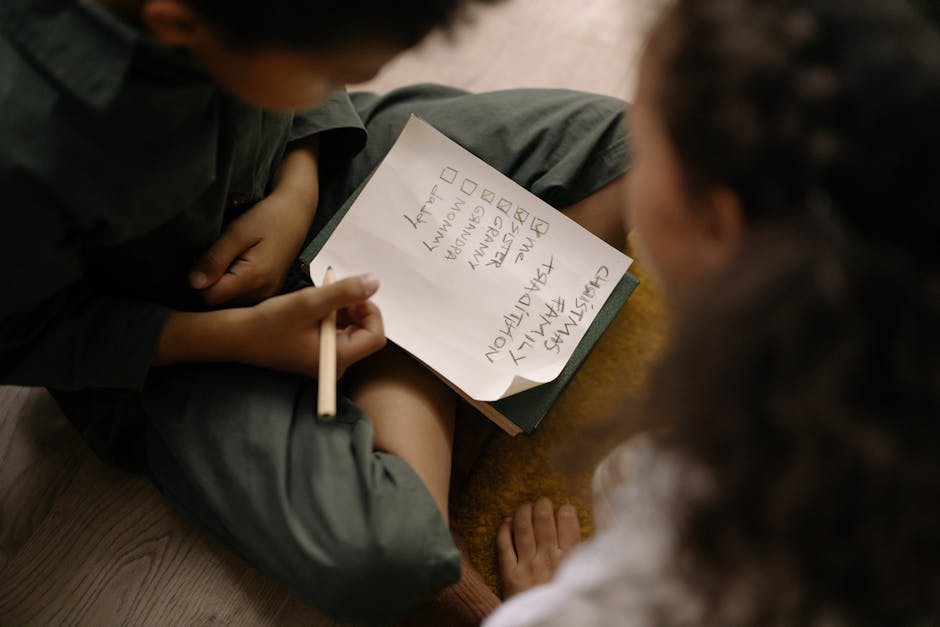
Write the list with your child in the room. Let them choose the order inside the non-negotiables, pick the emoji or color if that helps them care, and name the reward they’re working toward. When they help build it, the page stops feeling like a lecture taped to the wall. Keep language they can read or icons they can recognize if reading is still wobbly.
Put the list where their eyes go, not where yours do while cooking. Their bedside, the bathroom mirror at their height, a clipboard by the backpack hook. If the only copy lives on your phone, you remain the gate. Shared tablets work when the child opens the list themselves; constant parent approval for every tiny tick keeps you in the manager seat.
Match the work to attention, not to guilt. A 10–12 minute block for a younger child, a short visual countdown if rushing spirals them, one task at a time instead of “do your whole morning.” When screens are the default soother - nearly half of parents lean on them daily to get through the load - protect one small window before unlock. Fifteen protected minutes of checklist work will not erase six hours of average screen time, but they do keep independence from vanishing entirely.
Define done out loud once. “Bed made means pillow at the top and blanket pulled up, not hospital corners.” Then stop re-inspecting like a surprise audit every five minutes. Spot-check later if you need trust-building, especially if you’re tempted by photo proof from another room so the kitchen doesn’t become a negotiation zone. The point is fewer live reminders, not zero connection.
When the novelty fades - and it will - refresh the reward or rotate one task, not the entire system. Parents who say “it stuck” usually kept the structure stable and updated the carrot. Families who rebuild the whole chart every Sunday train kids to wait for the next relaunch instead of running today’s list.
If you want a light digital anchor while you practice, something like Sparky can put the child’s tasks on their own screen with stars and jointly chosen rewards, so you’re not the only one carrying the board. Use tools only if they cut reminders. Drop them if they add setup you resent.
A three-day ownership check you can run this week
You don’t need a month-long experiment. Three ordinary days tell you whether the checklist is theirs or still yours.
Day one: introduce the short list together after dinner or on a calm morning. Walk through each item once. Agree on the reward and how many checks unlock it. You may prompt once: “What’s first on your list?” Then step back.
Day two: stay quieter. If they stall, point at the list instead of naming the task. “Check your board” is different from “Go brush your teeth now.” Count how many times you still narrate the jobs. That number is your real baseline.
Day three: notice who initiates. Do they open the list without a speech? Do they mark done themselves? Do they argue the standard, or ask what counts? Mild friction about fairness is normal. Total silence until you explode into reminders means the handover didn’t stick yet - shorten the list again or move it to a more visible spot before you blame motivation.
Watch for quiet red flags. They mark complete without doing the work: tighten the definition of done and add a calm re-do, not a lecture. They only perform when you’re watching: practice one item while you’re in another room. One adult undermines the other: reset the shared rules once, in private, then present a united line. The streak number starts weighing more than the toothbrush: switch the language to “we’re back on tonight” and keep grace for sick days so the count stays light.
Common objections deserve straight answers. “It’s easier if I just do it myself” is true for today and expensive for the next decade of independence. “Charts only last two weeks” is true when the parent remains the engine; kid-held lists with real rewards last longer because the child can see progress toward something they picked. “Rewards are bribes” misses the difference between random payment for obedience and a predictable path that makes routine visible. “My child is too young” usually means the tasks are too big, not that ownership is impossible - shrink the job until it fits ten focused minutes.
After the three days, keep what worked. Drop one item that always needed you. Add only what they can finish without a speech. Protect the same window tomorrow. The goal you’ll feel in your body is simple: fewer repeats, a child who knows the next step, and the quiet relief of not being the family’s only checklist.
You’re not failing because mornings are loud. You’re carrying too much of the sequence in your head. A daily checklist for children earns its place when it lives in their hands, matches how long they can focus, and points toward a reward they care about - so the day can start without you saying the same three things four times.
Download Sparky free
Early access, no ads and no in-app purchases - just you and your child.