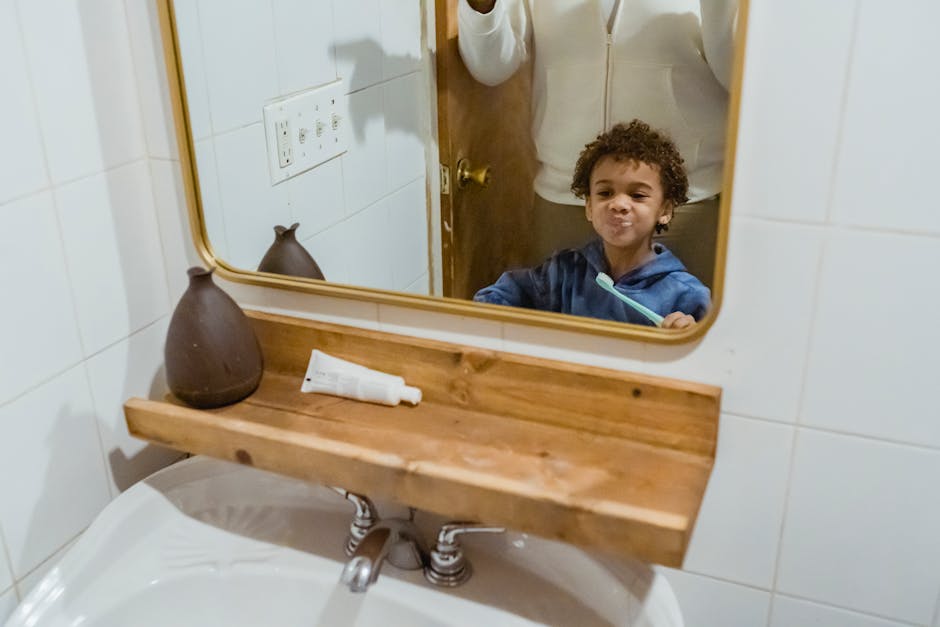
One father in a family with three kids keeps a running tally in his head: how many times did he say "did you brush your teeth" today? Some nights the number hits seven before anyone's even in pajamas. He's not a disorganized parent. He's not lazy about routines. He's just the default reminder system in a house where nobody else has learned to run their own morning yet. If you want to teach kids independence habits that actually stick, this is usually where it starts: not with a chart on the wall, but with a parent who's quietly exhausted from being the alarm clock, the GPS, and the memory bank for every small task in the house.
The frustrating part is that most kids aren't incapable. A six-year-old can absolutely zip her own backpack. A nine-year-old can set his own alarm. What's missing isn't ability, it's practice at doing the thing without someone standing over them narrating the steps. And the competition for that practice time is real. Kids ages 8 to 10 now average close to 6 hours of screen time a day, and the 8 to 12 group logs over 5 and a half hours of entertainment screen time alone, not counting schoolwork. Every one of those hours is an hour not spent folding laundry, packing a lunch, or figuring out how to get out the door on their own steam. Independence doesn't get built in the gaps left over after screens. It has to be built on purpose, in short windows, the same way you'd build any other habit.
Why the reminders never seem to stop
Here's the pattern that shows up in almost every house, regardless of how many kids or how organized the parent is. You ask once. Nothing happens. You ask again, a little more pointed. Still nothing. By the third ask you're not really parenting anymore, you're performing the job of an app that hasn't been invented yet, the one that lives in your head and pings every ten minutes. Parents describe this exact feeling over and over: "I am no longer the chore tracking app for the family" is the sentence people reach for when they finally get out from under it, which tells you how common the opposite experience is.
Part of the reason reminders don't work is that they're aimed at the wrong moment. A kid forgets to brush their teeth not because they're defiant, but because brushing teeth isn't yet linked to any internal cue, nothing in their own head says "now." The reminder from you becomes that cue, every single time, which means the habit never actually transfers to the child. It stays parked in your head instead. The Harvard Grant Study, one of the longest-running pieces of research on adult life outcomes, found that people who did regular chores starting young were more likely to be professionally successful and personally happier decades later. Not because the chores themselves were magic, but because doing a task on your own initiative, repeatedly, from a young age, builds a kind of internal operating system that keeps working long after childhood is over.
Sparky in Aktion sehen
Ein Maskottchen, Sterne und gemeinsam gewählte Belohnungen - in einer Familien-App.
What independence actually looks like, age by age
Before you can teach kids independence habits, it helps to know what's realistic for the kid in front of you, because a 5-year-old and an 11-year-old are not failing at the same task in the same way. Children aged 4 to 6 can hold focus for roughly 10 to 12 minutes on a task before their attention genuinely drains, not because they're being difficult but because that's close to the ceiling of what their developing brain can sustain. Kids 7 to 9 can usually manage 12 to 15 minutes, and by 10 to 12 most can stretch to 15 or even 20. If you're handing a 6-year-old a job that takes 25 minutes and expecting her to finish it unsupervised, you're not testing her independence, you're testing her endurance, and she's going to lose.
Age-appropriate doesn't mean easy, it means matched. A 5-year-old can absolutely make his own bed, even if it looks like a crumpled attempt rather than a hotel corner. A 9-year-old can pack her own school bag the night before, checking it against a short list rather than against your memory. An 11-year-old can manage his own after-school snack and homework start time with a visual timer instead of your voice counting down. The job isn't to lower your standards, it's to lower the task size until it fits inside the window where the child can actually succeed without you hovering.
Four small shifts that change who owns the task
Once the task size is right, the next lever is ownership, and this is where most households get stuck, because ownership isn't something you can assign, only something you can make room for.
- Let the child see the task, not just hear it. A verbal reminder disappears the second it's spoken, but something visual, a list on the fridge, a card, a screen, stays put and lets the child check in on their own schedule instead of yours. One mother of a 9-year-old who "really struggled with routine, being active, and chores" found that the moment she moved his jobs off her memory and onto a visible list, half the daily arguments simply stopped happening, because he could check his own progress instead of waiting to be told.
- Use real rewards, not symbolic ones. Parents are blunt about this in forums and reviews: virtual coins nobody cares about don't move the needle, but stars that lead toward something the child actually picked, an ice cream, a small toy, an extra half hour outside, do. The reward has to be worth wanting, chosen by the kid, not assigned by an adult guessing at what motivates them.
- Protect short, specific time windows for habits instead of screens. With kids averaging 5 and a half or more hours of entertainment screen time daily, the fix isn't usually a dramatic ban, it's claiming back a 15-minute slot before the tablet comes out, so the habit gets first access to the part of the day when attention is freshest.
- Build in grace instead of demanding perfection. Streaks that shatter the moment a kid is sick or has a late night don't teach independence, they teach kids to quit the day they fall behind. Gentle streaks with grace days keep the motivation light, treating an off day as normal rather than a failure that erases a week of progress.
This is roughly the thinking behind an app like Sparky, where the parent sets the tasks once and the child checks their own screen, earns their own stars, and works toward a reward they actually chose, which means the parent isn't the one holding the list anymore.
Keeping it alive after the sticker chart would have died
The honest truth, and most parents will tell you this if you ask directly, is that sticker charts and similar systems tend to lose their shine after about two weeks. The novelty wears off, the chart gets dusty on the kitchen wall, and everyone quietly stops checking it. That's not a parenting failure, it's just what happens when a system relies entirely on the parent remembering to care about it as much as the first day. What actually survives past week two is usually smaller than people expect: a reward that still feels worth earning, a task list that updates as the child grows instead of staying static, and some mechanism that doesn't put all the tracking weight back on the parent's shoulders the moment the excitement fades.
It also helps to let the child renegotiate the system occasionally. A list of chores that made sense for a 7-year-old starts feeling babyish by 9, and a reward that thrilled them in the spring can feel stale by autumn. Checking in every few weeks, not overhauling everything, just asking "is this still working for you, what would you want to earn next," keeps the whole thing feeling like theirs rather than something imposed once and forgotten.
Three days to shift who's in charge of the routine
You don't need a perfect Monday to start this. Pick one task this evening, something small enough to fit inside your child's attention window, and move it off your voice and onto something visible, a card, a list, a screen. Tomorrow morning, resist the urge to remind, and let there be a small natural consequence if it's missed, nothing dramatic, just reality doing its job. By day three, ask your child what they'd like to work toward next, and let the answer be theirs, even if it's smaller than you'd have picked.
None of this fixes every morning overnight, and there will still be days the shoes end up under the couch and the teeth don't get brushed until you ask twice. That's fine. The goal was never a flawless household, it was a kid who, a little more each week, runs part of their own day without needing you to run it for them.
Laden Sie Sparky kostenlos herunter
Frühzeitiger Zugriff, keine Werbung und keine In-App-Käufe - nur Sie und Ihr Kind.