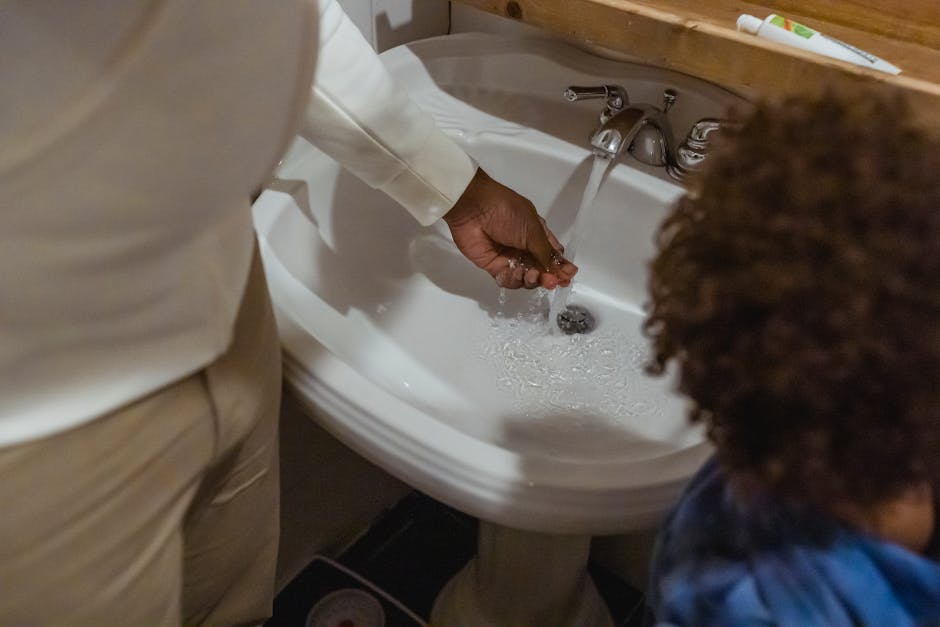
The bathroom light is already on when you walk in at 7:12. The towel is a heap. The bar of soap still has yesterday’s dry film on top. You can hear your child singing in the hallway, fully dressed except for the part that actually needs water. You call once. Then again. Then you stand in the doorway with that familiar mix of love and a timer you cannot pause.
This is the moment a kids hygiene habits app is supposed to solve, at least in theory. In real kitchens and small bathrooms, the problem is not that children “don’t know” how to wash hands or brush. They know. The problem is that hygiene lives in a tiny window, squeezed between screens, socks, and the bus, and you are still the person holding the whole sequence in your head. Common Sense Media found kids 8–12 average just under six hours of daily entertainment screen time — not counting school. Those hours do not leave much of the 10–20 minute attention span a child actually has for a sink, a toothbrush, and a towel.
Parents say the same thing in different words. The list on the wall gets dusty. Random asking does not stick. It feels easier to just do it yourself. Sticker charts last about two weeks. You have downloaded and deleted a lot of habit tools. Virtual coins nobody cares about. You are still the one keeping the whole sequence in your head. If that sounds like your house, you are not failing. You are trying to build a tiny, daily skill in the same hours that compete with a phone 42% of ten-year-olds already have, and 71% by age twelve.
What follows is not a personality makeover. It is a practical way to put a few hygiene jobs on a child’s own list, keep the window short, and stop turning the bathroom into a second shift.
The bathroom fight is a timing problem, not a soap problem
Hygiene looks simple from the adult side. Wet hands. Soap. Count. Rinse. Brush. Floss if you are lucky. Hang the towel. From a child’s side, it is a chain of starts. Each start costs attention. Ages 4–6 often hold focus for 10–12 minutes. Ages 7–9, about 12–15. Ages 10–12, 15–20 if nothing else is blinking. When you stack five hygiene jobs plus “get dressed” plus “find the other shoe,” you have already overflowed the window. Then you remind. They stall. You remind louder. Everyone feels like a failure before breakfast.
One mother of a six-year-old described the same loop: child said they washed, faucet ran for three seconds, soap stayed dry. Another family with two children, seven and nine, had a paper list that worked for eleven days, then became wallpaper. That two-week fade is not a character flaw. Novelty wears off. If the reward is a coin on a screen nobody wants, or a star that never turns into ice cream or a small toy the child picked, the job goes back to you.
A University of Minnesota study tracking kids from age 3 to their mid-20s found that those who did household chores early were more likely to complete education, launch careers earlier, and maintain closer relationships. Hygiene is one of those early chores. It is also the one that happens when everyone is late. So the job is not “teach soap.” The job is protect 12 minutes, name two or three age-appropriate tasks, and let the child see the list without you standing in the doorway as the living checklist.
If you have been telling yourself it is easier to just do it yourself, you are not lazy. You are tired. Doing it yourself works tonight. It does not build the muscle of ownership. Ownership is the child opening their own screen, seeing “wash face,” and starting without the third reminder. That is the shift parents mean when they say they no longer want to be the chore tracking app for the family.
Sparky in Aktion sehen
Ein Maskottchen, Sterne und gemeinsam gewählte Belohnungen - in einer Familien-App.
Put three hygiene jobs on their list, not twelve
Start smaller than you think. A manifesto of twenty items is how charts die. Pick three hygiene jobs that actually matter this week. For a five-year-old, that might be wash hands with soap until they count to ten, brush teeth morning, hang the towel. For an eight-year-old, add wash face or deodorant if that is already a fight. For an eleven-year-old, they can own the full sink sequence and wipe the counter with a cloth you already set out. Age-appropriate chores are not a lecture. They are jobs a child can finish in their real focus window.
Write them in the child’s words. “Do hygiene” is adult language. “Soap, then water, then towel” is a sequence they can follow. Recurring tasks help: same three, every morning, auto-repeating so you are not rewriting the kitchen wall. A visual countdown of 2 or 5 minutes beats a vague “hurry up.” Task-level timers that match 10–12 minutes for little kids feel like a game, not a punishment, if you keep your voice calm when the timer ends.
Real rewards beat virtual ones. Parents who switched from coins to something the child actually picks - ice cream, a small toy, extra story, a park stop - report that brushing and washing stop being a fight more often. Tie stars to effort and completion, not to a perfect unbroken month. Gentle streaks with grace days treat a late night or a sick morning as normal. Consecutive-day pressure turns a toothbrush into a report card. You do not need that.
If you worry this is bribing, say it out loud and then look at the alternative. The alternative is you hovering, they resisting, and nobody learning the sequence. Predictable, child-chosen rewards for visible effort are how young kids learn that a boring job still counts. Intrinsic motivation grows after the routine exists, not before.
A kids hygiene habits app only helps if the child opens it. Shared device mode, no account maze, no ads, no in-app purchases: that is what busy parents ask for when they say they have deleted a lot of these tools. If setup takes twenty minutes on a frantic morning, it will not last. Set it the night before. Sit together. Let them choose the reward. Then you leave the doorway.
When they mark it done and the soap is still dry
This is the honest objection. Kids might tap complete without doing the job. Paper charts had the same cheat. The answer is not a courtroom. It is a light check that does not restart the fight. Photo proof on a chore - a wet sink, a hung towel - lets you approve from your phone without turning the kitchen into a negotiation. You are not collecting evidence for a trial. You are closing the loop so you can stop asking “did you really?”
Keep the check kind. “Show me the towel” is enough. If they skipped soap, do not rewrite their character. Repeat the three-step sequence once. Tomorrow the same three jobs. Consistency across two adults matters more than a clever badge. If one parent tracks and the other shrugs, the child learns the list is optional. Agree on the three jobs and the reward. That is multi-parent consistency without a meeting.
Screen time as a reward worries people, and it should if it is endless. Earned minutes after the sink is done is different from handing over a tablet to buy quiet. Children already live in long screen days. Protecting 15–20 minutes for habits is the trade the data actually asks for. You are not adding a sixth hour. You are putting a short, owned sequence in front of the hour that was going to happen anyway.
If your child has a harder time with routine, including ADHD, shorter visual timers and fewer jobs are not a lesser version. They are the version that matches executive function. Overwhelm looks like refusal. Four jobs this week is plenty. You can add later.
A quiet experiment for the next seven mornings
Tonight, not in a big family meeting, sit with your child for ten minutes. Name three hygiene jobs. Agree on one real reward they care about. Put the jobs where they can see them without you. In the morning, say the list once. Start a 12-minute clock if that helps. Leave. If they stall, come back once, not five times. Approve if you use a photo. Give the star. Do not add a speech.
Expect a messy Tuesday. Illness, late nights, and forgotten towels are not streak-breaking moral events. Use a grace day and keep the same three jobs. If the reward still does not matter by Friday, the reward is wrong, not the child. Change the prize. Keep the jobs. That is how chores become more like a routine instead of a dusty list.
Some families find it easier when the child has their own simple screen for the list, stars, and a jointly chosen reward, so you are not the one carrying 98% of the mental load. Sparky lets you set the same three jobs to auto-repeat each morning, attach a 12-minute timer, and let your child upload a photo of the hung towel so you can approve it from your phone without re-entering the bathroom. That is the one thing a wall chart cannot do: the repeating list, the short clock, and the photo check live in one place the child opens themselves. If you want that kind of light structure, Sparky is one option made for exactly those short, repeating jobs - free for now, no ads, no subscription. Use it or a paper card. The method is the same: their list, short window, real prize, you out of the doorway.
You will still have days when the soap is dry. That does not erase the mornings they started without you. Hygiene is a small, daily kindness to a body they will live in for a long time. Hand them the sequence. Keep it short. Let the stars mean something they picked. Then go pour the coffee while the water actually runs.
Laden Sie Sparky kostenlos herunter
Frühzeitiger Zugriff, keine Werbung und keine In-App-Käufe - nur Sie und Ihr Kind.