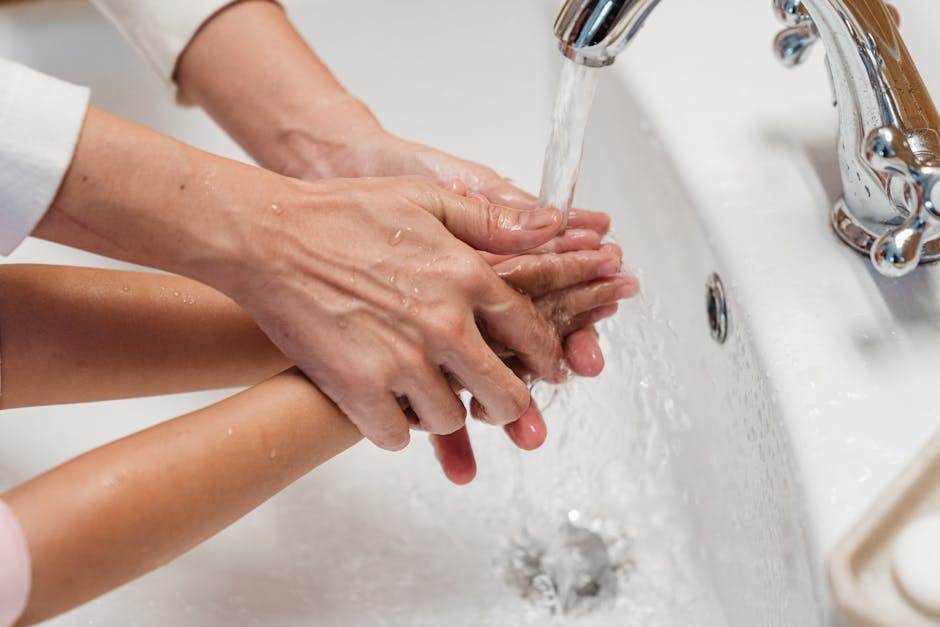
Seven minutes. That's how long my friend's eight-year-old swore it took her to brush her teeth, wash her face, and change into pajamas, standing in the bathroom doorway with a bone-dry toothbrush and wet hair from the sink faucet, not the shower. Every parent of a 4 to 12 year old has lived some version of this scene. The gap between "I did it" and what actually happened is where a hygiene routine app for kids earns its keep, not by shouting louder reminders, but by making the routine visible and owned by the child instead of carried entirely in your head. Hygiene is a strange category of parenting work. Unlike homework or chores, nobody applauds a clean kid, and nobody notices until it's not happening, like when a teacher mentions it gently at pickup or a grandparent asks why nobody combed anyone's hair. The tasks are small and repetitive: brush teeth, wash hands, wash face, shower, deodorant once puberty shows up. But repetition is exactly what wears parents down, because you're not teaching a new skill, you're nagging the same six things, twice a day, for years. Screen time makes this harder than it used to be. Kids aged 8 to 12 now average over five and a half hours of entertainment screen time daily, and that's competing directly with the ten or fifteen minutes it takes to actually get clean. The fight isn't really about soap. It's about attention, habit, and who's holding the mental list.
Why "go brush your teeth" stops working by age seven
Somewhere around first or second grade, direct commands lose their grip. Younger kids comply because you're the authority standing right there. Older kids start testing whether the instruction is actually enforceable, and a verbal reminder shouted from the kitchen has zero weight if nobody's watching to confirm it happened. This is developmentally normal, not defiance, but it feels like defiance at 7:45 on a school morning. What's really happening is a mismatch: you're asking a child to self-regulate a task that has no built-in feedback loop. A messy room is visible. Unbrushed teeth are invisible until a dentist flags plaque six months later. Parents end up doing one of two things, neither of which works long-term. They either police every single step, standing in the bathroom doorway narrating, or they give up and hope the child absorbs the habit by osmosis. Sticker charts were supposed to bridge that gap, and for a while they do. Then the chart gets dusty on the fridge, the stickers run out, nobody buys more, and you're back to shouting down the hallway. Parents describe this exact arc over and over: enthusiasm for the first two weeks, then a quiet fade. The problem was never the sticker. It's that a paper chart has no memory, no momentum, and no reason for a kid to check it once the novelty wears off.

Sparky in Aktion sehen
Ein Maskottchen, Sterne und gemeinsam gewählte Belohnungen - in einer Familien-App.
Moving the routine off your mental list and onto theirs
The shift that actually changes behavior isn't a better reminder system for you, it's giving the child their own place to see what's expected and check it off themselves. When a seven-year-old opens something on their own screen and sees "brush teeth, wash face, comb hair" waiting for them, with a star attached to finishing it, the task stops being a request from a tired parent and starts being theirs to complete. That's the whole mechanism behind a hygiene routine app for kids, and it's a small shift with a surprisingly large effect, because kids this age are deeply motivated by ownership and visible progress, even over things as unglamorous as flossing. One mother of two, ages six and nine, told us the turning point wasn't the stars at all, it was that she stopped being, in her words, "the chore tracking app for the family." She wasn't managing anymore. She was just approving. That distinction matters more than any feature list. This is also where real rewards beat virtual ones. Parents consistently say virtual coins mean nothing to a kid, but a star chart that leads toward something actually chosen by the child, a small toy, an ice cream trip, an extra bedtime story, gets taken seriously. This is part of why Sparky leans on jointly-chosen rewards rather than in-app currency; a six-year-old doesn't care about points, but she absolutely cares about the ice cream she picked out herself on Saturday.
Five concrete steps for a hygiene routine that survives week three
Here's where it gets practical, because knowing the theory doesn't help at 7am. These are the steps that tend to hold up past the initial burst of enthusiasm, based on what actually sticks for families who've tried and abandoned several systems before landing on one that works.
- Start with three tasks, not seven. Brush teeth, wash hands before meals, and shower or bath on schedule is plenty for a first week. Adding deodorant, nail care, and hair brushing all at once overwhelms a 6 or 8 year old and guarantees half the list gets ignored.
- Attach each task to an existing anchor point rather than a time. "After breakfast" works better than "8:15am" because mornings never run on schedule, and a time-based task that gets missed by ten minutes feels like a failure even when nothing actually went wrong.
- Let the child check off the task themselves, even if you're standing right there the first few times. The physical or digital act of marking something done is what builds the sense of ownership; if you check it off for them, it's still your routine, not theirs.
- Build in grace days instead of all-or-nothing streaks. A kid who's sick for two days or up late at a sleepover shouldn't feel like they broke something irreplaceable. Gentle streaks that forgive an off day keep the whole system feeling supportive instead of like a performance review.
- Review the reward together every couple of weeks, not just the task list. A reward that excited a 7 year old in September might feel stale by November, and kids this age shift preferences fast, so a quick "still want this, or something else?" conversation keeps the whole thing feeling current.
What photo checks and age-matched timers actually solve
Two friction points come up constantly in hygiene routines specifically, more than with almost any other category of chore. First, parents can't always verify a task happened, especially with younger kids who'll cheerfully report "I brushed my teeth" while the toothbrush sits untouched. A quick photo check, where the child snaps a picture and a parent glances at it from their phone, removes the interrogation entirely. Nobody's accusing anybody of lying; it's just a fast, low-friction confirmation that replaces the daily "did you actually do it?" conversation. Second, hygiene tasks genuinely take different amounts of time depending on age, and an adult sense of "that should take two minutes" doesn't match a 5 year old's actual pace. Attention spans run roughly 10 to 12 minutes for 4 to 6 year olds and up to 15 to 20 minutes for 10 to 12 year olds, so a timer pitched for a teenager's showering pace will feel rushed and punitive to a 6 year old still learning to wash behind their own ears. Matching the timer to the child, not the clock on the wall, turns the whole thing from a countdown of doom into something closer to a game, especially when there's a small visual element, a progress bar, a mascot, something that makes the two minutes feel like it's moving toward something instead of just ticking down.
Your next move, tonight
You don't need to overhaul the whole evening routine in one go. Pick one hygiene task that's currently a daily fight, usually it's teeth brushing or showering, and separate it from everything else for a week. Write it down somewhere your child can see on their own, not just in your head, attach a small, specific reward they chose themselves, and let them be the one who marks it finished. Skip the perfection standard; a missed day isn't a crisis, it's just a day to pick back up tomorrow. If paper and a fridge chart have already lost their shine in your house, as they do for most families within a couple of weeks, a hygiene routine app for kids can carry that same idea without needing a new marker every time one runs dry. The goal isn't a flawless streak. It's a kid who checks their own list, most days, without you saying a word.
There's no version of this that removes every evening negotiation forever, and anyone who promises that is overselling it. What actually changes, slowly, is the ratio: fewer nights where you're standing in the bathroom doorway repeating yourself, more nights where the routine just happens because it belongs to your kid now, not to you.
Laden Sie Sparky kostenlos herunter
Frühzeitiger Zugriff, keine Werbung und keine In-App-Käufe - nur Sie und Ihr Kind.